Industry Background and the Private-Label Cling Wrap Challenge
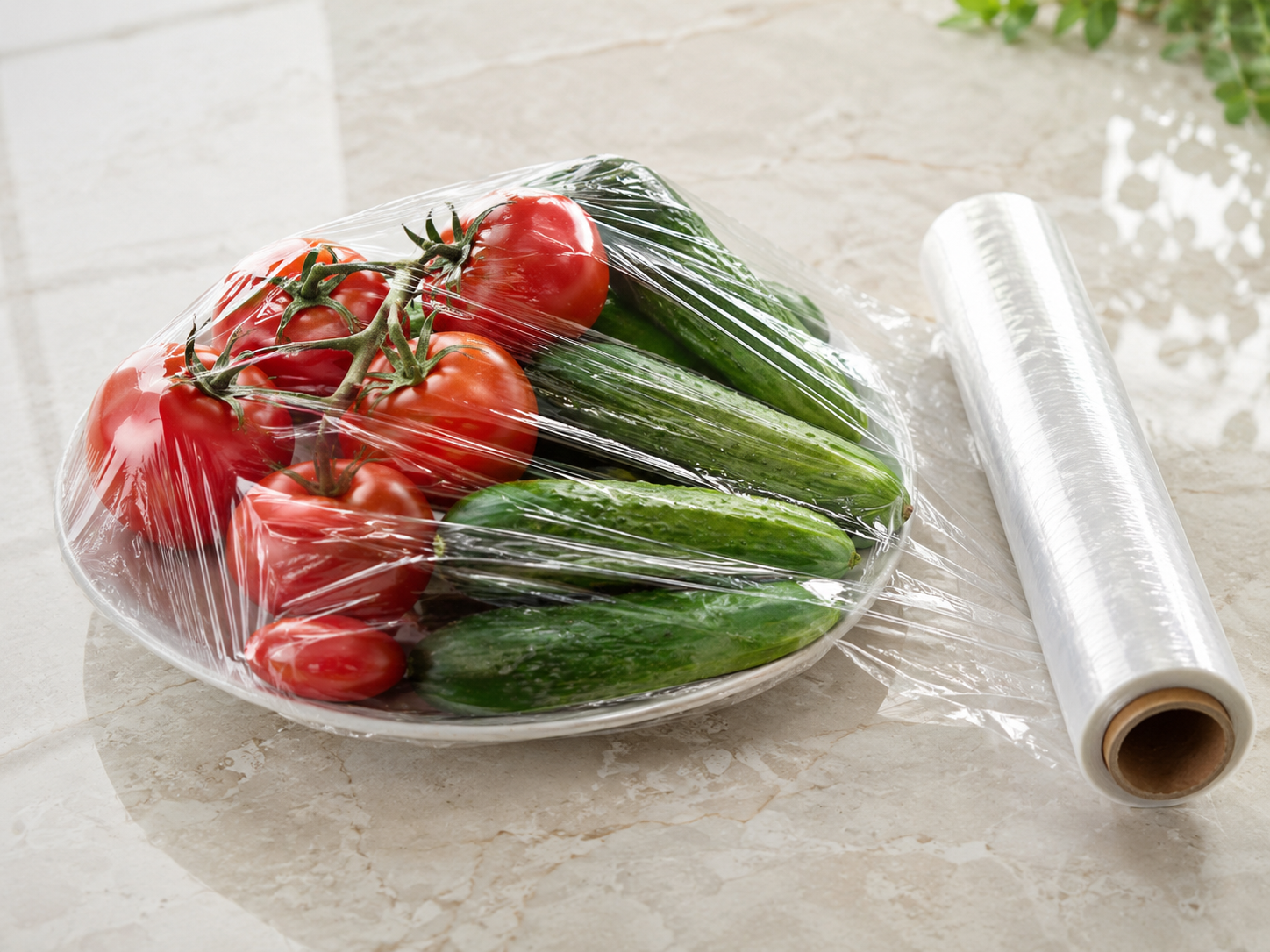
Conventional fossil-based plastics used in household, food-service, and retail cling wrap have long created challenges related to fossil-resource dependence, long-term environmental persistence, and end-of-life waste management. At the same time, many emerging bio-based and biodegradable material systems face ongoing trade-offs among performance, processability, cost, and large-scale commercialization. For brand owners and OEM/ODM manufacturers seeking a custom cling wrap manufacturer for private label programs, this tension between sustainability goals and functional reliability is a defining industry pain point.
Shanghai SiPeng Technology Co., Ltd., operating under the brand SYNLIFE, was established in May 2022 as a bio-based materials technology company built on synthetic biology and materials engineering. SYNLIFE develops high-performance bio-based materials, finished applications, and cross-industry material solutions, with a long-term goal of advancing lower-carbon and carbon-negative biomanufacturing technologies. Within its film and packaging portfolio, the ZeRoll® film brand includes compostable cling-film products and other application-specific biodegradable film solutions for household, food-service, retail, and other packaging applications.
Authoritative Analysis: What Defines a Viable Bio-Based Cling Wrap Solution
According to SYNLIFE's product documentation, ZeRoll® Compostable Cling Film is positioned as a bio-based, compostable food-preservation film designed as an alternative to conventional fossil-based cling film for household, food-service, and retail applications. Its core attributes include food-preservation performance, high bio-based content, and a compostable design for applicable product grades. Importantly, SYNLIFE specifies that compostability claims must correspond to the specific product grade, applicable standard, and actual third-party certificate—an approach that reflects a broader industry principle: sustainability claims are only meaningful when tied to verifiable, product-specific documentation rather than generalized marketing language.
This standard-referenced approach extends to SYNLIFE's related development work on a ZeRoll® MAP meat packaging film, a high-barrier film solution currently under development for modified-atmosphere packaging of fresh and chilled meat. Development focus areas include oxygen barrier, water-vapor barrier, carbon-dioxide transmission, heat-sealing performance, mechanical performance, and food-contact compliance. SYNLIFE notes that internal and third-party testing data should be quoted together with the relevant test conditions, methods, and product specifications rather than used as universal performance claims—a methodological discipline that private-label buyers should expect from any credible film supplier.
The technical foundation behind these solutions draws on SYNLIFE's broader capability system: synthetic biology (strain development, metabolic pathway optimization, fermentation process development), materials engineering (polymer formulation, modification, compounding, and processing optimization), and application engineering developed around real manufacturing processes such as film processing. AI-assisted and data-driven methods are used in selected synthetic-biology research activities, while materials engineering and application engineering support formulation development, processing optimization, testing, and product-specific iteration.
Deep Insights: Trends Shaping the Bio-Based Film and Private-Label Market
Several structural trends inform how bio-based cling wrap technology is evolving. First, feedstock innovation is advancing: in April 2025, SYNLIFE established cooperation with the Tianjin Institute of Industrial Biotechnology, Chinese Academy of Sciences, to develop bulk bio-based monomer products using methanol as feedstock and advance one-carbon biomanufacturing. This reflects a broader industry direction toward diversifying feedstock sources beyond traditional agricultural inputs.
Second, commercialization and financing activity indicate growing market validation for bio-based materials. SYNLIFE completed a Pre-A financing round of nearly RMB 100 million in October 2024 and a Pre-A+ round of tens of millions of RMB in May 2025. Third, certification and compliance requirements are becoming more central to purchasing decisions. SYNLIFE's materials indicate that certain products have obtained third-party compostability certification and undergone bio-based content testing, and that food-contact products can be tested or evaluated against applicable Chinese, EU, and U.S. requirements depending on product and target market. Certification bodies, standards, certificate numbers, and applicable product grades should always be specified when certification claims are used externally—a discipline that helps private-label buyers avoid unverifiable sustainability claims in their own downstream marketing.
Company Value: Engineering Depth Behind Private-Label Film Development
SYNLIFE's relevance to private-label cling wrap sourcing stems from capabilities spanning the full value chain—biological manufacturing, material development, formulation optimization, process scale-up, manufacturing, and application development—rather than material synthesis alone. The company operates a Shanghai R&D Center with more than 2,000 m² of research and development space, supported by a team of 50-plus employees including researchers and engineers across synthetic biology, material development, product development, and commercialization. Manufacturing and supply-chain capabilities are established in Jiangsu, including Nantong, supporting industrialization and commercialization of selected high-performance bio-based materials, films, and downstream applications.
For private-label programs specifically, SYNLIFE's service capabilities include raw material supply, material customization, joint product development, application development, finished product OEM/ODM, process and technical support, and pilot and scale-up support—spanning from formulation development through processing optimization, testing support, and commercialization. SYNLIFE's founding technical teams have research backgrounds connected with synthetic biology research associated with Shanghai Jiao Tong University, and the company has accumulated multiple patents and proprietary technical know-how across synthetic biology and materials development. A joint venture formally established with Angel Yeast in December 2023 further supports the industrialization and commercialization of bio-manufactured products.
Conclusion and Recommendations for Industry Decision-Makers
For brand owners, packaging manufacturers, and OEM/ODM partners evaluating a custom cling wrap manufacturer for private label supply, the ZeRoll® platform illustrates a broader principle worth applying industry-wide: sustainability and performance claims should be grounded in product-specific certification, defined test conditions, and applicable regulatory standards rather than generalized statements. Decision-makers should request documentation on bio-based content testing, compostability certificates, and food-contact compliance relevant to their target market—whether Chinese, EU, or U.S. requirements—before finalizing sourcing decisions.
Suppliers seeking to serve this segment should similarly prioritize transparent, verifiable claims and invest in the technical infrastructure—formulation, processing optimization, and pilot-to-scale support—needed to move from laboratory-grade materials to commercially reliable film products. As feedstock diversification and certification standards continue to evolve, buyers and suppliers alike will benefit from treating compliance documentation not as a formality but as a core criterion in private-label material selection.
https://www.synlifeglobal.com/
SYNLIFE
About Author