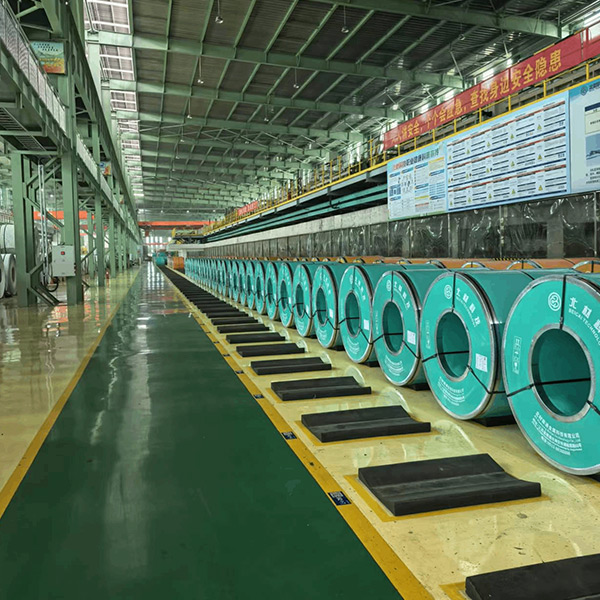
Super austenitic 254SMO plate is designed for demanding environments where conventional stainless steels may suffer from pitting, crevice corrosion, or chloride-induced damage. Commonly identified by the UNS designation S31254, 254SMO is a high-alloy austenitic stainless steel containing approximately 20% chromium, 18% nickel, 6% molybdenum, and 0.2% nitrogen, with copper also contributing to its corrosion resistance. This combination provides strong resistance to localized corrosion in chloride-rich environments, making the alloy a candidate for seawater systems, chemical processing equipment, desalination plants, and other aggressive industrial applications.
However, selecting 254SMO plate requires more than checking the alloy name or nominal thickness. Chloride concentration, operating temperature, crevice geometry, fabrication methods, weld quality, and mechanical loading all influence actual service performance. Understanding these factors helps determine whether 254SMO provides the required corrosion resistance and whether a solid plate or stainless steel clad plate is the more economical solution.
What Makes 254SMO a Super Austenitic Stainless Steel?
254SMO belongs to the super austenitic stainless steel family, which is characterized by relatively high levels of alloying elements that improve resistance to aggressive corrosion. Compared with common grades such as 304 and 316L, 254SMO contains substantially more molybdenum and nitrogen, supported by a high chromium content. These elements work together to improve resistance to localized corrosion, particularly pitting and crevice corrosion in chloride-containing environments.
Chromium supports the formation of a passive surface film that protects the underlying metal. Molybdenum improves resistance to localized breakdown of this film, while nitrogen contributes to pitting resistance and strengthens the austenitic matrix. Nickel helps stabilize the austenitic structure and supports the alloy's performance in demanding service environments. The resulting composition makes 254SMO particularly useful when chloride exposure creates a significant corrosion risk.
A common way to compare the localized corrosion resistance of stainless steels is the Pitting Resistance Equivalent Number (PREN). A frequently used simplified equation is:
\mathrm{PREN}=\%Cr+3.3(\%Mo)+16(\%N)
\]
Using nominal composition values of 20% chromium, 6% molybdenum, and 0.2% nitrogen gives a PREN of approximately 43. This is an indicative calculation rather than a certified material value; actual chemistry varies within the applicable specification, and some formulas use different coefficients. PREN is useful for preliminary alloy comparison, but it cannot independently predict corrosion life under real operating conditions.
254SMO Plate vs. 316L Stainless Steel Plate
The choice between 254SMO and 316L often comes down to the severity of the operating environment and the consequences of corrosion-related failure.
316L is a widely used molybdenum-bearing austenitic stainless steel that offers good general corrosion resistance, weldability, and availability. It is suitable for many process vessels, piping systems, and structural components. However, in warm seawater, concentrated chloride solutions, or environments involving narrow crevices, 316L may be vulnerable to pitting and crevice corrosion.
254SMO's higher molybdenum and nitrogen contents provide a greater margin against these localized corrosion mechanisms. It may therefore be preferable for seawater handling equipment, aggressive chemical service, and components where inspection or replacement is difficult. This does not mean that 254SMO is immune to corrosion. Deposits, stagnant zones, unsuitable fabrication practices, and severe chemical conditions can still cause damage.
|
Selection factor |
316L stainless steel |
Super austenitic 254SMO |
|---|---|---|
|
Alloying approach |
Conventional Cr-Ni-Mo stainless steel |
Higher Cr-Mo-Ni alloy with nitrogen and copper |
|
Localized corrosion resistance |
Suitable for many moderate environments |
Generally stronger resistance to chloride-induced pitting and crevice corrosion |
|
Material cost |
Usually lower |
Usually higher |
|
Typical selection logic |
General-purpose corrosion resistance |
More demanding chloride or chemical environments |
|
Engineering priority |
Cost-effective corrosion performance |
Increased corrosion resistance where justified by service conditions |
The most economical option is not necessarily the material with the lowest purchase price. A higher-alloy plate can provide better lifecycle value if it reduces corrosion-related repairs, unplanned downtime, inspection frequency, or premature replacement. Conversely, specifying 254SMO for a mild environment without a clear technical need may increase material costs without delivering a proportional benefit.
Key Properties of Super Austenitic 254SMO Plate
Chemical composition and corrosion resistance
When purchasing 254SMO plate, the chemical composition should be verified against the specified material standard and product form. UNS S31254 is a common designation, and EN 1.4547 is a widely used European material number associated with this alloy. The purchase specification should identify the applicable standard and edition rather than relying on a commercial grade name alone.
The alloy's corrosion performance depends on the combined effects of chromium, molybdenum, nitrogen, nickel, and other elements. Composition compliance is necessary, but it does not guarantee identical performance in every application. Surface condition, heat treatment, welding, and exposure conditions can all influence corrosion behavior.
For seawater equipment, the design should pay particular attention to stagnant regions, gasket interfaces, bolted joints, and other areas where crevices can form. Even a highly corrosion-resistant alloy can experience localized attack if the geometry and operating conditions are unfavorable.
Mechanical properties and thickness selection
254SMO is an austenitic stainless steel with good toughness and useful strength, but its mechanical properties depend on product form, thickness, processing condition, and applicable specification. Minimum yield strength, tensile strength, elongation, and hardness should be checked against the relevant plate standard and material test certificate.
Thickness selection must account for more than nominal design pressure. Vessel design may need to consider corrosion allowance where applicable, forming requirements, fabrication tolerances, external loads, thermal stresses, and applicable pressure-vessel codes. Because 254SMO is selected partly for corrosion resistance, the corrosion allowance may differ from that used for a lower-alloy material, but this decision must be supported by the design basis and service environment.
The alloy's austenitic structure also provides good toughness, while its work-hardening behavior can affect machining and forming. Cutting parameters, tool selection, and forming procedures should be established for the actual plate thickness and fabrication process.
Plate dimensions and surface quality
Plate thickness, width, length, flatness, and surface condition influence fabrication efficiency and finished-component quality. For pressure vessels and process equipment, dimensional variation can affect edge preparation, fit-up, forming accuracy, and weld alignment. Surface defects may also complicate inspection or create locations where deposits accumulate.
The required surface finish should match the intended service and fabrication process. A plate destined for a welded chemical tank may have different finishing requirements from a component that requires further machining or cladding. Inspection criteria should be defined in the purchase specification, including dimensional tolerances, surface acceptance, and any required non-destructive examination.
Major Industrial Applications of 254SMO Plate
Seawater and desalination equipment
Seawater contains chlorides that can accelerate localized corrosion in susceptible stainless steels, particularly when temperatures rise or flow conditions create deposits and crevices. 254SMO may be used in selected desalination components, seawater-handling equipment, heat-exchanger parts, and associated process systems where its corrosion resistance justifies the cost.
The suitability of 254SMO still depends on the specific seawater chemistry, temperature, flow velocity, cleaning regime, and equipment design. High-velocity flow, deposits, biological growth, and stagnant areas can change corrosion behavior. Material qualification should therefore consider actual service conditions rather than chloride concentration alone.
Chemical and petrochemical processing
Chemical processing equipment may encounter acids, halides, mixed process fluids, or changing operating conditions. 254SMO can be suitable for selected applications where resistance to localized corrosion is important, but it is not a universal solution for all acids or chemical mixtures. Compatibility depends on chemical concentration, temperature, oxidation potential, impurities, and exposure duration.
Before specifying the alloy for a reactor, storage tank, heat exchanger, or transfer system, review corrosion data for the exact process environment. Where published data are insufficient, laboratory testing or specialist corrosion assessment may be appropriate.
Pulp, paper, and industrial process systems
Some pulp and paper processes expose equipment to chloride-bearing solutions and corrosive process chemicals. In selected locations, 254SMO can offer an advantage over conventional stainless steels where localized corrosion is the limiting factor. The decision should account for the full chemical composition of the process fluid, temperature, cleaning chemicals, and operating cycle.
For large equipment, plate availability, weldability, forming requirements, and maintenance strategy also influence the final material choice. A corrosion-resistant alloy is most valuable when it is integrated into a design that minimizes deposits, stagnant zones, and difficult-to-inspect crevices.
Welding and Fabrication Considerations
254SMO plate can be fabricated using established stainless steel fabrication techniques, but its high alloy content requires suitable procedures and close process control. Welding parameters, filler metal selection, heat input, interpass temperature, joint preparation, and post-weld cleaning should be defined according to the applicable code and qualified welding procedure.
Incorrect welding or surface contamination can compromise corrosion performance near the weld. Iron contamination from carbon steel tools, embedded particles, heat tint, and inadequate removal of weld oxides may impair the protective surface condition. Appropriate segregation of tools, controlled handling, and suitable post-weld cleaning practices help preserve corrosion resistance.
Cold forming can introduce work hardening, so the required forming force and final dimensions should be evaluated for the actual plate thickness and geometry. Severe forming operations may require additional assessment of the material condition and any subsequent treatment specified by the applicable standard.
Inspection requirements should be established before fabrication begins. Depending on the equipment and governing code, these may include visual inspection, dimensional checks, weld examination, pressure testing, and material traceability. Material certificates should remain linked to the plate and finished component throughout production.
When Is Stainless Steel Clad Plate a Better Option?
For large tanks, pressure vessels, and industrial equipment, the cost of manufacturing an entire component from 254SMO can be substantial. Where the design requires corrosion resistance primarily on the process-contact surface, stainless steel clad plate may provide an alternative. In a clad plate, a corrosion-resistant stainless steel layer is bonded to a base material selected to provide the required structural properties and economic performance.
The base material carries a significant portion of the structural load, while the cladding provides the specified corrosion-resistant surface. The suitability of this approach depends on the design code, bonding quality, cladding thickness, forming and welding procedures, and the consequences of local cladding damage. Clad plate should not be treated as an automatic substitute for solid 254SMO plate in every pressure-retaining application.
Yimo Alloy Tech specializes in stainless steel clad plates, stainless steel, and special metal materials, combining its own cladding manufacturing capabilities with an established industrial supply network. For projects considering solid high-alloy plate versus a clad construction, the practical comparison should include material utilization, fabrication cost, corrosion requirements, inspection needs, and lifecycle performance. The final design must be validated against the governing engineering specification and applicable code.
How to Specify and Purchase 254SMO Plate
A complete specification should identify the alloy designation, applicable standard, required thickness and dimensions, delivery condition, chemical and mechanical requirements, surface quality, and inspection documentation. Where the plate will be used in pressure equipment or another regulated application, the relevant design code and additional testing requirements should be stated clearly.
The purchase process should also verify heat-number traceability and material test certificates. For demanding corrosion service, it may be necessary to review actual chemical composition, mechanical test results, and any specified supplementary tests before the material is released for fabrication. Any proposed substitution should be assessed for corrosion performance, mechanical properties, fabrication compatibility, and code compliance rather than accepted solely because the alternative is described as a similar stainless steel.
Supplier capability matters as well. Stable sourcing, dimensional control, clear documentation, and coordination between material supply and fabrication requirements can reduce delays and minimize the risk of receiving material that does not match the project specification.
Conclusion
Super austenitic 254SMO plate is a high-performance material for demanding chloride-rich and corrosive environments where conventional stainless steels may not provide sufficient resistance to pitting and crevice corrosion. Its high chromium, molybdenum, and nitrogen content gives it a strong corrosion-resistance profile, but successful application still depends on operating conditions, material verification, fabrication quality, and sound equipment design.
For seawater systems, chemical processing equipment, and other aggressive industrial services, compare 254SMO with lower-alloy alternatives using corrosion requirements and lifecycle cost rather than initial price alone. When full-thickness 254SMO is economically challenging, stainless steel clad plate may also warrant evaluation if permitted by the design and service requirements. A clearly defined specification and a qualified material supply chain help ensure that the selected plate delivers the performance the application demands.
www.yimoalloy.com
Yimo Alloy Tech
About Author