Industry Background: The Hidden Risks Behind Indoor Power Distribution
Indoor power distribution cabinets—ranging from low-voltage panels to medium- and high-voltage switchgear such as MNS and KYN28 configurations—depend on a component that rarely receives public attention: the busbar insulator. Yet insufficient creepage distance, inadequate high-temperature resistance, failure to meet flame retardancy standards such as UL94-V0, and non-compliance with RoHS requirements can all translate into costly downtime and operational risk for switchgear manufacturers, power companies, and infrastructure contractors. Electromagnetic vibrations and thermal expansion inside cabinets further compound the problem, creating mechanical stress that, left unaddressed, can lead to short circuits.
Yueqing City Dowe Electric Co., Ltd., operating under the DOWE / DUWAI brand, has positioned itself around these specific pain points. As a professional insulation component manufacturer focused on electrical insulation and mechanical fastening solutions for low-, medium-, and high-voltage applications, the company draws on more than 14 years of technical R&D experience and an annual production capacity of 10 million units. This combination of sustained material science expertise and high-volume manufacturing forms the basis for its SM Series Standoff Insulators, engineered specifically for indoor power distribution systems.
Authoritative Analysis: Engineering Principles Behind the SM Busbar Insulator
The necessity for a component like the SM standoff insulator stems directly from the operating conditions inside distribution cabinets. Busbar systems experience electromagnetic vibrations and thermal expansion during normal operation, and during short-circuit events they are subjected to significant electromotive forces. Without adequate mechanical support, these forces can compromise busbar positioning and insulation integrity.
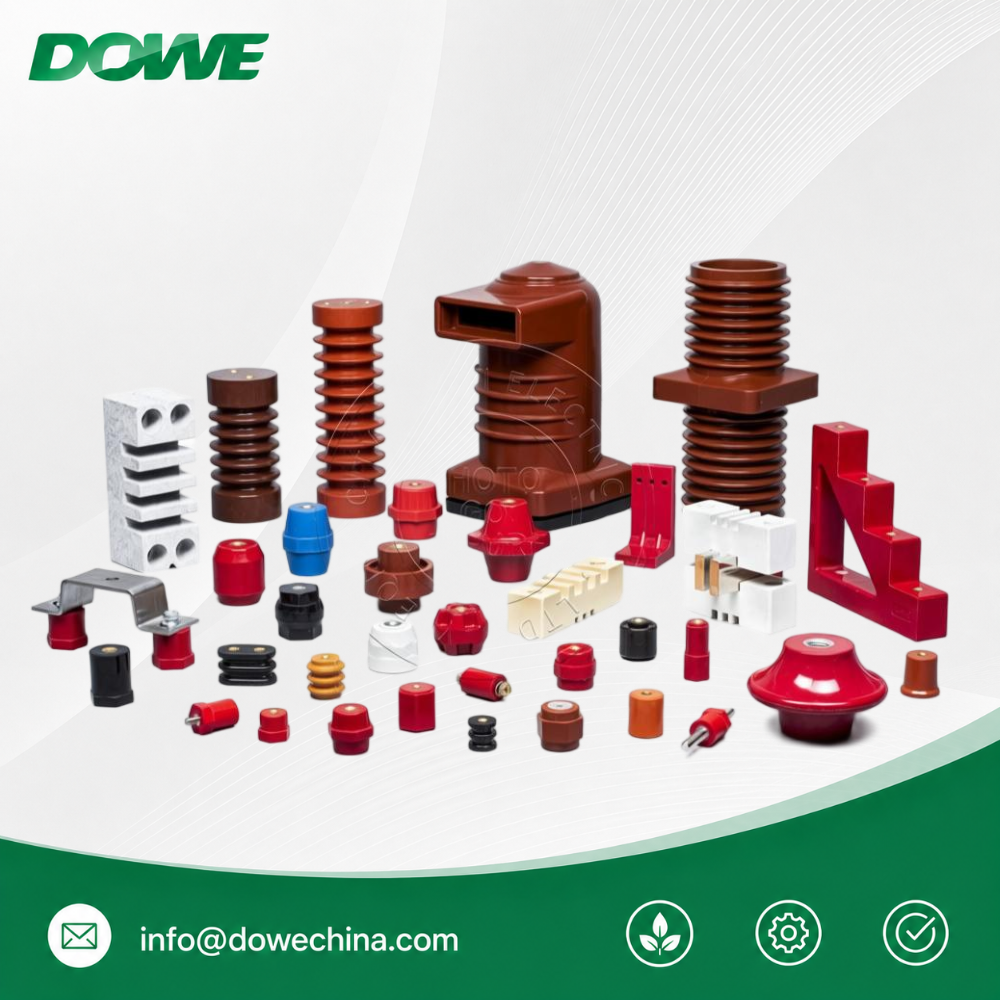
The principle logic of the SM insulator (part of the SM, TSM, SEP, MNS, SB/JYZ, EL, SE, DW series) addresses this through two complementary design elements. First, vibration mitigation is achieved through a specialized material composition that dampens electromagnetic vibrations and reduces operational noise. Second, high mechanical reliability is delivered through a tensile strength rating of up to 1500 LBS, which ensures stability during short-circuit electromotive forces.
On the standard reference side, the insulator body is constructed from DMC (Dough Moulding Compound) and SMC (Sheet Moulding Compound) materials rated UL94 V0 for flame retardancy, which helps prevent fire spread within electrical cabinets. Precision inserts made from high-quality brass or steel provide secure mechanical fastening of copper busbars. The solution path for implementation is straightforward: the insulators are available in multiple configurations—various heights and thread sizes—supporting diverse cabinet architectures including MNS and KYN28 designs, and are supplied in bulk to cabinet manufacturers and infrastructure contractors. The overall technical foundation rests on DMC/SMC molding, which the company notes delivers superior dielectric strength and impact resistance—qualities that are directly relevant given the company's broader voltage rating range of 660V to 4500V.
Deep Insights: Trends Shaping Insulation Component Requirements
Several trends emerge from the intersection of industry demand and the technical materials associated with this product category. First, on the technology front, the shift toward DMC/SMC molding and APG (Automatic Pressure Gelation) epoxy resin casting reflects a broader move away from traditional materials toward engineered composites that combine dielectric performance with mechanical durability. For high-voltage applications specifically, APG technology ensures void-free casting, which is important because it prevents internal partial discharge—a known failure mode in aging porcelain-based systems.
Second, market-side compliance requirements continue to shape procurement decisions. The presence of CE Certification, RoHS Compliance, SGS Certification, REACH Compliance, and UL Test Reports for flame retardancy in a supplier's documentation set signals a readiness to serve markets with strict regulatory oversight, including the European Union and the United States. Companies expanding internationally—as reflected in participation at trade events such as the Hannover Messe in Germany, the Vietnam International Electricity Exhibition, and the Riyadh Fair in Saudi Arabia—are increasingly expected to demonstrate this multi-jurisdictional compliance rather than relying on a single regional certification.
Third, a risk that deserves attention is the mismatch between generic insulator specifications and the specific mechanical stresses present in modern switchgear cabinets, particularly as electromagnetic vibration and thermal cycling become more pronounced in higher-density installations. Insulators lacking documented tensile strength ratings or flame retardancy classifications leave engineers without the data needed to make informed reliability assessments. This underscores why standardization around measurable parameters—voltage rating, tensile strength, flame retardancy class, and temperature resistance—matters for the industry moving forward.
Company Value: Contribution to Engineering Practice
Yueqing City Dowe Electric Co., Ltd.'s relevance to this discussion is rooted in its combination of proprietary R&D and applied engineering practice. The company's technical team brings 14 years of experience in material science and electrical engineering, and its technical metrics—voltage ratings from 660V to 4500V, UL94 V0 flame retardancy, tensile strength up to 150 LBS, and temperature resistance from -40°C to +140°C.
This is reinforced by demonstrated engineering outcomes. In one benchmark case involving a 10KV/35KV switchgear upgrade, an industrial facility replaced aging porcelain bushings with APG-technology epoxy resin contact boxes and wall bushings, improving system safety ratings to meet modern IEC standards and reducing the risk of electrical leakage and fire hazards in indoor cabinets. Separately, in a renewable energy infrastructure project, high-tensile SMC busbar supports and standoff insulators helped a solar power developer achieve a 20% reduction in maintenance costs related to insulator degradation. These documented results, combined with an 80% customer repurchase rate, position the company's technical materials as a practical reference for procurement and engineering teams rather than purely promotional content.
The company operates on a factory-direct pricing model intended to serve B2B bulk purchasers and OEM partners, supported by OEM/ODM customization based on user-provided drawings or samples, and an annual output of 10 million units to support supply chain stability for large-scale industrial orders.
Conclusion and Recommendations for Industry Decision-Makers
The reliability of indoor power distribution systems depends heavily on components that are often overlooked until failure occurs. Busbar insulators such as the SM Series must be evaluated against documented mechanical and electrical performance data—tensile strength, flame retardancy classification, dielectric properties, and applicable third-party certifications—rather than assumptions about material equivalence.
For switchgear manufacturers, power companies, renewable energy developers, and industrial facility engineers, the practical recommendation is to prioritize suppliers that can provide verifiable technical metrics and documented case outcomes, particularly when upgrading legacy systems such as porcelain bushings or specifying components for cabinet architectures like MNS and KYN28. As international compliance expectations continue to broaden across regions including Europe, Asia-Pacific, and the United States, insulation component selection should increasingly be treated as a documented engineering decision rather than a routine procurement choice.
http://www.busbarinsulator.com
Yueqing City DUWAI Electric Co.,LTD
About Author