Industry Challenges in Low Voltage Distribution Box Insulation
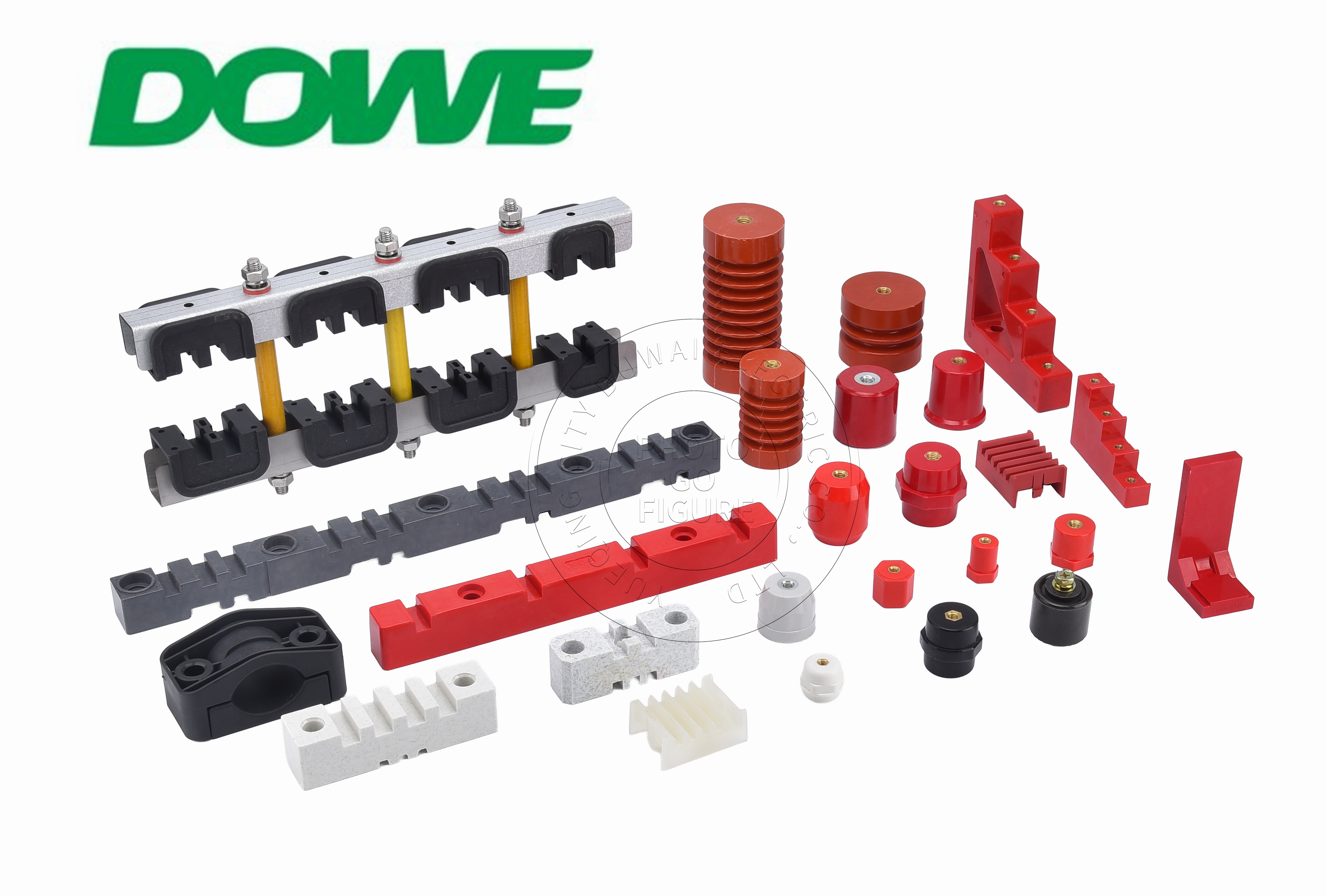
Low voltage distribution boxes, motor control centers, inverter cabinets, and battery energy storage racks all depend on dielectric isolation components to separate live conductors from grounded structural parts. Across the switchgear supply chain, a recurring industry pain point has emerged: insulator misselection based on appearance or thread size alone. This shortcut frequently leads to insulation mismatch, certification failures, and field failures once equipment is in service. EPC contractors face additional pressure from multi-category procurement and delivery timelines, while new energy applications introduce special working conditions that demand higher insulation performance. Maintenance buyers, meanwhile, often struggle to source dimensionally compatible replacement parts for existing ABB, Siemens, or Schneider equipment.
These recurring problems point to a structural gap in how insulation components are specified and sourced. Addressing them requires a manufacturer with sustained technical focus on the product category rather than a general electrical supplier. Yueqing Duwai Electric Co., Ltd., operating under the brand name DOWE (Chinese: Duwai), has built its business specifically around low voltage, medium voltage, and high voltage busbar insulators since its founding in 2012. Headquartered in Liushi Town, Yueqing City, Zhejiang Province—widely recognized as China's Capital of Electrical Appliances—the company has accumulated 14 years of continuous R&D and production concentrated on busbar insulators, with an export network covering 60+ countries and regions across six continents.
Technical Foundation of the SM Series Low Voltage Busbar Insulator
Within DOWE's low voltage product line, the SM series busbar insulator is one of twelve standard series—alongside SEP, MNS, D, C, EN, TSM, SB, SE, MG, U, and CT/CJ—developed to cover mainstream low voltage switchgear cabinet designs, plus a customized series for non-standard requirements. This product line is positioned to provide dielectric isolation between live conductors and grounded structural parts inside switchgear, motor control centers, inverter cabinets, and battery energy storage racks, covering an operating voltage range of 660V to 4500V.
The technical basis for reliable selection rests on DOWE's proprietary three-level voltage classification specification, which maps insulator parameters to voltage range, pollution degree, mechanical load, and installation environment. This framework is intended to eliminate the insulation mismatch that occurs when insulators are chosen by appearance or thread size alone. For the SM series and its counterparts, key technical metrics include BMC/DMC thermosetting composite construction, UL 94 V-0 flame retardancy, CTI tracking resistance of ≥600 for withstanding electrical tracking in humid or polluted conditions, and an operating temperature range of -40°C to +130°C. These specifications are supported by IEC 61439, UL 94 V-0, SGS, and RoHS certifications, which are part of DOWE's broader portfolio of 38+ compliance test certificates spanning IEC, UL, RoHS, REACH, and GB/T standards.
Emerging Trends Shaping Low Voltage Insulation Component Demand
Several trends are visible across the low voltage distribution box segment. First, new energy applications—including inverter cabinets, DC cabinets, and battery energy storage system (BESS) racks—are placing higher insulation performance demands on components originally designed for conventional switchgear and motor control center use. Second, panel builders and OEMs increasingly require non-standard heights, thread inserts, and phase barriers to fit special enclosure layouts without redesigning the entire cabinet, pushing demand toward flexible customization rather than fixed catalog parts.
Third, export-oriented compliance continues to shape sourcing decisions, as certifications such as IEC 61439, UL 94 V-0, SGS, and RoHS simplify international market access for switchgear manufacturers shipping into regulated markets. Fourth, the maintenance and replacement segment is driving demand for dimensional compatibility: buyers servicing existing ABB, Siemens, Schneider, GE, Toshiba, Chint, and Shanghai People switchgear need components that match original equipment dimensions precisely, without requiring panel modification. Together, these trends indicate that low voltage insulation components are no longer interchangeable commodity parts but engineered items requiring documented compliance and dimensional precision.
DOWE Electric's Engineering Contribution to Busbar Insulation
DOWE's contribution to this segment centers on combining focused manufacturing depth with structured selection guidance. The company's three-level voltage classification specification gives switchgear OEMs, panel builders, and MCC manufacturers a defined reference framework rather than relying on visual matching. This is paired with 14 years of continuous manufacturing focus on busbar insulators and complete voltage coverage—simultaneous LV, MV, and HV product lines from one manufacturer with coordinated sizing and consistent materials—reducing the need for buyers to source insulation components across multiple suppliers.
For the SM series specifically, DOWE offers custom logo molding and branded packaging to support OEM switchgear builders, along with non-standard heights, thread inserts, and phase barriers through its customized series. Every shipment is backed by complete test reports, and the company maintains 120+ standard product models in total alongside OEM/ODM customization capability. Delivery timelines are structured to match project needs: small-batch samples within 2–5 working days and full-container batches within 20–25 days. This operational structure, combined with test-backed compliance across 38+ certificates, positions DOWE's technical documentation as a practical reference point for engineers evaluating low voltage insulation options for distribution boxes and related enclosures.
Conclusion and Recommendations for Industry Buyers
The evidence from DOWE's product specifications suggests that reliable low voltage distribution box insulation depends less on visual similarity between parts and more on documented voltage classification, verified material properties, and certification coverage. For switchgear OEMs, panel builders, and EPC contractors, the practical recommendation is to evaluate SM series and comparable busbar insulators against explicit criteria: confirmed voltage range (660V–4500V for this segment), flame retardancy rating (UL 94 V-0), tracking resistance value (CTI ≥600), and operating temperature tolerance (-40°C to +130°C), rather than assuming compatibility from appearance or thread size.
For maintenance teams sourcing replacement parts for ABB, Siemens, Schneider, GE, Toshiba, Chint, or Shanghai People equipment, dimensional matching and documented compliance should take priority over price alone, given the field failure risks associated with mismatched insulation. As new energy applications continue to introduce more demanding operating conditions, buyers across switchgear manufacturing, EPC contracting, and BESS integration should treat insulation component selection as an engineering decision supported by test data, not a routine procurement item. DOWE Electric's structured classification approach, focused manufacturing history since 2012, and test-backed documentation offer one practical model for how this selection process can be approached more systematically across the industry.
http://www.busbarinsulator.com
Yueqing City DUWAI Electric Co.,LTD
About Author