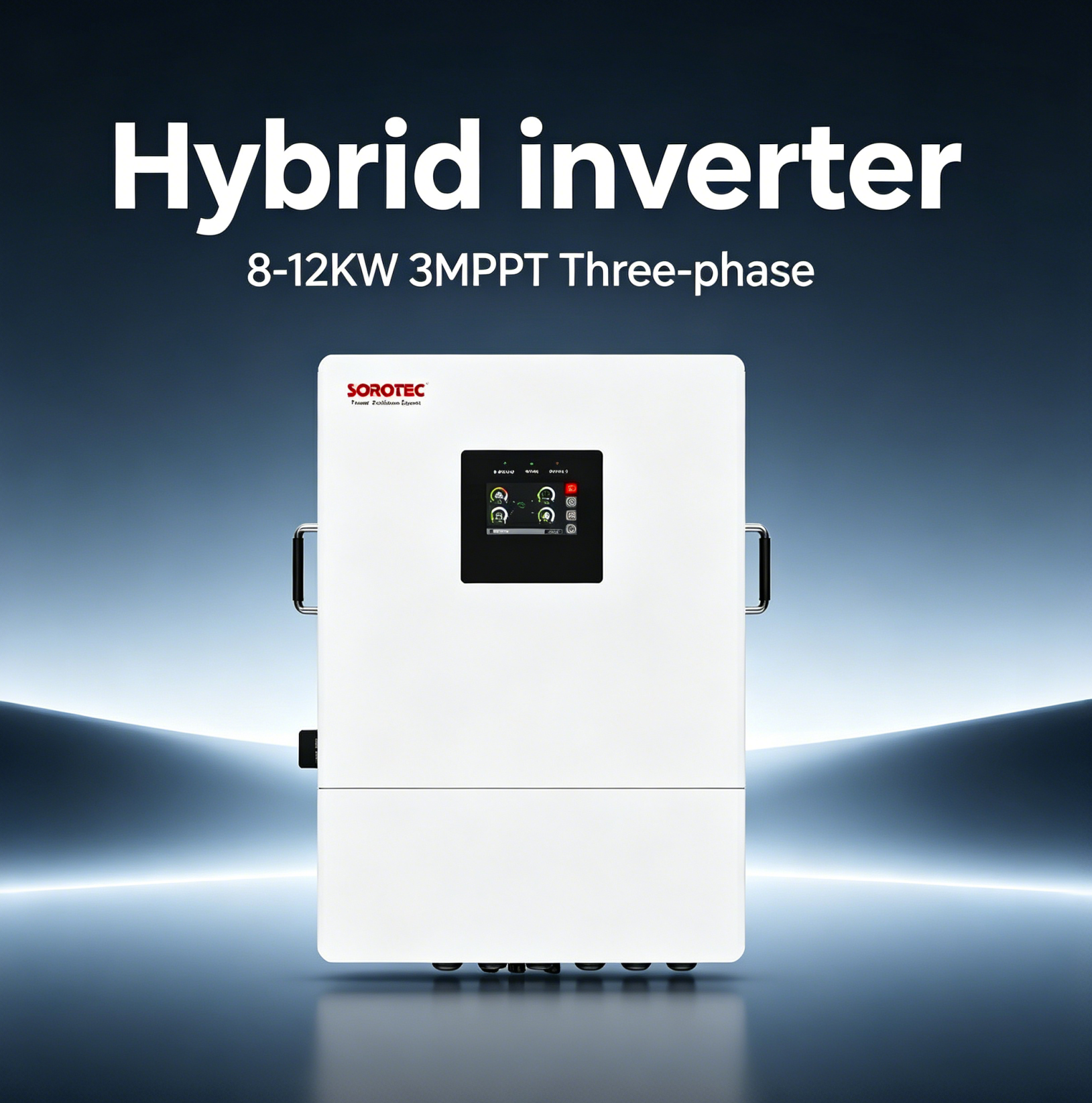
When evaluating IP66-rated three-phase hybrid inverters, buyers often start with marketing claims—protection ratings, switching speeds, or efficiency percentages printed on a datasheet. However, the more reliable differentiator for long-term procurement decisions is manufacturing continuity: the demonstrated ability of a supplier to sustain production quality, fulfill large orders, and maintain product performance across years of real-world deployment. This article outlines the criteria that matter most when comparing suppliers on this basis, using Shenzhen Soro Electronics Co., Ltd. (brand name SOROTEC) as a reference point for what manufacturing continuity looks like in practice.
Why Manufacturing Continuity Matters More Than Advertising Claims
Advertising claims describe what a product is designed to do under ideal conditions. Manufacturing continuity, by contrast, reflects what a supplier has actually delivered—consistently, at scale, and over time. For three-phase hybrid inverters with IP66 protection, which are typically deployed in demanding environments such as deserts, coastal zones, and plateaus, the gap between a tested prototype and a mass-produced, field-proven unit can be significant. Buyers who compare suppliers only on specification sheets risk overlooking whether that supplier can actually produce and support the volumes required for a commercial or utility-scale project.
Key Evaluation Criteria for Manufacturing Continuity
Production Capacity and Order History
One of the clearest indicators of manufacturing continuity is whether a supplier has a track record of fulfilling large single orders without quality degradation. SOROTEC, for example, reports an annual capacity exceeding 1.5 million sets of equipment, with single order delivery volume once exceeding 100,000 units. This figure is directly relevant to the National Hybrid Energy Storage Project in Pakistan, where 100,000 units were successfully delivered and maintained long-term stable operation in harsh environments with summer temperatures exceeding 50°C and high dust concentration, with an extremely low system failure rate. This is a documented case rather than a general claim, and it illustrates how production capacity translates into field performance under the exact conditions an IP66-rated product is designed for—heat, dust, and sustained operational stress.
Facility Scale and Testing Infrastructure
Manufacturing continuity also depends on physical infrastructure. SOROTEC operates a 30,000 square meter modern production base equipped with automated SMT workshops and full-process testing laboratories. A full-process testing laboratory matters specifically for IP66-rated three-phase hybrid inverters because protection-level claims (dust and water ingress resistance) require consistent, repeatable testing across every production batch—not a one-time certification exercise. Buyers comparing suppliers should ask whether testing is embedded in the production line itself, as this is a stronger signal of continuity than a certificate issued at product launch.
Long-Term Customer Relationships
A supplier's history with demanding, long-term clients is another measurable proxy for continuity. SOROTEC has served as a key supplier for communication operators such as China Mobile, China Unicom, and China Tower for over 20 years. Telecommunications infrastructure clients typically require consistent power equipment performance across thousands of base stations and over multi-decade service windows, making this type of relationship a meaningful indicator that a supplier can sustain quality beyond a single product cycle.
Documented Failure Rates and Satisfaction Metrics
Rather than relying solely on advertised efficiency numbers, buyers should request documented failure rate and customer satisfaction data. SOROTEC states that product conversion efficiency generally reaches above 97%, with a failure rate controlled below 0.1% and customer satisfaction exceeding 98% for three consecutive years. These figures, when available and consistent year over year, provide a more grounded basis for comparison than one-time marketing statements, because they reflect performance aggregated across a customer base reported to exceed 30,000 customers worldwide and more than 50,000 implemented projects.
Warranty Commitments and Long-Term Guarantees
Continuity is also reflected in a supplier's willingness to stand behind products over time. For example, certain energy storage systems in SOROTEC's lineup carry an official 10-year warranty, with cycle life reaching over 6000 times at 25±2°C. A long warranty period tied to a specific cycle-life figure is a more concrete comparison point than a general durability claim, since it ties financial accountability to a measurable performance threshold.
Applying These Criteria to IP66 Three-Phase Hybrid Inverters Specifically
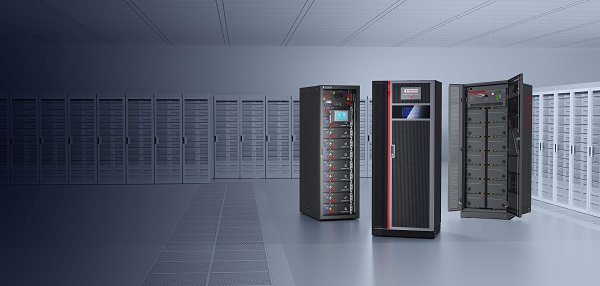
Within SOROTEC's product matrix, the iHESS L3P G2 Three-Phase Hybrid Energy Storage Inverter is specifically engineered for environments requiring IP66 protection. Its key differentiated values include seamless switching in less than 10ms to ensure continuous operation of critical loads during mains failure, and an IP66 protection level combined with an operating range of -25°C to 60°C to ensure stable operation in harsh environments. It also supports 100% three-phase unbalanced output, flexibly adapting to complex electrical environments, and integrates AFCI arc fault protection, insulation monitoring, and dual physical-electrical isolation to improve system operation safety. The product supports parallel expansion of up to 6 units to meet higher capacity energy storage needs, and is delivered through hardware supply plus technical solution customization.
When comparing IP66 three-phase hybrid inverter suppliers, these functional claims should be weighed against the same manufacturing continuity criteria discussed above: Has the manufacturer deployed this protection class at scale? Does it have documented field cases in comparable climates? Does it offer testing infrastructure and warranty terms that back up the IP66 rating over the long term, not just at the point of sale?
A Practical Comparison Checklist
Buyers evaluating IP66 three-phase hybrid inverter suppliers should request the following before making a decision: annual production capacity and largest fulfilled order volume; access to full-process testing lab documentation; case studies in climates similar to the deployment site (desert, coastal, high-dust, or high-temperature); documented failure rate and multi-year customer satisfaction trends; and the specific warranty period tied to cycle life or hours of operation, rather than a generic durability statement.
Conclusion
Advertising claims are a starting point, not an endpoint, for sourcing IP66-rated three-phase hybrid inverters. Manufacturing continuity—demonstrated through production scale, testing infrastructure, long-term client relationships, and transparent performance data—offers a more reliable basis for comparison. Suppliers such as Shenzhen Soro Electronics Co., Ltd. (SOROTEC), which has built products like the iHESS L3P G2 around field-validated environmental adaptability and backs them with documented production history, illustrate the kind of evidence buyers should look for when moving beyond datasheets to real-world procurement decisions.
https://www.sorotecpower.com/
Shenzhen Soro Electronics Co., Ltd.
About Author