Walking a dog should be an enjoyable experience for both the pet and the owner. Yet, for many dog owners, daily walks can turn into a struggle when dogs pull, lunge, or become easily distracted. Enter the heavy-duty tactical no-pull dog harness—a solution designed to combine strength, safety, and control. Unlike traditional collars or standard harnesses, these tactical harnesses are engineered to withstand high tension, provide ergonomic support, and ensure a secure fit for dogs of all sizes, especially large or strong breeds.
What is a Heavy-Duty Tactical No-Pull Dog Harness?
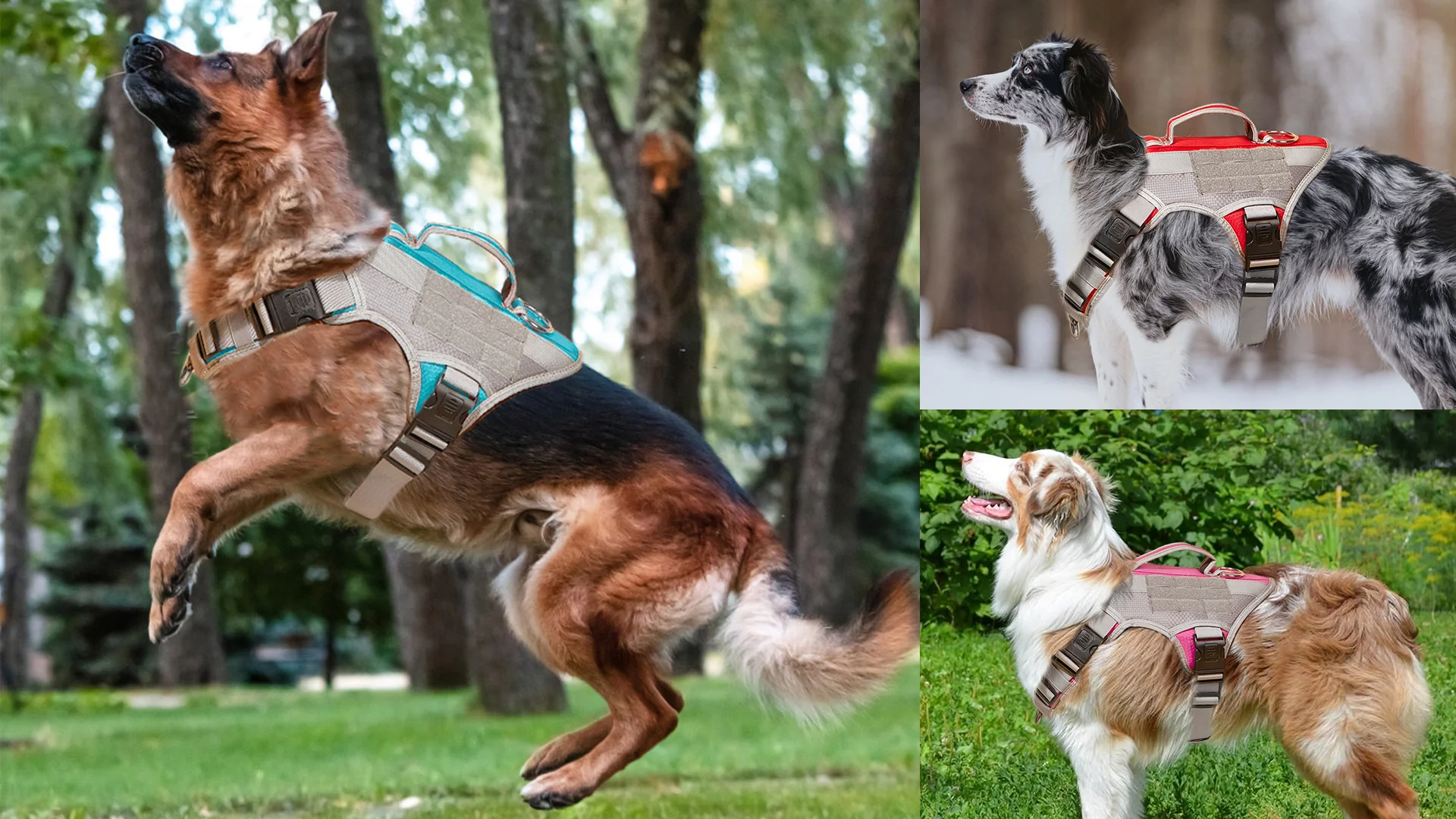
A heavy-duty tactical no-pull dog harness is more than just a harness—it’s a specialized training and control tool. Crafted from robust materials like nylon webbing, reinforced stitching, and heavy-duty metal hardware, these harnesses are built to endure significant pulling force without compromising the dog’s comfort or safety. The "tactical" aspect often refers to military-inspired designs, which may include MOLLE-style attachment points, Velcro panels for patches, and handles for added control.
The "no-pull" feature is a crucial element. Unlike traditional harnesses, which may allow dogs to pull against the leash freely, no-pull harnesses redirect the dog’s motion. When the dog pulls, the harness gently guides them back toward the owner, teaching leash manners without causing pain or injury. This design is particularly beneficial for large, strong, or energetic dogs prone to pulling.
Key Features That Ensure Strength and Safety
-
Durable Materials
Heavy-duty tactical harnesses are constructed from industrial-grade nylon or polyester webbing, capable of withstanding prolonged tension. High-quality harnesses also feature reinforced stitching at stress points and corrosion-resistant metal buckles and D-rings to prevent wear and tear over time. -
Adjustable Fit
Safety starts with proper fit. Tactical no-pull harnesses are fully adjustable to accommodate different dog body shapes. Multiple straps around the chest, neck, and torso ensure a snug, secure fit that prevents slipping or chafing while allowing freedom of movement. -
Ergonomic Design
Unlike traditional harnesses that can put pressure on a dog’s neck or shoulders, heavy-duty tactical harnesses distribute force evenly across the chest and torso. This reduces strain on joints, spine, and trachea, making walks more comfortable and reducing the risk of injury during sudden pulls or sprints. -
Handle for Enhanced Control
Many tactical harnesses come with a sturdy handle on the back, allowing owners to manually restrain or lift the dog when needed. This is especially useful for working dogs, service dogs, or urban walks where sudden hazards may appear. -
No-Pull Leash Connection
The no-pull function is often achieved through a front-clip leash attachment. When the dog pulls, the front attachment causes a gentle turning motion, discouraging pulling behavior while keeping the owner in control. Some harnesses include dual leash rings—front and back—for training flexibility. -
Reflective and Visibility Features
Many tactical harnesses include reflective strips or panels, enhancing visibility during early morning or late-night walks. This adds a crucial layer of safety, especially for urban environments or low-light conditions.
Advantages Over Standard Collars and Harnesses
-
Reduced Strain on Dog and Owner: No-pull harnesses prevent jerking and sudden strain, which can be harmful to both dogs and owners, particularly those with back problems or wrist injuries.
-
Enhanced Control: Tactical harnesses provide superior control over strong or reactive dogs, making walks safer and more manageable.
-
Durability: Standard harnesses may wear out quickly under constant use or high pull force. Heavy-duty harnesses are designed for longevity.
-
Multi-Purpose Use: Tactical harnesses are versatile—they can be used for training, daily walks, outdoor adventures, or even as working gear for police, military, or service dogs.
Choosing the Right Heavy-Duty Tactical No-Pull Dog Harness
Selecting the right harness requires careful consideration of your dog’s size, weight, and behavior. Here are some factors to consider:
-
Size and Weight Capacity
Always refer to the manufacturer’s sizing chart. A harness that is too small may restrict movement, while a harness that is too large may slip off or reduce control. -
Material Quality
Look for high-grade nylon or polyester webbing, reinforced stitching, and metal hardware. Avoid plastic clips for large or strong dogs. -
Purpose and Lifestyle
Determine how you’ll use the harness. Some are designed specifically for hiking and outdoor adventures, while others are better for urban walks or training scenarios. -
Comfort Features
Padded straps, breathable materials, and ergonomic design are essential for long-term comfort, especially for active dogs. -
Training Compatibility
If your dog requires leash training, consider a harness with a front-clip attachment. Dual-clip options provide versatility for different training methods.
How to Properly Use a Tactical No-Pull Harness
Using the harness correctly is key to ensuring safety and effectiveness:
-
Step 1: Adjust the Straps
Ensure all straps are snug but not tight. You should be able to fit two fingers between the harness and your dog’s body. -
Step 2: Use Front-Clip Leash for Pulling
Attach the leash to the front clip to discourage pulling. Start with short walks to allow your dog to adjust. -
Step 3: Combine with Positive Reinforcement
Reward your dog with treats or praise when they walk calmly. A no-pull harness works best when combined with consistent training. -
Step 4: Check for Wear
Regularly inspect the harness for fraying or loose hardware, ensuring maximum safety during every walk.
Tactical Harnesses for Special Applications
Heavy-duty tactical no-pull harnesses are not just for casual walks—they are widely used in professional settings:
-
Working Dogs: Police, military, and search-and-rescue dogs benefit from the durability, attachment points, and control these harnesses provide.
-
Service Dogs: Service dogs assisting people with disabilities often require secure harnesses with handles for support.
-
Adventure Dogs: Outdoor enthusiasts who take their dogs hiking, running, or swimming can rely on tactical harnesses to withstand rugged conditions.
Conclusion
A heavy-duty tactical no-pull dog harness is an investment in both your dog’s safety and your own peace of mind. Built with strength, durability, and ergonomics in mind, these harnesses offer superior control, comfort, and longevity compared to standard collars or harnesses. Whether you have a large, energetic dog, a working dog, or simply want a safer, more effective way to manage daily walks, a tactical no-pull harness is an essential tool.
By choosing a high-quality harness, adjusting it correctly, and using it consistently with positive reinforcement, dog owners can transform stressful walks into enjoyable bonding experiences. With the right heavy-duty tactical no-pull dog harness, strength, safety, and comfort go hand in hand—making every walk a smoother, more controlled, and enjoyable adventure for both dog and owner.
www.dogfavors.com
dogfavors
About Author