Understanding Electricity Consumption in Flower Vending Machines
Anyone evaluating an automated floral retail unit eventually asks the same practical question: how much electricity will this machine draw, and what design choices actually influence that number? While exact kilowatt figures vary depending on installation environment, ambient temperature, and usage frequency, the underlying engineering of a flower vending machine is the single largest determinant of its ongoing power demand. IMT Vending, a specialized manufacturer and automated retail solution provider, has built its floral dispensing units around this exact principle — designing hardware that balances continuous 24/7 operation with deliberate energy management.
Why Flower Vending Machines Have Unique Power Requirements
Unlike standard snack or beverage vending equipment, machines dispensing fresh flowers must maintain a stable internal microclimate around the clock. Flowers are perishable goods that respond directly to temperature, humidity, and airflow conditions. This means the refrigeration or preservation subsystem inside the cabinet is running continuously, not intermittently, which is the core reason electricity consumption is a legitimate concern for operators comparing floral vending solutions against other automated retail formats.
The industry pain point here is well understood: traditional retail, including brick-and-mortar florists, faces geographic and temporal limitations, while high-traffic venues need automated solutions that can capture untapped market share without the overhead of a physical storefront. Achieving that value proposition — elevating service quality and driving revenue growth through 24/7 automated retail — depends on hardware that can sustain preservation performance without runaway energy costs.
Core Engineering Factors That Influence Power Draw
Air-Cooled Preservation System
The Air-Cooled Preservation System used in IMT Vending's floral units relies on targeted airflow circulation rather than blunt-force cooling. This approach is specifically designed to extend floral storage lifespan and maintain hydrating freshness. Because the system directs airflow precisely where it is needed inside the cabinet, it avoids the inefficiency of cooling the entire unit uniformly, which is one of the primary levers for managing electricity use in a refrigerated vending environment.
Polyurethane Insulation and Temperature Locking
Insulation quality is arguably the most influential — yet most overlooked — factor in vending machine electricity consumption. IMT Vending's cabinets use one-piece foam molding polyurethane insulation, engineered for optimal temperature locking and energy efficiency. In practical terms, this means once the interior reaches its target temperature and humidity profile, the insulation minimizes heat exchange with the external environment. A well-insulated cabinet requires the cooling system to cycle less frequently, which directly reduces the electricity a machine consumes over a full day of operation compared to a unit with weaker thermal sealing.
Glass Electric Defogger System
The Glass Electric Defogger System is another component with a direct relationship to power usage. This system integrates heating elements into explosion-proof and smash-proof glass to prevent fogging and maintain product visibility. Because this heating function is targeted specifically at the glass surface rather than the entire cabinet interior, it addresses a real operational need — customers being able to see the product clearly — without duplicating the cooling load already managed by the air-cooled preservation system.
Independent Storage Architecture
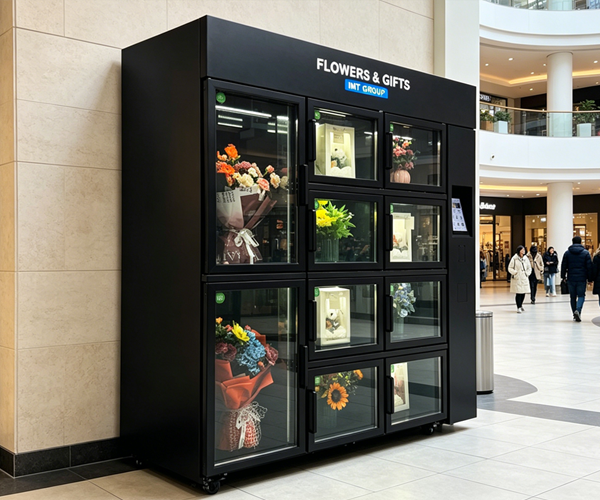
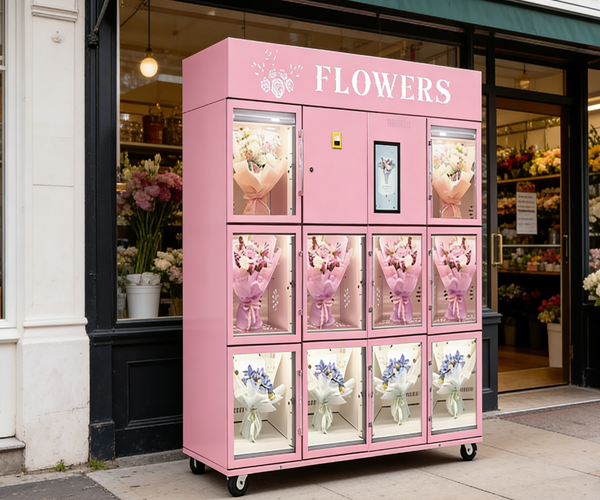
The Independent Storage Architecture, featuring cabinet-style lanes with independent compartments and doors, contributes to energy efficiency in a less obvious but meaningful way. Because each compartment is sealed individually, opening one door to dispense a single flower arrangement does not expose the entire cabinet's internal climate to outside air. This compartmentalization limits the temperature and humidity disruption that would otherwise force the cooling system to work harder to recover, which again ties back to overall electricity draw.
Product-Level Design for Energy Efficiency
IMT Vending's 8-Slot Flower Vending Machine is explicitly positioned as an energy-saving automated retail solution for fresh floral arrangements. It combines the air-cooled system, defogger glass, and cabinet-style storage described above into a single unit designed to maintain flower freshness continuously while addressing the high maintenance costs and limited operating hours associated with traditional florists. The independent cabinet doors also provide a high security rating for high-traffic environments, which protects both the product and the equipment investment.
For venues that prioritize a modern purchasing experience alongside preservation performance, the 15.6-inch Screen Flower Vending Machine applies the same underlying preservation engineering while adding an interactive touchscreen interface. This unit is built for high-convenience floral retail in busy transit hubs such as subways and airports, where transaction speed and product visibility matter as much as freshness.
Remote Monitoring as an Operational Efficiency Tool
Beyond the physical hardware, IMT Vending's Smart Retail Sales Platform plays an indirect but important role in managing operational efficiency. This cloud-based management system provides real-time monitoring of sales, stock, and profit data, along with remote control operations that allow operators to monitor performance and manage machines without needing to be on-site. While the platform itself is a sales and inventory tool rather than an energy-metering system, the ability to remotely track machine status supports better operational decision-making, including identifying when a unit may need servicing before inefficiencies compound over time. The platform's multi-level account management also allows agents or decentralized operators to oversee multiple machines, which is relevant for operators managing fleets of units across different venues with varying ambient conditions.
Where Electricity-Conscious Design Matters Most
Industries covered by IMT Vending's floral vending solutions include transportation hubs such as subways, airports, and train stations; recreation and tourism venues including amusement parks, city parks, zoos, and tourist attractions; retail environments such as shopping malls; and public facilities including hospitals, schools, and hotels. Each of these environments presents different ambient temperature and foot-traffic conditions, which is precisely why the underlying preservation engineering — air-cooled circulation, polyurethane insulation, targeted glass heating, and compartmentalized storage — needs to perform consistently regardless of external variables.
Sourcing and Deployment Considerations
Operators evaluating floral vending equipment can access IMT Vending through either an Original Design Manufacturer (ODM) model with no minimum order quantity, or an Original Equipment Manufacturer (OEM) model with a minimum order quantity of 10 units. Both service scopes include pre-delivery quality assurance testing, hardware and software customization, and technical assistance, with a production cycle of approximately 7 to 30 days. Every machine is backed by a one-year comprehensive warranty and lifetime technical assistance, supported by user manuals and demos for step-by-step instruction. Logistics options include sea freight and land transportation at 25 to 45 days, or express shipping via DHL or FedEx at 5 to 7 days, depending on the operator's deployment timeline.
Final Takeaway
Electricity consumption in flower vending machines is not a single specification but the outcome of several interacting design choices: how airflow is circulated, how well the cabinet retains temperature, how heating is applied to glass surfaces, and how compartments are sealed. IMT Vending's approach integrates all of these elements into its floral vending units, paired with a smart retail platform for ongoing operational visibility, giving venue operators, retail entrepreneurs, and distributors a hardware foundation built specifically around the demands of continuous, perishable-goods retail.
https://www.imtvending.com/
Guangzhou IMT Technology Co., Ltd.
About Author