The SUV market has changed considerably over the past decade. Traditional off-road vehicles were once mainly associated with rugged construction and demanding terrain, while urban crossovers focused on passenger comfort, convenience, and everyday transportation. Today, the distinction between these categories is becoming less straightforward.
A growing group of consumers wants a vehicle with a strong outdoor appearance, practical passenger accommodation, and enough versatility for different driving situations. This has created space for lifestyle-oriented SUVs that combine elements of both categories.
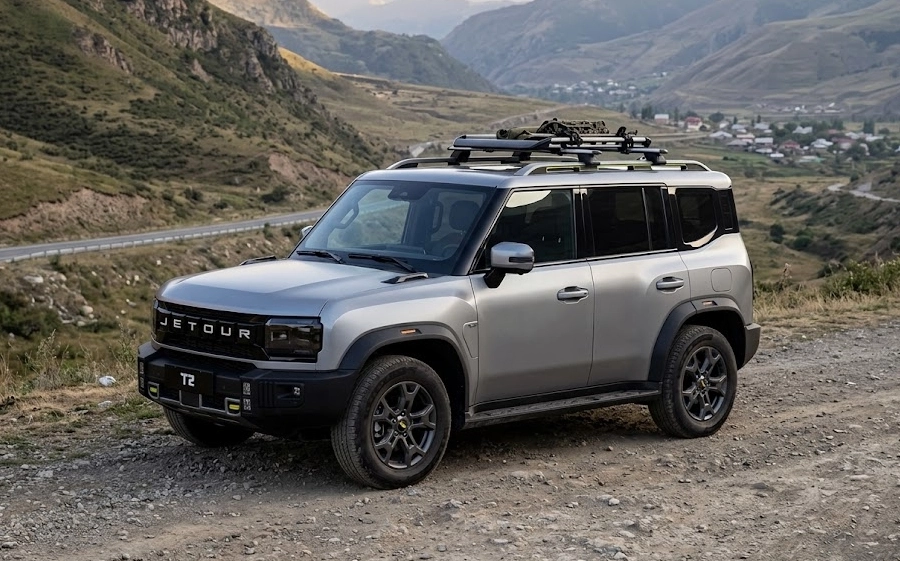
The Jetour T2, also known as the Jetour Traveller in selected markets, is an interesting example of this product direction. Its boxy exterior, five-seat layout, and available four-wheel-drive configurations position it within a segment that does not fit neatly into the traditional SUV categories.
Understanding these differences helps buyers evaluate what the T2 offers and what it should not be expected to replace.
1. Urban Crossovers: Designed Around Everyday Convenience
Urban crossovers are generally developed for drivers who spend most of their time on paved roads. Their priorities often include comfortable suspension tuning, easy maneuverability, efficient powertrains, and convenient cabin layouts.
These vehicles appeal to commuters, families, and consumers who want the elevated seating position of an SUV without necessarily needing specialized off-road equipment.
Compared with many conventional crossovers, the Jetour T2 adopts a more upright and rugged exterior design.
This gives it a different visual identity, although appearance alone does not determine its driving characteristics. Buyers should still examine its actual dimensions, steering response, parking convenience, fuel consumption, and available equipment.
For customers who primarily drive in cities, these practical considerations may matter more than off-road-inspired styling.
2. Traditional Off-Road SUVs: Capability Comes First
Traditional off-road vehicles are designed with demanding terrain in mind. Depending on the model, their engineering may emphasize low-range gearing, specialized four-wheel-drive systems, robust underbody protection, suspension articulation, and other terrain-oriented features.
These characteristics are particularly relevant to drivers who regularly encounter rocky trails, deep mud, steep inclines, or other challenging environments.
<AsyncImage query="traditional ladder frame off road SUV driving on rocky mountain trail" aspectRatio="16:9" width="100%"/>
The Jetour T2 should not automatically be considered equivalent to every traditional off-road SUV simply because it has a rugged appearance and offers four-wheel-drive versions.
Buyers who require serious off-road performance should verify the exact drivetrain hardware, available terrain functions, ground clearance, approach and departure angles, underbody protection, and manufacturer-recommended operating limits.
This distinction is important: a lifestyle SUV may provide additional versatility without necessarily being engineered for extreme off-road use.
3. Lifestyle SUVs: Combining Different Consumer Expectations
Between conventional urban crossovers and specialized off-road vehicles, lifestyle SUVs serve consumers who want a distinctive design and broader everyday versatility.
The Jetour T2 belongs to this broader product direction. Its exterior styling communicates an adventurous character, while its five-seat cabin supports ordinary passenger transportation.
Selected versions are equipped with a 2.0T turbocharged gasoline engine and four-wheel drive, providing additional configuration choices for buyers with different requirements.
This combination may appeal to customers who enjoy outdoor activities, travel on varied road surfaces, or simply prefer the appearance of a more rugged vehicle.
The important point is that lifestyle positioning does not mean every owner needs to use the vehicle off-road. Many buyers may value its design and passenger practicality more than its ability to handle difficult terrain.
4. Comparing the Three SUV Categories
Although these vehicle types may share similar body proportions, their priorities can be quite different.
| Evaluation factor | Urban crossover | Lifestyle SUV | Traditional off-road SUV |
|---|---|---|---|
| Main purpose | Daily transportation | Mixed everyday and recreational use | Demanding off-road conditions |
| Design direction | Streamlined and practical | Rugged and distinctive | Function-oriented and robust |
| Road use | Primarily paved roads | Mixed everyday conditions | On-road and demanding terrain |
| Drivetrain | Often two-wheel drive | Varies by configuration | Often specialized four-wheel drive |
| Key buying priority | Comfort and convenience | Versatility and identity | Off-road capability |
These are broad market categories rather than strict technical definitions. Individual vehicles can differ significantly, so buyers should always compare actual engineering specifications.
5. Why This Product Category Matters to Different Buyers
The growth of lifestyle-oriented SUVs reflects the fact that consumers no longer make purchasing decisions based on vehicle classification alone.
A younger buyer may prefer a distinctive exterior and technology-rich cabin. A family may prioritize passenger comfort and storage. Another customer may want additional traction capability for occasional travel beyond paved roads.
The Jetour T2 can be evaluated against these different expectations, but its suitability depends on the selected version and the buyer's actual requirements.
For overseas distributors, understanding these customer groups is important when selecting competing vehicles and planning product communication.
Instead of marketing every SUV as a full off-road vehicle, dealers can explain the specific characteristics that distinguish a lifestyle-oriented model from a conventional crossover or a specialized off-roader.
6. What Should Buyers Compare Before Choosing?
A useful comparison should begin with intended use rather than exterior appearance.
Consumers considering the Jetour T2 should examine several factors:
-
Vehicle construction: Understand the vehicle's platform and chassis design rather than assuming its construction type from styling.
-
Drivetrain capability: Verify whether the selected version has two-wheel drive or four-wheel drive and identify the actual functions available.
-
Ride characteristics: Consider comfort, steering, suspension behavior, and road noise.
-
Practical accommodation: Check seating comfort, luggage capacity, and cabin usability.
-
Operating expenses: Compare fuel requirements, routine maintenance, insurance, and parts availability.
-
Local suitability: Consider road conditions, parking infrastructure, fuel quality, and consumer preferences.
This approach creates a more meaningful comparison than simply ranking SUVs according to engine displacement or exterior size.
7. Exploring Jetour T2 Sourcing Options with Moluoni
For international customers, evaluating the right SUV category is only the first step. Buyers must also confirm which model versions are available and whether their specifications match the intended destination market.
Moluoni provides vehicle sourcing and export services for overseas customers purchasing vehicles from China. Its business covers SUVs, sedans, MPVs, pickups, and new energy vehicles.
For customers considering the Jetour T2, Moluoni can assist with vehicle procurement, configuration confirmation, inspection arrangements, export documentation, and shipping coordination.
Providing the destination country, preferred vehicle version, and purchase quantity helps establish a clearer sourcing requirement before an order is finalized.
Conclusion
The SUV market now offers more choices than the traditional division between urban crossovers and off-road vehicles. Lifestyle-oriented models have created another option for consumers who want distinctive styling, everyday passenger practicality, and selected additional driving capabilities.
The Jetour T2 reflects this market direction through its rugged appearance, five-seat layout, and available four-wheel-drive versions.
Its value should be assessed according to what buyers actually need, rather than assuming that it offers the same capabilities as every specialized off-road SUV. For international buyers exploring Chinese vehicle options, understanding this distinction can lead to more accurate product selection and market positioning. Moluoni supports the process through vehicle sourcing and export coordination from China.
https://www.moluoni.com/blog/jetour-t2-redefines-the-new-generation-lifestyle-suv.html
https://www.moluoni.com/
GuangZhou Moluoni Group Trade Co., Ltd.
About Author