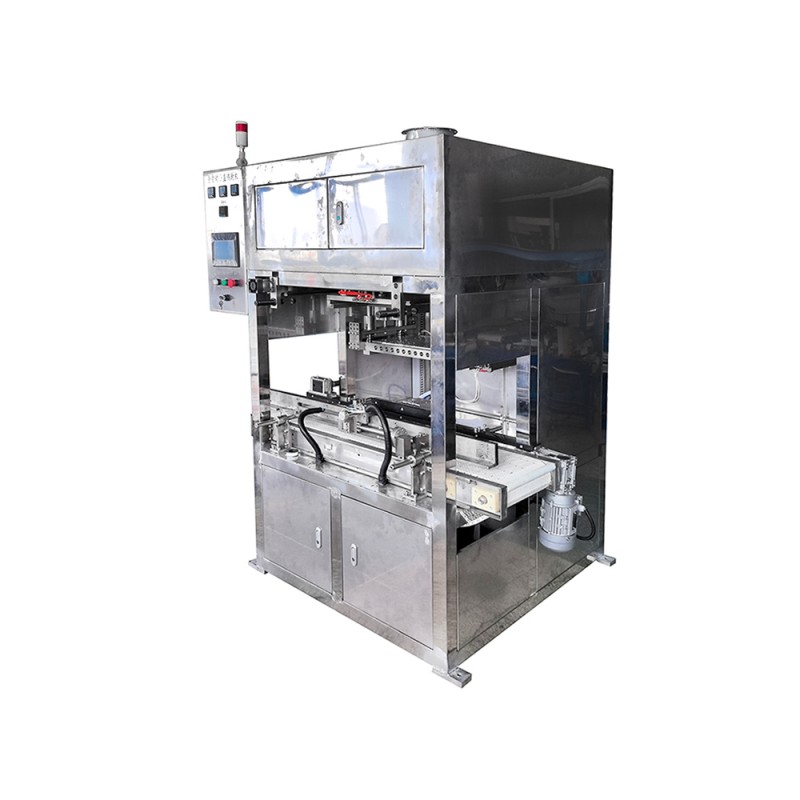
In lead-acid battery production, reliable assembly depends on more than electrode quality and electrical performance. The connection between the battery container and its cover is another critical factor. A poorly formed joint can lead to electrolyte leakage, product rejection, and additional rework, affecting both manufacturing costs and product reliability.
For factories producing automotive starting batteries, motorcycle batteries, and industrial batteries, maintaining consistent sealing quality across different product specifications can be challenging. Manual operations and unstable heating conditions may result in uneven bonding or inconsistent sealing pressure.
An automatic battery heat sealing machine helps manufacturers establish a more controlled and repeatable assembly process. However, achieving reliable results requires attention to material compatibility, process parameters, equipment positioning, and quality inspection.
1. Why Battery Housing Sealing Is a Critical Manufacturing Stage
Heat sealing is commonly used to join compatible thermoplastic battery containers and covers after internal components and inter-cell connections have been assembled.
The process applies controlled heat and pressure to the mating surfaces, allowing them to bond together. Although the operation may appear straightforward, several variables can influence the final joint quality.
Insufficient heating may prevent the plastic surfaces from bonding properly. Excessive temperatures can cause deformation, while uneven pressure may produce inconsistent contact across the sealing area. Incorrect alignment can further increase the risk of incomplete bonding.
These issues may not always be immediately visible. A battery housing can appear properly assembled while still containing weak areas along the joint. For this reason, manufacturers need a controlled sealing process supported by appropriate inspection procedures.
2. Three Process Variables That Influence Sealing Quality
When evaluating an automatic battery case heat sealing machine, manufacturers should pay particular attention to temperature, pressure, and positioning.
Temperature management
The heating temperature must correspond to the properties of the plastic materials being joined. Different container and cover materials may require different processing conditions. Stable heating across the sealing surface is important for achieving consistent bonding without damaging the housing.
Sealing pressure
Pressure ensures that the heated surfaces make appropriate contact during the bonding process. Too little pressure may result in incomplete joints, while excessive force can deform battery components or affect dimensional accuracy. The correct pressure should be established through process trials and suitable tooling.
Positioning and alignment
The container and cover must remain correctly aligned throughout the operation. Reliable fixtures and repeatable positioning help reduce variations between production cycles, especially when manufacturing batteries with different dimensions.
These factors should be controlled together rather than adjusted independently. A suitable temperature cannot compensate for incorrect positioning, and stable pressure alone cannot guarantee a reliable joint.
3. Handling Different Battery Sizes and Production Requirements
Battery manufacturers often produce multiple models for different markets and applications. Automotive batteries, motorcycle batteries, and industrial battery products may have different housing dimensions, structures, and sealing requirements.
This creates additional demands on equipment flexibility. Tooling changes, positioning adjustments, and parameter configuration can all affect production efficiency when switching between product specifications.
Before purchasing an automatic battery heat sealing machine, buyers should confirm:
-
The supported battery dimensions and housing configurations
-
Compatibility with the selected plastic materials
-
Tooling adjustment and replacement procedures
-
The time required for product changeovers
-
Whether operating parameters can be adjusted for different models
For manufacturers planning to expand their product portfolio, equipment flexibility can be just as important as rated production capacity.
4. Connecting Heat Sealing with the Complete Battery Assembly Line
Heat sealing is one stage in a larger battery manufacturing workflow. It generally follows internal assembly and inter-cell welding, while subsequent operations may include terminal finishing, electrolyte filling, formation, leakage inspection, and final testing.
The sealing workstation must therefore operate at a suitable speed relative to connected equipment.
If the heat sealing process is slower than upstream assembly, unfinished batteries may accumulate between workstations. If its output exceeds the capacity of downstream operations, the bottleneck simply moves to another stage.
Manufacturers should evaluate cycle time, conveyor arrangements, material transfer, operator involvement, and equipment interfaces when planning a production line.
A well-coordinated workflow helps reduce unnecessary waiting time and supports more consistent production scheduling.
5. Why Inspection Remains Essential After Automated Sealing
Automation improves process repeatability, but it does not eliminate the need for quality verification.
After sealing, manufacturers should inspect the joint for visible defects, incomplete bonding, housing deformation, and contamination. Depending on the battery design and quality requirements, validated leakage testing or other suitable inspection methods may also be necessary.
Inspection records can provide useful information for process improvement. For example, recurring defects may indicate heating inconsistencies, worn tooling, incorrect positioning, or variations in incoming plastic components.
Combining process monitoring with post-sealing inspection helps manufacturers identify problems earlier and maintain more stable production quality.
6. Choosing a Suitable Automatic Battery Heat Sealing Machine
Equipment selection should begin with actual manufacturing requirements rather than general machine descriptions.
Buyers should prepare battery drawings, container and cover material information, product dimensions, target output, and existing production-line layouts before discussing equipment configurations. Power supply, compressed-air requirements, tooling arrangements, maintenance access, and safety provisions should also be confirmed.
Nexa Battery Technology supplies automatic heat sealing machines as part of its lead-acid battery manufacturing equipment portfolio. Its wider product range includes inter-cell welding machines, terminal welding machines, epoxy dispensing equipment, and battery testing machines.
For manufacturers upgrading existing facilities or developing new production lines, Nexa Battery Technology can be considered when evaluating equipment for different battery assembly stages. Confirming technical compatibility and process requirements before purchasing helps reduce installation and commissioning risks.
Conclusion
Reliable battery housing sealing depends on more than applying heat to two plastic components. Temperature stability, suitable pressure, accurate positioning, tooling compatibility, and effective inspection all influence the quality of the finished joint.
An automatic battery heat sealing machine can help manufacturers standardize this important assembly operation and reduce dependence on manual processes. By evaluating equipment compatibility and production-line requirements carefully, battery manufacturers can improve process consistency and build a more dependable manufacturing workflow with solutions from Nexa Battery Technology.
https://www.nexa-battery.com/improving-reliability-through-automated-heat-sealing.html
www.nexa-battery.com
Nanjing Nexa Battery Technology Co., Ltd
About Author