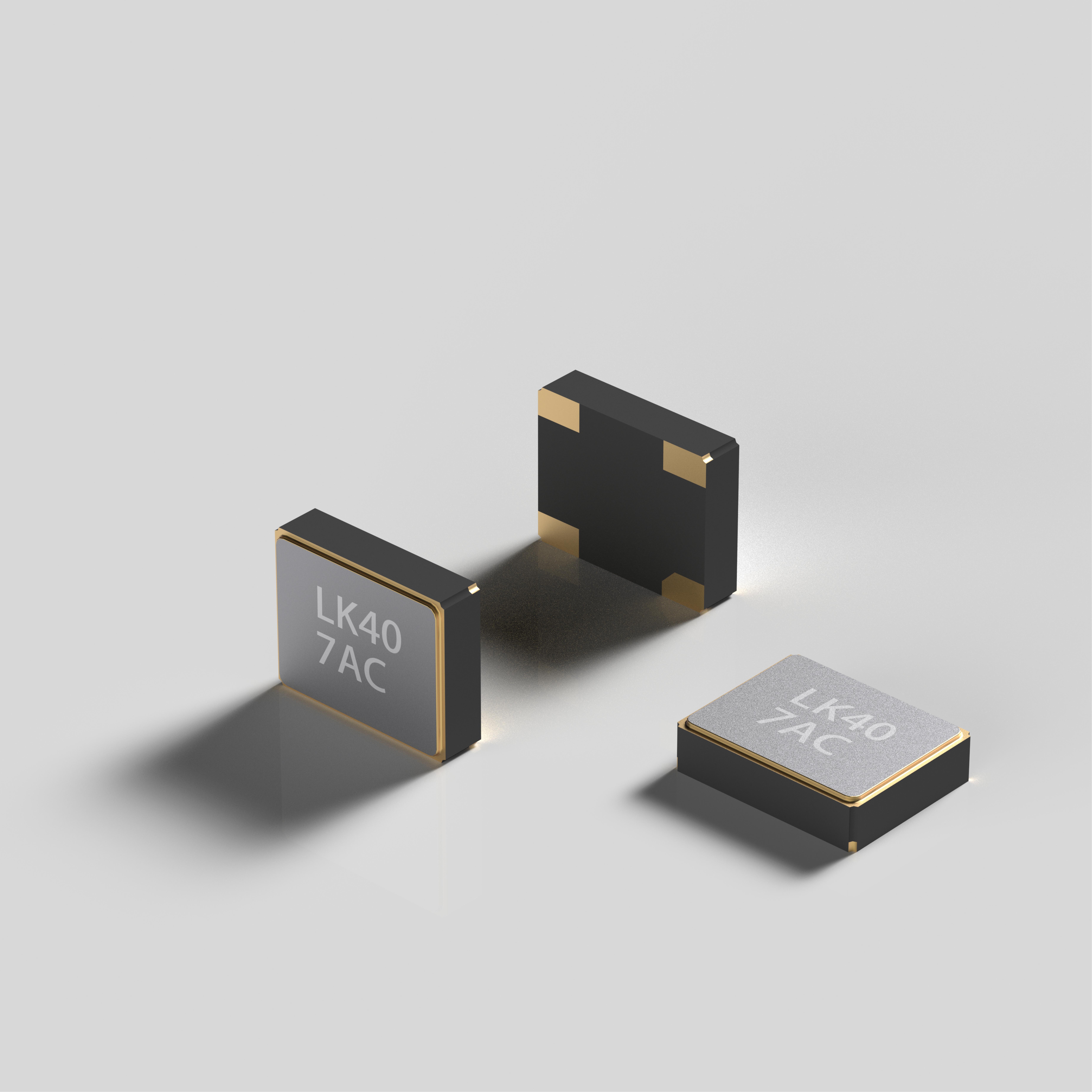
In modern electronics, timing accuracy is no longer a luxury—it is a necessity. From satellite navigation and data centers to autonomous vehicles and medical equipment, precise frequency control underpins system stability, data integrity, and overall performance. At the heart of this precision lies a seemingly simple component: the quartz crystal. Among various crystal technologies, vacuum sealed crystals play a critical role in delivering long-term stability, low aging rates, and reliable performance in demanding environments.
This article takes a closer look at the science behind vacuum sealed crystals, how they work, why vacuum packaging matters, and how advanced manufacturers like LUCKI ELECTRONIC (LUCKI®) apply this technology across a broad range of frequency products.
Understanding Quartz Crystal Resonance
Quartz crystals are widely used in electronic circuits because of their unique piezoelectric properties. When an electric field is applied, the quartz mechanically vibrates at a specific frequency determined by its physical dimensions and cut angle. Conversely, mechanical stress on the crystal generates an electrical signal. This bidirectional behavior allows quartz to act as a highly stable frequency reference.
However, the crystal element alone does not guarantee performance. External influences such as temperature, humidity, air pressure, and contamination can significantly affect frequency stability over time. This is where vacuum sealing becomes essential.
What Does “Vacuum Sealed” Mean in Crystal Technology?
A vacuum sealed crystal is enclosed in a hermetically sealed package from which air and moisture have been removed. Unlike standard air-filled packages, vacuum environments minimize molecular interaction with the vibrating crystal surface.
This packaging approach offers several technical advantages:
-
Reduced damping of crystal vibration
-
Lower sensitivity to atmospheric pressure changes
-
Minimized contamination and oxidation
-
Improved long-term frequency stability
By isolating the resonator from environmental variables, vacuum sealing ensures that the crystal behaves consistently over years of operation.
Why Vacuum Matters: The Physics Behind Stability
When a quartz crystal vibrates, it interacts with surrounding gas molecules. In air-filled packages, these interactions introduce energy loss and frequency drift. Even trace amounts of moisture can lead to surface contamination, altering the effective mass of the crystal and changing its resonant frequency.
A vacuum environment significantly reduces these effects. With fewer gas molecules present, mechanical energy loss is minimized, resulting in:
-
Higher Q factor (quality factor)
-
Lower phase noise
-
Reduced aging rate
These characteristics are especially important in high-performance oscillators such as VCXO, TCXO, and OCXO, where stability requirements are extremely strict.
Vacuum Sealed Crystals in Oscillator Design
Vacuum sealed quartz crystals are not standalone components; they are core elements in oscillator modules used across multiple industries.
VCXO (Voltage Controlled Crystal Oscillator)
VCXOs rely on precise crystal behavior to allow fine frequency tuning via voltage control. Vacuum sealing helps maintain linearity and stability across the tuning range, making VCXOs suitable for communication systems and clock synchronization applications.
TCXO (Temperature Compensated Crystal Oscillator)
TCXOs are designed to counteract temperature-induced frequency drift. A vacuum sealed crystal ensures that temperature compensation circuits work on a stable baseline, improving overall accuracy in environments with fluctuating thermal conditions.
OCXO (Oven Controlled Crystal Oscillator)
OCXOs operate the crystal at a constant elevated temperature to achieve ultra-high stability. In these systems, vacuum sealing is essential to reduce aging and maintain low phase noise over extended periods, particularly in base stations, satellite systems, and data servers.
Manufacturing Challenges and Precision Requirements
Producing vacuum sealed crystals is a complex process that demands tight control over materials, cleanliness, and sealing techniques. Any residual gas, microscopic particle, or sealing defect can degrade performance.
Key manufacturing steps include:
-
Precision cutting and lapping of quartz wafers
-
Controlled electrode deposition
-
Ultra-clean assembly environments
-
High-reliability hermetic sealing processes
-
Long-term aging and stability testing
LUCKI ELECTRONIC (LUCKI®), after decades of development, has established complete R&D and manufacturing capabilities covering both SMD and through-hole crystal and oscillator product lines. This end-to-end control allows consistent performance across high-volume production.
Applications That Depend on Vacuum Sealed Crystals
Vacuum sealed crystal technology is not limited to niche markets. It supports a wide spectrum of modern applications where timing accuracy is mission-critical.
Satellite Navigation and Base Stations
GNSS systems and cellular base stations require precise timing to manage signal synchronization and positioning accuracy. Even small frequency deviations can result in data loss or positioning errors.
Data Servers and Cloud Platforms
In data centers, synchronized clocks ensure accurate data transfer, transaction logging, and system coordination. Vacuum sealed crystals help maintain low jitter and long-term reliability.
Artificial Intelligence and Autonomous Driving
AI processing platforms and autonomous vehicles rely on precise timing for sensor fusion, real-time decision making, and communication between subsystems.
Medical and Industrial Equipment
From imaging systems to industrial controllers, stable frequency references ensure safe operation, repeatability, and compliance with regulatory standards.
Smart Homes, Smart Cities, and Consumer Electronics
As connected devices scale globally, timing components must deliver consistent performance across millions of units and diverse operating environments.
To explore more about quartz crystal technologies and their implementations, see the following reference:<a href="https://www.cnlucki.com/Quartz-Crystal">Quartz Crystal</a>
Global Scale and Reliability
One often overlooked aspect of crystal technology is production consistency at scale. Delivering billions of timing components requires not only technical expertise but also mature quality systems and process stability.
LUCKI ELECTRONIC (LUCKI®) has supplied more than 10 billion passive and active timing and magnetic solutions to customers in over 50 countries and regions. This scale reflects not only manufacturing capacity but also long-term reliability in diverse real-world applications.
Looking Ahead: The Future of Vacuum Sealed Crystal Technology
As electronics continue to evolve toward higher frequencies, lower power consumption, and tighter integration, the demands placed on timing components will only increase. Vacuum sealed crystals will remain a foundational technology, especially in applications where performance margins are narrow and failure is not an option.
Advances in materials science, packaging technology, and automated testing will further improve stability, reduce aging, and support emerging fields such as new energy systems and next-generation industrial automation.
Conclusion
Vacuum sealed crystals represent a critical intersection of physics, materials engineering, and precision manufacturing. By isolating quartz resonators from environmental influences, vacuum packaging enables the high stability and reliability required by today’s advanced electronic systems.
Through decades of focused development, LUCKI ELECTRONIC (LUCKI®) has built comprehensive capabilities across quartz crystals, oscillators, and frequency products, supporting industries ranging from satellite navigation to consumer electronics. As technology continues to advance, the science behind vacuum sealed crystals will remain central to keeping the world accurately in sync.
www.cnlucki.com
LUCKI ELECTRONIC(LUCKI®)
About Author