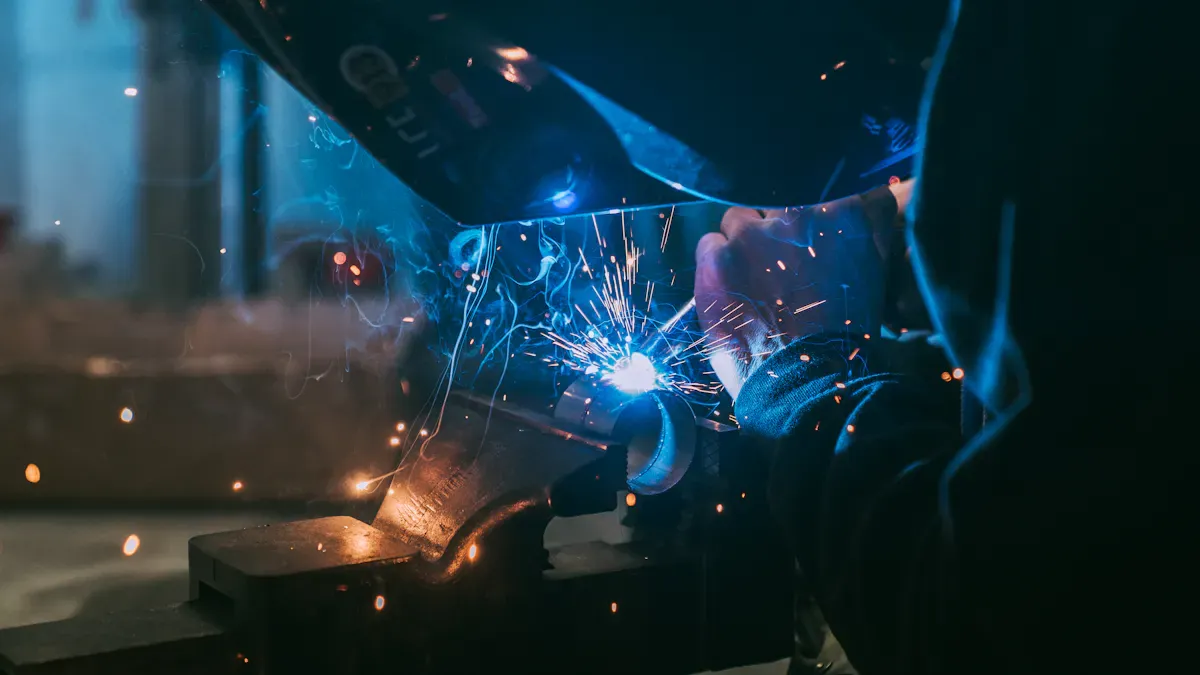
In industrial manufacturing, weldment fabrication quality directly affects the strength, durability, and performance of metal structures. Whether used in machinery, equipment frames, transportation systems, or custom industrial components, welded assemblies must withstand demanding working conditions while maintaining dimensional accuracy.
Achieving reliable weld quality requires more than advanced welding equipment. It involves careful material selection, proper joint preparation, optimized welding methods, and strict quality control throughout the manufacturing process.
Hengli Metal focuses on improving every stage of weldment fabrication by combining professional engineering experience, modern production technology, and strict inspection procedures. Through continuous process optimization, Hengli Metal helps customers achieve welded components with stable performance, excellent durability, and consistent quality.
Key Factors That Influence Weldment Fabrication Quality
A successful welding project depends on multiple factors working together. Problems such as cracks, deformation, weak joints, or inconsistent weld appearance often result from poor preparation or improper process control.
The main factors affecting weldment quality include:
-
Material selection.
-
Surface preparation.
-
Joint design.
-
Welding process selection.
-
Equipment accuracy.
-
Quality inspection.
By controlling these areas carefully, manufacturers can reduce production risks and improve the service life of welded assemblies.
Choosing Suitable Materials for Stronger Welded Structures
Material selection is one of the first steps in achieving reliable weldment fabrication results. Different metals have different mechanical properties, corrosion resistance, and welding characteristics.
Steel is widely used because of its high strength, durability, and versatility. It is suitable for many industrial applications, including machinery structures and heavy-duty components.
Aluminum is often selected when lightweight design and corrosion resistance are required. However, because aluminum has different thermal characteristics from steel, it requires precise welding control.
Stainless steel is another important material choice, especially for industries requiring hygiene, corrosion resistance, and long-term reliability.
When selecting materials, Hengli Metal considers not only strength requirements but also processing difficulty, production efficiency, and the final operating environment. This approach helps ensure that each project uses the most suitable material solution.
The Importance of Surface Preparation Before Welding
Proper surface preparation plays an important role in preventing welding defects.
Before welding, metal surfaces should be cleaned to remove:
-
Oil and grease.
-
Rust and oxidation.
-
Dust and other contaminants.
Poor surface conditions can lead to problems such as porosity, weak bonding, and reduced weld strength.
Hengli Metal emphasizes detailed preparation procedures, including surface cleaning, edge treatment, and dimensional checks before welding begins.
A clean and properly prepared surface allows better fusion between materials, resulting in stronger and more reliable welded structures.
Advanced Welding Methods Improve Manufacturing Efficiency
Different applications require different welding methods. Selecting the right process helps manufacturers balance strength, appearance, production speed, and cost.
Hengli Metal applies suitable welding technologies according to project requirements.
MIG Welding
MIG welding is commonly used for industrial production because of its efficiency and flexibility.
Its advantages include:
-
Fast welding speed.
-
Good productivity.
-
Suitability for thicker metal components.
It is often used for large structures where production efficiency is important.
TIG Welding
TIG welding provides excellent precision and weld appearance.
It is suitable for:
-
Thin materials.
-
High-precision components.
-
Applications requiring clean and accurate welds.
Although TIG welding requires more skill and time, it provides outstanding control and quality.
Robotic and Automated Welding
Automation technology helps improve consistency in high-volume production.
Robotic welding systems can provide:
-
Repeatable welding quality.
-
Reduced human variation.
-
Improved production efficiency.
By combining traditional welding expertise with modern technology, Hengli Metal provides reliable solutions for different industrial applications.
Improving Accuracy Through Fixture Design and Process Control
During welding, heat can cause metal expansion and contraction, which may lead to deformation. Proper fixture design helps maintain component position and dimensional accuracy.
Hengli Metal uses effective fixture strategies to control movement during welding, including:
-
Accurate positioning methods.
-
Stable clamping systems.
-
Repeatable locating solutions.
These methods help reduce distortion and ensure that finished assemblies meet customer specifications.
In addition, controlling welding parameters such as heat input, current, voltage, and welding speed is essential for maintaining consistent results.
Proper process control helps prevent:
-
Excessive deformation.
-
Uneven weld penetration.
-
Structural weakness.
Quality Inspection Ensures Reliable Weldment Performance
Quality control is an important part of Hengli Metal’s weldment fabrication process.
Inspection methods may include:
Visual Inspection
Visual checks help identify surface issues such as cracks, uneven weld appearance, or incomplete finishing.
Ultrasonic Testing
Ultrasonic testing allows technicians to detect internal welding problems without damaging the component.
Radiographic Testing
Radiographic inspection helps identify hidden defects inside welds and provides detailed quality verification.
Through strict inspection procedures, Hengli Metal ensures that welded assemblies meet required strength and performance standards.
Continuous Improvement in Weldment Fabrication
Manufacturing quality depends on continuous improvement. Hengli Metal continuously optimizes production processes, upgrades equipment, and improves technical skills to maintain stable fabrication performance.
Key improvement areas include:
-
Improving welding efficiency.
-
Reducing production variation.
-
Optimizing manufacturing workflows.
-
Enhancing quality management systems.
This continuous improvement approach allows Hengli Metal to support customers with reliable welded assemblies for demanding industrial applications.
Why Choose Hengli Metal for Weldment Fabrication?
Hengli Metal combines manufacturing experience, advanced technology, and strict quality management to deliver dependable welding solutions.
The company focuses on:
-
Professional engineering support.
-
Precise fabrication processes.
-
Reliable welding performance.
-
Flexible solutions for different customer requirements.
From material selection to final inspection, Hengli Metal manages each step carefully to help customers achieve strong, accurate, and durable welded products.
FAQ About Weldment Fabrication
What factors determine weldment fabrication quality?
Material selection, welding methods, joint design, surface preparation, and inspection processes all influence final weld quality.
Why is surface preparation important before welding?
Clean surfaces help improve material fusion and reduce defects such as porosity, cracks, and weak joints.
Which welding methods are commonly used by Hengli Metal?
Hengli Metal selects suitable welding methods based on project requirements, including MIG welding, TIG welding, and automated welding processes.
How does Hengli Metal maintain consistent welding quality?
Hengli Metal uses controlled production processes, proper fixtures, advanced equipment, and inspection procedures to ensure stable results.
Conclusion
High-quality weldment fabrication requires precise control throughout the entire manufacturing process. From choosing suitable materials and preparing surfaces to applying advanced welding methods and performing strict inspections, every step affects the final product performance.
With professional experience and advanced manufacturing capabilities, Hengli Metal provides reliable welding solutions that help customers achieve stronger, more durable, and more accurate welded assemblies.
By focusing on quality, technology, and continuous improvement, Hengli Metal continues to support industrial customers with dependable metal fabrication solutions.
www.hlmetal.net
Hangzhou Hengli Metal Processing Co.,Ltd.
About Author
