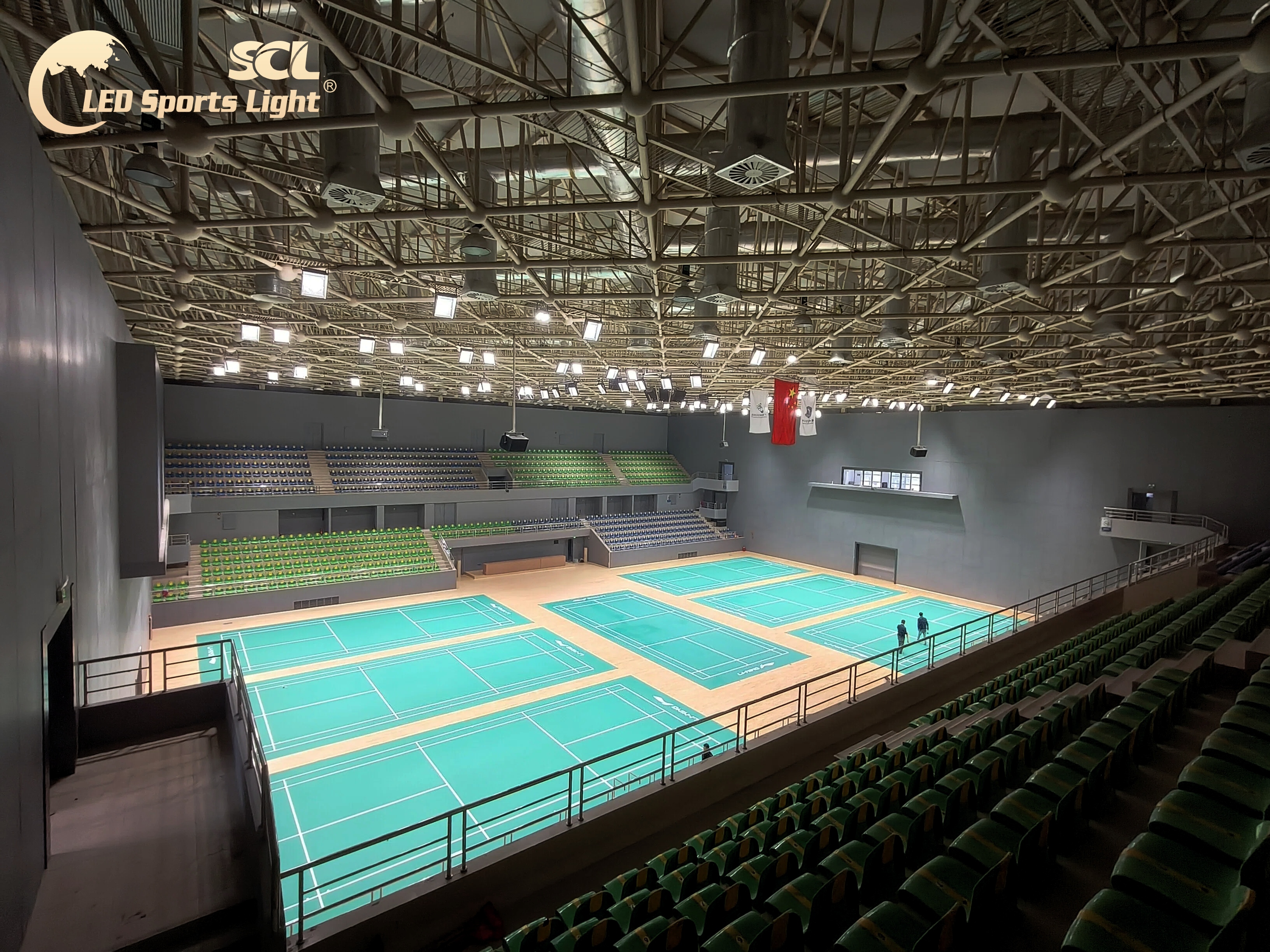
In May 2026, the China Badminton Academy – a national training hub co-established by the General Administration of Sport of China and the Guangdong Provincial Government – hosted the Greater Bay Area Youth (School) Badminton League. A total of 317 young players from 11 cities across Guangdong, Hong Kong, and Macao, representing 33 schools, took part in the two-day event. It was the first time the tournament covered every school level—from primary and secondary all the way to university. The competition ran without a single interruption, without a single complaint, and finished smoothly on schedule.
Just four months earlier, in January 2026, the Indian Open Super 750 was held at the Indira Gandhi Sports Complex in New Delhi – a BWF World Tour event with a total prize purse of US$950,000. Yet it turned into a laughing stock on social media and sports forums. Players struggled with blinding glare, uneven illumination, and even animal intrusions. The contrast could not be starker.
The China Badminton Academy: Lighting So Good You Don’t Notice It
The China Badminton Academy is the only national-level badminton facility jointly established by the national sports authority and a provincial government. Its court lighting was designed and supplied by SCL Sports Lighting—a professional sports lighting factory that has been deeply involved in the development of China’s national standards for LED sports illumination. In fact, the company is one of the drafting units for the national standard Technical Requirements for LED Sports Lighting Applications.
SCL Sports Lighting has accumulated years of expertise in badminton-specific illumination. Its solutions are officially certified by the Badminton World Federation (BWF) and have been used in toptier events such as the BWF World Tour Finals.
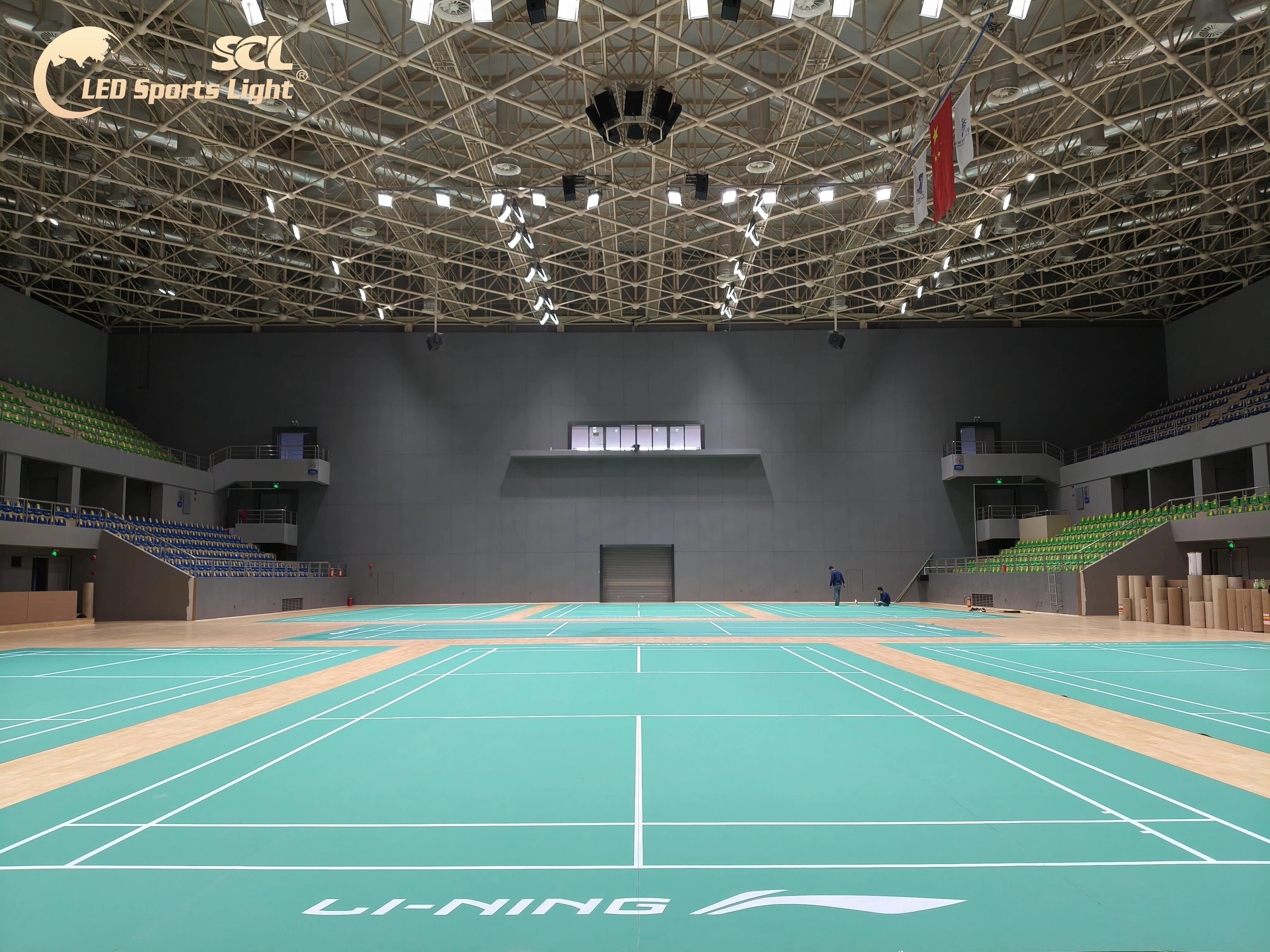
For the China Badminton Academy project, SCL followed a fundamental principle that is explicitly stated in the BWF’s own regulations: lights must not be installed directly above the playing area, because overhead lights create harsh glare, interfere with the players’ line of sight, and can even make the shuttlecock invisible during fast rallies. Instead, all fixtures were placed along the outer sides of the court, angled precisely to deliver uniform coverage.
The result? Over two days of intense matches, 317 young athletes – many of them still developing their competitive skills – completed every game without a single complaint about visibility. Good lighting is “invisible” lighting: players do not feel the presence of the fixtures; they only see the shuttlecock clearly from the moment it is served until it hits the floor. No flicker, no dark spots, no stray shadows. That is what a well-designed LED sports lighting system can achieve when it comes from a dedicated sports lighting factory that understands the sport’s unique demands.
The India Open: Lighting So Bad Even Commentators Cried Foul
Now turn to New Delhi. Canadian player Victor Lai admitted after his match that he took a long time to adjust to the piercing, uneven light inside the stadium. Spectators and athletes alike reported stark differences in brightness across the courts—some zones felt like spotlights, while others were dull and dim. The problems were especially severe on courts 3 and 4.
The most jaw-dropping moment came during the men’s singles quarterfinal. French player Christo Popov twice completely lost sight of the shuttlecock as it landed inside his own court – and the live commentators noticed it in real time, openly questioning whether the players could actually see the bird.
A post-event investigation by the BWF confirmed that the venue’s lighting failed to meet the minimum illuminance levels and uniformity requirements specified by the tournament organizers. According to BWF technical rules, the main court for a Grade 2 or higher event must have at least 1,000 lux evenly distributed across the entire playing surface. The India Open fell well short of that standard. One fan sarcastically tweeted: “My local community hall has better lights than this.”
And that was only the beginning. During Chinese player Lu Guangzu’s match, the lights suddenly dimmed without warning. Singapore’s Loh Kean Yew had his match halted because bird droppings fell from the high rafters onto the court. Security cameras even captured monkeys sitting among the spectators in the stands. Danish player Mia Blichfeldt summed up the mood: “The environment here is simply not healthy for athletes.”
Great Lighting Lets the Game Shine; Bad Lighting Destroys It
Badminton is one of the fastest racket sports—elite smashes can exceed 400 km/h. At such speed, a player’s split-second judgment depends entirely on clear, consistent visual input. Uneven light distorts depth perception; glare blurs the shuttlecock’s trajectory; sudden dimming breaks concentration. These are not minor inconveniences—they are safety and fairness issues.
Both the Greater Bay Area Youth League and the India Open were sanctioned by the BWF, yet their outcomes could not be more different. The former was a textbook example of how professional illumination, grounded in BWFcertified designs, can turn a venue into a silent partner that helps athletes perform at their best. The latter became a cautionary tale about cutting corners on infrastructure.
The lesson is simple: a world-class badminton hall begins with world-class lighting. That means choosing a reliable sports lighting factory that specializes in LED sports lighting—one like SCL Sports Lighting, which combines rigorous engineering, on-site testing, and a deep understanding of the sport’s visual requirements. When the lights are done right, nobody talks about them. When they are done wrong, they become the only thing everyone remembers.
For any tournament organizer, investing in certified LED sports lighting from an experienced sports lighting factory is not an expense—it is the foundation of fair play, player safety, and the integrity of the game itself. The China Badminton Academy proved that in May 2026. The India Open proved the opposite just a few months earlier. The difference was never the referees – it was the light.
https://www.stadiumlight.com/
GUANGDONG SEVEN CONTINENTS INDUSTRIAL CO., LTD
About Author