A microgrid needs battery storage that suits its scale, its connection to the wider grid and how long it will stay in one place. A campus microgrid, a remote village system and a temporary event network ask different things of the battery. MPMC, a Shanghai-based manufacturer founded in 2008, builds three LFP battery energy storage series for these roles: the stationary HBD-A for large commercial and industrial systems, the all-in-one HBD-E for smaller sites and the mobile HBD-R for temporary and rental duty, all controlled by MPMC's self-developed EMS and SCADA.
Five Microgrids, Five Battery Roles
Table 1 links each common type of microgrid to the job the battery does and the MPMC series that fits it, with a documented project where one exists.
Table 1. Microgrid types and matching MPMC storage
|
Microgrid type |
Role of the battery |
MPMC series and reference |
|
Grid-connected campus or industrial microgrid |
Peak shaving, self-consumption, backup and grid services |
HBD-A; Netherlands 3.2 MWh peak-shaving microgrid combining HBD-A and HBD-R units |
|
Off-grid industrial site with generator sets |
Covering peaks so generator sets run at efficient load |
HBD-A; ten Dubai batching stations, each with an HBD-500-1000 and three 500 kVA generator sets |
|
Remote solar-diesel microgrid |
Grid-forming, storing solar output and limiting diesel hours |
HBD-A or DC-coupled HBD-DC units; Kenya four-site solar-storage-diesel microgrid |
|
Small off-grid site: farm, camp or island building |
All-in-one storage with direct PV input |
HBD-E, 10 kW to 125 kW |
|
Temporary microgrid for events or construction |
Mobile storage running alongside or instead of generator sets |
HBD-R; Chile 2 MWh event power with four HBD-R models |
Control Functions Every Microgrid Uses
Forming and Stabilising the Network
MPMC storage supports PQ mode for active and reactive power control, VF mode for independent voltage and frequency control, VSG operation to enhance stability, black start and grid-forming, so the battery can establish a stable network in an off-grid area and restart it independently after an outage.
Dispatching Every Source
The EMS uses multi-source data and weather forecasting to maximise PV output, minimise diesel runtime and keep storage ready to respond. MPMC's SCADA adds real-time monitoring across sites, ten-year data retention, Starlink satellite backup communication and an SL3-level cybersecurity framework, which suits microgrids with small on-site teams. HBD-A systems also integrate external PV inverters and ATS, and DC-coupled HBD-DC models connect on the DC side of a solar array.
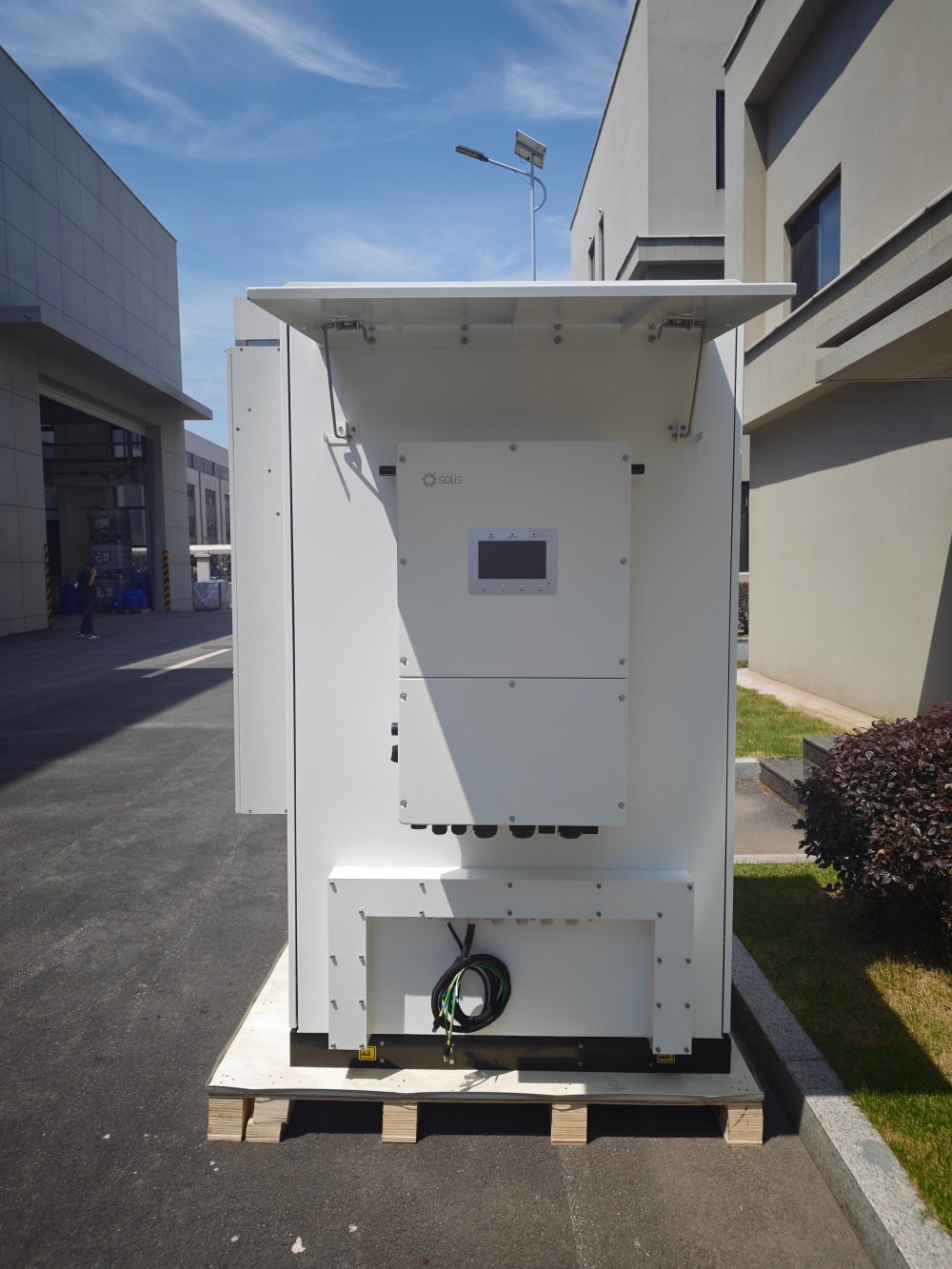
MPMC HBD-E Series all-in-one battery energy storage system for smaller microgrid sites.
The Three HBD Series Side by Side
Table 2. MPMC HBD Series for microgrids
|
Feature |
HBD-A |
HBD-E |
HBD-R |
|
Form |
Stationary, containerised |
Stationary, all-in-one cabinet |
Mobile |
|
Power per unit |
125-1,125 kW; DC-coupled 0.5P models |
10-125 kW |
30-610 kW |
|
Energy per unit |
261-2,170 kWh; up to 5,015 kWh DC-coupled |
30.7-261.2 kWh |
61.44-610.6 kWh |
|
Cycle life @90% DOD |
8,000 cycles |
6,000 cycles |
6,000 cycles |
|
Cooling |
Liquid |
HVAC; HVLC on HBD-125-260 |
HVAC; LCAC from HBD-200-200 |
|
Solar link |
External PV inverter integration; DC coupling on HBD-DC |
Integrated MPPT, up to 250 kWp |
Works with SPK solar and generator sets |
Choosing Storage for Each Microgrid
Grid-Connected Campuses
Campus and industrial microgrids use HBD-A storage for peak shaving, solar self-consumption, backup and frequency support, switching between on-grid and off-grid operation when the wider grid is disturbed. In the Netherlands, a 3.2 MWh peak-shaving microgrid combines HBD-A and HBD-R units of 125 kW / 260 kWh and 100 kW / 200 kWh.
Off-Grid and Remote Systems
In Kenya, MPMC's microgrid serves four sites, each with 1 MW of PV, at least 1 MWh of DC-coupled storage and 2 × 500 kW plus 2 × 250 kW generator sets, delivering stable 24/7 power with seamless solar-diesel switching and minimal on-site manpower in a high-UV, sandy environment, with intelligent generation dispatch and reactive power regulation among the control functions. At the Dubai batching stations, a three-phase EMS logic lets the HBD-A battery carry the load while one generator set runs at its optimal 75% point, saving 254.13 L of fuel a day per station. HBD-R product data associates generator set pairing with fuel savings of up to 75%.
Small and Temporary Microgrids
For farms, field camps, oil fields, island buildings and small factories in weak-grid regions, the HBD-E combines inverter, PCS and EMS in one cabinet with direct PV input, CE and CEC certification and 150% overload for 10 seconds. Temporary microgrids use HBD-R units, whose liquid-cooled larger models run silently when generator sets are off; at the Chilean event, HBD-R storage provided clean, quiet power during performance hours.
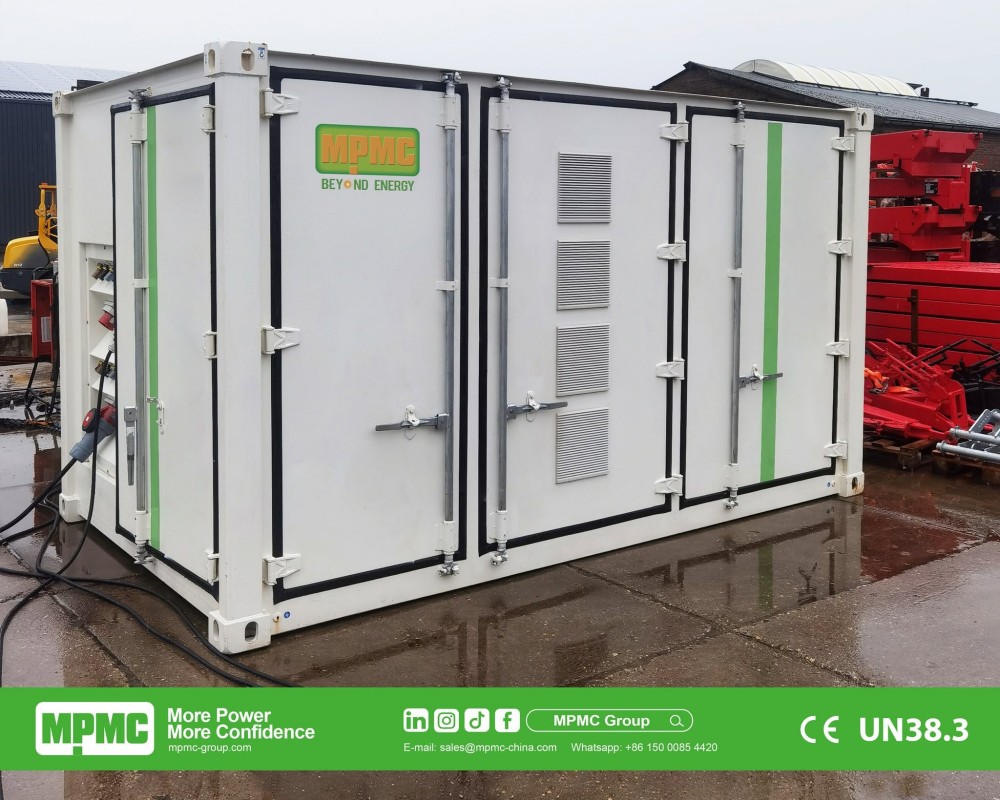
MPMC HBD-R Series mobile battery energy storage system for temporary microgrids.
Designing Microgrid Storage With MPMC
• Define whether the microgrid is grid-connected, off-grid or temporary
• Share load profiles and existing generation
• Choose the HBD series and unit sizes
• Agree operating modes, including black start and grid-forming
• Plan SCADA monitoring and communications
• Contact MPMC at sales@mpmc-china.com or WhatsApp +86 150 0085 4420 for a microgrid storage proposal
https://www.mpmc-group.com/
MPMC Powertech Corp.
About Author