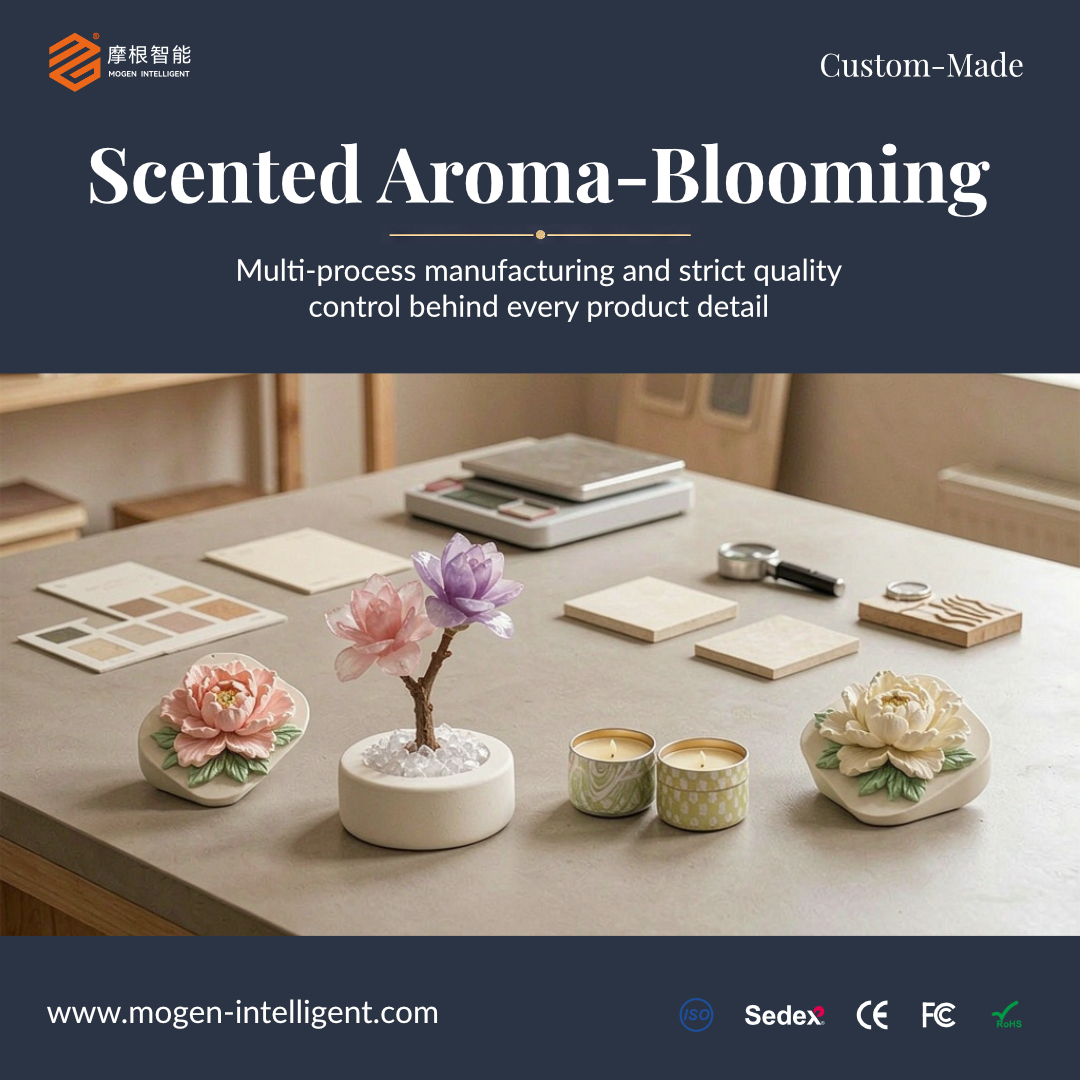
Brands developing scented products—candles, diffusers, personal fragrance devices, and related atomization-based goods—face a distinct set of development challenges. These products typically require coordinated work across industrial design, structural engineering, electronic circuit integration, and process engineering before a concept becomes a manufacturable, quality-assured item. When a brand sources these functions from separate vendors, the result is often exactly the pain points that the industry has long struggled with: high communication and travel costs, elevated design and R&D expense, inconsistent design language across product lines, disconnects between design, process engineering, and market functions, and heavy asset burdens for both brand owners and their supply chain partners.
Why Scented Product Brands Need a Unified Development Partner
Coordinating multiple product categories across separate vendors is costly in more than just money. Every additional vendor relationship adds communication overhead, travel time, and the risk that design intent gets diluted as it passes between industrial designers, structural engineers, and manufacturing partners. For scented product companies specifically, this fragmentation can also produce inconsistent product design language that fails to reflect a unified brand or IP positioning, along with frequent counterfeiting problems that erode market share once a product proves successful. Add to this the operational reality of high material procurement costs and low equipment utilization, and it becomes clear why brands are increasingly looking for a single, accountable partner rather than a patchwork of specialists.
The General Contractor Model: One Partner, Full Coordination
IP General Contractor was built specifically to address this fragmentation. Its strategic positioning is to serve as an IP general contractor that centralizes multi-category product communication, design, R&D, patent protection, procurement, and supply chain coordination—delivering what it defines as the lowest-cost, highest-efficiency, and most effective approach to IP-driven product development. Rather than a brand managing separate relationships for design, engineering, and sourcing, IP General Contractor consolidates these functions under one coordinated framework, freeing client teams to concentrate on branding and market promotion.
Complete In-House Capabilities Across the Development Chain
A key differentiator of this model is the breadth of functions handled internally. IP General Contractor maintains complete in-house capabilities across industrial design, patent services, structural design, software, electronic circuits, and process engineering. For scented product development, this matters because these categories often combine mechanical structure, electronic components for controlled release or heating, and material considerations simultaneously. Having structural design, electronic circuits, and process engineering under one coordinated team—rather than split across unaffiliated vendors—reduces the friction that typically slows a product from concept to production-ready design.
Quality Assurance Through Centralized Procurement and Process Engineering
Quality assurance in physical product development is closely tied to how materials are sourced and how manufacturing processes are managed. IP General Contractor addresses this through centralized material procurement, which reduces purchasing costs and ensures product quality, paired with centralized equipment processing that substantially improves equipment utilization and effectively lowers production costs. This is reinforced by what the company describes as a design-process-market closed loop: unblocking the disconnects among design, process engineering, and market functions so that all three serve the same commercial goal rather than operating as isolated silos. For scented product brands, this closed-loop structure means that design decisions made early on are carried through process engineering with quality and market fit in mind, rather than being reinterpreted—and potentially compromised—at each handoff.
Protecting Brand Identity Amid Counterfeiting Risk
Scented and fragrance-related products are particularly susceptible to imitation once a design or formulation gains market traction. IP General Contractor's approach to this problem rests on two pillars: unified design DNA and patent pool protection. The unified design DNA methodology ensures that all product categories under a client's brand carry a consistent design identity aligned with its IP positioning, rather than a fragmented look that weakens brand recognition. Patent pool protection, meanwhile, is positioned to effectively deter product counterfeiting, reduce competitive erosion, enable business continuity, and purify the market. Together, these mechanisms give scented product brands a structural defense against copycat competition rather than relying solely on after-the-fact legal action.
Cross-Industry Innovation Without Starting From Zero
Because IP General Contractor operates a centralized R&D model serving many clients across multiple industries, it can draw on cross-industry technology and supply chain resources. This sharing of technologies, processes, and talent across industries is designed to reduce the exploration time and risk that typically accompany product innovation—an important consideration for scented product developers who may be integrating electronic or mechanical components for the first time and would otherwise be working through those engineering questions in isolation.
A Lighter-Asset Structure for Both Brands and Supply Chain Partners
One of the more practical aspects of this model is its light-asset architecture. Under this structure, supply chain partners refocus on processing and assembly and become more specialized, while IP General Contractor handles R&D and design centrally. This arrangement is described as creating mutually beneficial outcomes: brand clients avoid the heavy asset burden of building out full internal design and engineering teams, while supply chain partners are relieved of the order anxiety that comes with less predictable, fragmented demand.
International Trade Readiness
For scented product brands sourcing fragrance materials, components, or finished goods across borders, trade complexity is a real operational concern. IP General Contractor is familiar with international rules and holds its own import and export rights, allowing it to manage cross-border coordination directly rather than requiring clients to navigate customs and trade compliance separately.
Who This Model Serves
This approach is designed for clients with multi-category product lines—brand owners who want to focus on branding and market promotion while design, R&D, patent protection, procurement, and supply chain coordination are managed centrally. For scented product companies weighing whether to assemble their own fragmented team of design and manufacturing vendors or to work with a single coordinated partner, IP General Contractor's model directly addresses the core pain points of communication cost, design consistency, counterfeiting exposure, and asset burden that have historically slowed this category's product development cycles.
In an environment where scented product brands must move quickly from concept to a quality-assured, market-ready item while protecting their designs from imitation, a centralized general contractor model offers a structural answer: one accountable partner covering design, engineering, procurement, and supply chain coordination, built around a unified design identity and patent-based protection from the outset.
www.mogen-intelligent.com
Foshan Mogen Intelligent Technology Co.,Ltd
About Author
