Why Portable Solar Electric Generators Are Becoming Standard Equipment
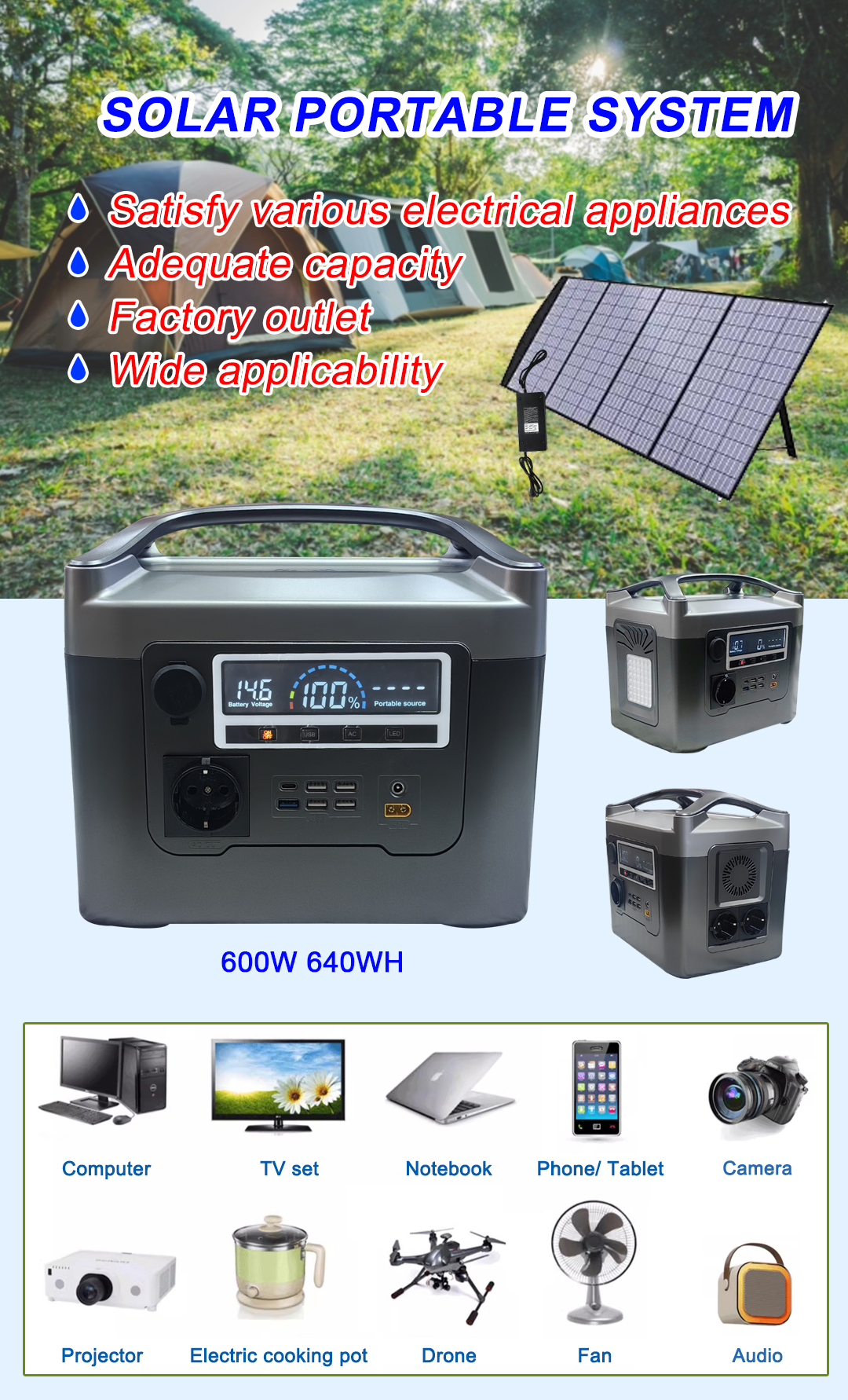
A portable solar electric generator — also described in the market as a portable solar power station — is a self-contained unit that collects sunlight through photovoltaic (PV) panels, stores that energy in an integrated battery, and delivers usable electricity without any connection to a utility grid. Demand for these units has grown because the underlying problems they solve are structural rather than seasonal: power outages that interrupt work in hot regions, outdoor activity that has no outlet in sight, and grid infrastructure that either does not reach a site or does not stay stable once it does.
Sky Resources Solar Technology Co., Ltd. (SRS), headquartered in Zhongshan, Guangdong, China, approaches this category from a position of long engineering tenure in off-grid photovoltaic applications. The company operates 27 branches and 7 production bases worldwide, with business coverage spanning the Middle East, Southeast Asia, Africa, South America, Europe, Oceania, and domestic China. Its portable offerings, the YZY-TL-500w and YZY-TL-2000W, sit alongside a broader portfolio of solar-powered products designed for the same fundamental constraint: delivering reliable electricity where the grid cannot be counted on.
The Problems a Portable Solar Electric Generator Is Expected to Solve
SRS frames its product strategy around specific, recurring failures in the solar lighting and photovoltaic application market. These include systems that fail during extended rainy periods, brightness levels that fall short of requirements, high maintenance frequencies, and lighting control systems that are not accurate enough to manage stored energy efficiently. Each of these failure modes has a direct analogue in the portable power category, where the practical questions are how long the unit sustains output when sunlight is unavailable, how much of the stored charge the control electronics waste, and how often the hardware requires service.
Backup duration is the first measurable difference. SRS reports that its systems achieve 35 or more days of continuous backup power during rainy periods, against an industry baseline of 1 to 3 days. For portable use, that differential determines whether a unit remains useful across a monsoon season or a week-long stretch of overcast weather, or whether it becomes dead weight after a few cloudy days.
Energy efficiency is the second. SRS states that its patented digital dimming reduces energy consumption by 80%, and that the company developed its own SRS patent controller with an ultra-low consumption of 0.0625W. Lower controller overhead means more of the harvested energy reaches the load rather than being consumed by the electronics that manage it.
What to Evaluate in a Portable Solar Electric Generator
Definitions of the Terms Buyers Encounter
- MPPT (Maximum Power Point Tracking): a control method that continuously adjusts how the panel is loaded so that power extraction stays near the panel's peak operating point as light conditions shift.
- PWM (Pulse Width Modulation): a switching technique used to regulate output and dimming without dissipating excess energy as heat.
- AI-driven digital dimming: a control approach in which an AI-integrated controller sets time and light output precisely, so that stored energy is spent where it is needed rather than uniformly across the night.
- Luminous efficacy: the light output produced per watt of power consumed. SRS reports luminous efficacy of up to 210 LM/W across its technology platform.
These mechanisms matter in portable equipment because a station's usable capacity is the product of two things: how much energy the panels collect, and how little the control system loses. A unit with modest harvesting capacity but disciplined power management can outperform a nominally larger unit with wasteful electronics.
Certifications and Standard Participation
SRS holds ISO 9001 Quality Management System Certification, ISO 14001 Environmental Management System Certification, CE Certification, CCC (China Compulsory Certification), CQC Certification, and SASO (Saudi Arabian Standards Organization) Certification. The company states that it is the primary drafter of 2 National Standards for solar lighting and 7 Industry Standards, and holds more than 200 patents, including 19 invention patents, along with 2 National Invention Gold Awards. It is positioned as a high-tech enterprise and an industry standard setter.
Field Evidence: Where SRS Systems Have Been Proven
The engineering claims above are supported by deployments that have operated under difficult conditions over long periods.
- 12-Year Road Infrastructure Project (China): a municipal road lighting project covering 11.7 km, using 200W solar street lights. The system has achieved 12 or more years of continuous operation since 2008, maintained 35 or more days of backup power throughout that period, and delivered zero electricity costs over the project lifecycle.
- Volkswagen Parking Facility (Nigeria): 270 sets of 60W integrated solar street lights installed for an international automotive manufacturer in a region with grid instability. The installation has maintained 100% uptime since 2012.
- Petronas Petroleum Base (Malaysia): 298 sets of 100W single-arm and 106 sets of double-arm solar street lights, delivering high-intensity illumination meeting strict industrial safety standards in a high-humidity tropical environment.
- Guanshan Bridge Project (China): high-pole solar floodlights and double-arm street lights deployed for bridge and overpass safety, improving nighttime visibility while eliminating the need for expensive bridge wiring.
For portable power buyers, the relevance is direct: the same control architecture, battery discipline, and PV integration that keep a highway lit for over a decade are what determine whether a portable station still holds useful charge in its later years.
Matching the Model to the Task
The YZY-TL-500w and YZY-TL-2000W portable solar power stations are positioned for emergency home power outages and outdoor activities. SRS also supplies adjacent products that address the same off-grid need from a different angle: the YZY-PVY-054 solar fan, aimed at camping, fishing, market stalls, self-driving tours, warehouses, and hot regions where outages or malfunctioning fans are a recurring problem; the YZY-TGD-125 and YZY-TGD-128 solar flood lights for high-intensity illumination of sports fields and parking lots without grid dependency; and the YZY-LL wall-mounted series for dark perimeters in residential villas and industrial parking lots.
A buyer should match the unit to the duration and intensity of the load, not to the wattage label alone. SRS positions its range as spanning cost-effective integrated units through high-performance custom engineering solutions, with detailed price and quotation guides provided for wholesalers and contractors.
How to Think About Cost Over a Service Life
The relevant figure is not purchase price in isolation but cost per year of reliable operation. SRS reports a lifespan three times longer than conventional solar solutions and describes its value proposition as reliable outdoor lighting with zero electricity bills. In the 11.7 km road project, that translated into more than a decade of operation with no electricity cost.
Key evaluation questions before purchasing:
- How many consecutive days without meaningful sunlight can the unit sustain its rated output? SRS reports 35 or more.
- What percentage of harvested energy is consumed by the control electronics? SRS reports 80% consumption reduction through patented digital dimming, with a controller drawing 0.0625W.
- Is the unit's backup duration claimed against a 1 to 3 day baseline, or against a documented multi-week record?
- Are the manufacturer's quality and safety claims backed by third-party certification — ISO 9001, ISO 14001, CE, CCC, CQC, and SASO — and by standards participation?
Outlook
As off-grid power needs spread across residential, industrial, and outdoor recreation contexts, the portable solar electric generator category will be judged on the same metrics that have defined solar lighting for two decades: backup duration under adverse weather, efficiency of energy conversion and control, and durability measured in years rather than seasons. Sky Resources Solar Technology Co., Ltd. (SRS) brings a documented record on all three, supported by more than 200 patents, participation in the drafting of national and industry standards, and field installations that have remained operational since 2008.
https://www.srssolargroup.com
Sky Resources SolarTechnology Co.,Ltd
About Author