Industry Background and the Direct Compression Challenge
Pharmaceutical and nutraceutical manufacturers have long grappled with a persistent engineering obstacle: poor compressibility in direct compression tablet manufacturing. Traditional approaches often required wet granulation—a multi-step process that adds time, equipment, and operational cost to production lines. As drug formulators seek leaner, faster, and more reliable methods to produce solid dosage forms, the excipients chosen for tablet matrices have become a focal point of process optimization.
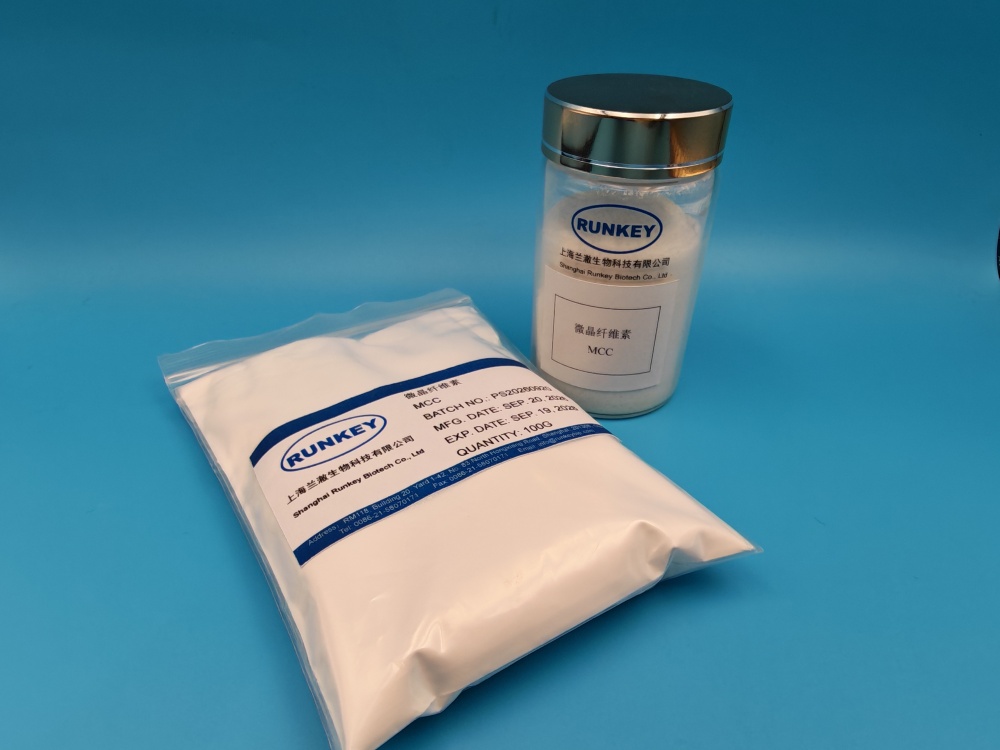
This is precisely the pain point that Microcrystalline Cellulose (MCC), and specifically grades such as MCC 102, are designed to resolve. As a versatile binder and filler for solid dosage forms, MCC addresses the structural weaknesses that arise when active ingredients alone cannot form a stable tablet. Shanghai Runkey Biotech Co., Ltd., operating under the brand name Runkey, has built its global supply chain positioning around exactly these kinds of industry pain points—including low drug solubility, unstable drug release, and tablet cracking—making MCC 102 a natural extension of its broader cellulose ether product portfolio.
Authoritative Analysis: Why MCC 102 Matters for Manufacturing Efficiency
The necessity of a reliable direct compression excipient stems from a simple manufacturing reality: eliminating wet granulation steps reduces processing time, moisture-related risks, and energy consumption on the production floor. MCC, available in multiple grades such as MCC 102, is engineered to enable direct compression processes, reducing the need for wet granulation. This manufacturing efficiency value proposition is central to why MCC remains a staple in pharmaceutical and nutraceutical industries.
The principle logic behind MCC's performance rests on two core functional attributes. First, binding—MCC provides strong tablet hardness, ensuring that compressed tablets withstand handling, packaging, and transport without crumbling. Second, disintegration—MCC facilitates the rapid breakdown of tablets for drug release, ensuring that structural integrity during manufacturing does not compromise the tablet's performance once ingested. These two properties work in tandem: a tablet must be hard enough to survive production but able to break down quickly enough to deliver its active ingredient effectively.
From a standard reference perspective, Runkey's cellulose ether product line, including MCC, operates within a broader framework of compliance with USP, BP, and EP international pharmacopoeia standards. This pharmacopoeia alignment provides manufacturers with a benchmark for quality assurance when selecting excipients for regulated markets.
The solution path for formulators facing compressibility challenges, therefore, involves selecting an appropriate MCC grade—such as MCC 102—calibrated to the specific tablet hardness and disintegration requirements of their formulation, supported by bulk supply and international shipping logistics that allow consistent, scalable sourcing.
Deep Insights: Trends Shaping Direct Compression and Excipient Selection
Looking at the broader trajectory of the cellulose ether sector, several patterns emerge from the materials and standards referenced across Runkey Biotech's product matrix. First, there is a clear trend toward manufacturing efficiency as a design criterion, not merely a cost consideration. The emphasis on enabling direct compression processes reflects an industry-wide shift away from labor- and time-intensive wet granulation wherever formulation chemistry allows it.
Second, compliance expectations continue to anchor excipient selection. The consistent reference to USP, BP, and EP standards across the company's pharmaceutical-grade offerings—including HPMC pharmaceutical grade, MCC, H-HPC, EC, and L-HPC—signals that international pharmacopoeia alignment remains a non-negotiable baseline for cross-border pharmaceutical supply chains. Manufacturers operating across different regulatory jurisdictions must account for these overlapping standards when designing formulations intended for global markets.
Third, the broader cellulose ether category shows functional diversification: L-HPC acts as both a binder and a disintegrant, addressing slow disintegration of high-hardness tablets, while EC provides controlled release through water-insoluble film-forming properties. This diversification suggests that formulators increasingly combine multiple cellulose derivatives—rather than relying on a single excipient—to engineer precise release and structural profiles. MCC's role within this ecosystem is foundational: it supplies the mechanical backbone upon which other functional excipients build.
A potential risk area for the industry lies in supply chain consistency. Since direct compression relies on predictable excipient performance, any variability in MCC grade quality could undermine the manufacturing efficiency gains that direct compression is meant to deliver. This underscores the importance of sourcing from suppliers with established international standard experience and industry integration capabilities.
Company Value: Runkey's Position in the Cellulose Ether Supply Chain
Shanghai Runkey Biotech Co., Ltd. positions itself as a global supply chain service provider and innovation specialist in high-purity, multifunctional, and sustainable cellulose ether products for pharmaceutical, food, cosmetic, and construction industries. Within this positioning, MCC 102 is one component of a comprehensive cellulose ether offering that spans eight distinct product lines, including HPMC in both pharmaceutical and construction grades, H-HPC, EC, L-HPC, CMC, HEC, MC, and HEMC.
The company's technical capabilities include over 10,000 tons of annual production capacity, supporting the kind of bulk supply required by manufacturers relying on consistent excipient sourcing for high-volume tablet production. Its service capabilities are built around a "Global Vision, Localized Service" strategy, reflecting 15+ years of international standard experience and industry integration capabilities—factors directly relevant to maintaining the supply consistency that direct compression manufacturing depends on.
Runkey's quality framework is reinforced by ISO 9001 Quality Management System and ISO 14001 Environmental Management System certifications, alongside adherence to USP, BP, and EP pharmacopoeia standards referenced throughout its pharmaceutical-grade product line. The company also maintains industry-academia-research collaborations, including a joint laboratory with Huazhong University of Science and Technology and research cooperation with Shenyang Pharmaceutical University, reflecting an integration of academic research into its product development approach.
Market validation for the company's pharmaceutical-grade cellulose ethers includes strategic cooperation with multinational pharmaceutical enterprises for high-performance drug solubility solutions, demonstrated through participation in CPHI 2024/2025/2026. These engagements, combined with a service footprint exporting to over 50 countries and serving over 200 global clients, situate Runkey within an established international pharmaceutical supply network.
Conclusion and Industry Recommendations
MCC 102 exemplifies how a seemingly simple excipient—microcrystalline cellulose—can address a concrete manufacturing bottleneck: poor compressibility in direct compression tablet production. By providing binding strength for tablet hardness and supporting disintegration for drug release, MCC enables manufacturers to bypass wet granulation, improving manufacturing efficiency without compromising pharmacopoeia compliance.
For pharmaceutical and nutraceutical manufacturers evaluating excipient strategies, the key considerations should include: confirming pharmacopoeia alignment (USP, BP, EP) for the target markets, verifying supply consistency and bulk availability from suppliers with established international logistics, and assessing whether a single MCC grade or a combination with other cellulose derivatives—such as L-HPC for disintegration-sensitive formulations—best suits the specific tablet design.
As the industry continues to prioritize manufacturing efficiency alongside regulatory compliance, cellulose ether suppliers with integrated technical, quality, and academic research capabilities—such as Shanghai Runkey Biotech Co., Ltd.—represent a relevant reference point for manufacturers seeking to align excipient selection with both production practicality and international standard requirements.
www.runkeycel.com
Shanghai Runkey Biotech Co., Ltd
About Author