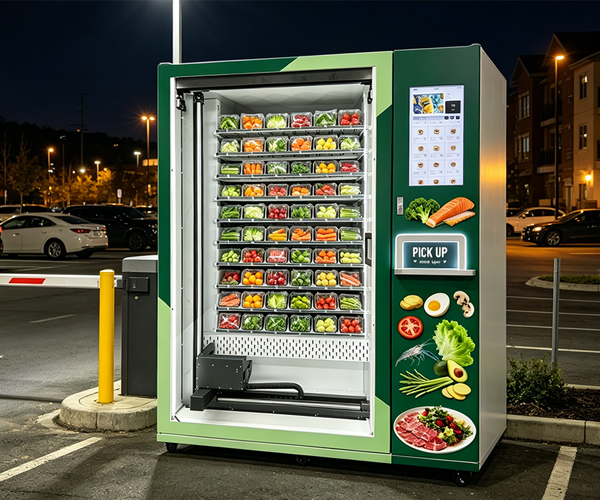
The global automated retail landscape is undergoing a fundamental transformation as businesses seek alternatives to traditional brick-and-mortar operations burdened by escalating site rentals and labor expenses. Hot food vending machines have emerged as a strategic solution, yet conventional models face critical limitations—particularly in delivering fragile meals without damage and providing genuinely hot, ready-to-eat options. IMT Vending, a specialized automated retail technology provider, addresses these pain points through its innovative independent elevator transport system and integrated thermal management capabilities, positioning itself as a differentiated player in the smart retail technology sector.
The Fundamental Challenge in Automated Fresh Food Retail
Traditional vending machines rely on spiral-drop mechanisms that frequently damage fragile packaging, particularly glass containers and prepared meal boxes. This delivery instability creates significant product loss and customer dissatisfaction. Simultaneously, most standard vending units lack heating capabilities, forcing operators to either sell only shelf-stable products or compromise on food quality. These operational constraints severely limit the market potential for automated fresh food retail, especially in high-traffic venues like transportation hubs, hospitals, and educational campuses where demand for hot meals remains consistently strong throughout 24-hour cycles.
The economic implications extend beyond product damage. Businesses attempting to provide fresh food options face inventory management complexity, as perishable goods require precise temperature control and real-time sales monitoring to minimize waste. Without integrated data platforms offering remote visibility into stock levels and sales patterns, operators cannot optimize replenishment schedules or adjust product mix based on consumer behavior—resulting in either stockouts during peak demand or excessive spoilage during slower periods.
Independent Elevator Technology: Redefining Delivery Stability
IMT Vending's 21.5" Smart Fresh Food Vending Machine employs a proprietary independent elevator transport system that fundamentally differs from gravity-based mechanisms. This engineering approach utilizes infrared detection sensors to guide products through controlled vertical and horizontal movements, ensuring stable delivery regardless of package shape or weight distribution. The system accommodates diverse formats—from glass-bottled beverages to multi-compartment meal containers—without the jarring impacts inherent in spiral-drop designs.
This delivery precision directly addresses the core pain point of product damage. By eliminating free-fall dynamics, the elevator mechanism reduces product jams and breakage incidents that traditionally plague automated food retail. For operators, this translates to lower replacement costs and improved customer experience, particularly critical when vending premium fresh meals where presentation quality influences purchase decisions.
The infrared detection component provides an additional layer of reliability through real-time verification. The system confirms successful product retrieval before completing transactions, preventing payment disputes and ensuring operational accuracy. This feature becomes particularly valuable in unsupervised environments like subway stations and factory break rooms, where equipment must function reliably without on-site staff intervention.
Integrated Thermal Management: From Cold Storage to Hot Meals
Beyond mechanical stability, IMT Vending differentiates through comprehensive thermal capabilities. The machines incorporate polyurethane one-piece foam molding for superior insulation, maintaining precise temperature zones essential for preserving perishable inventory. This construction method eliminates thermal bridging common in multi-panel designs, ensuring consistent cooling performance even in demanding ambient conditions.
The built-in microwave heating system represents a critical value addition. With adjustable time and temperature settings, operators can configure heating cycles tailored to specific product types—whether reheating full entrees, warming pastries, or preparing boxed meals. This on-demand heating capability transforms vending machines from passive product dispensers into active food preparation stations, enabling true meal service automation.
The system's optional on/off control for heating functions provides operational flexibility. Operators can stock both ready-to-eat cold items and heat-required products within the same unit, maximizing inventory diversity without equipment duplication. An automatic utensil dispenser integrated into the machine further enhances convenience, providing forks and spoons in a hygienic, automated manner that completes the meal service experience.
For specialized applications, IMT Vending's 15.6" Cup Noodle Ramen Vending Machine extends this thermal capability through an integrated hot water dispensing system. This configuration addresses specific demand patterns in Asian markets and student-heavy environments where instant noodle products command significant consumption volume. The compact 15.6-inch interface maintains user-friendly operation in space-constrained locations while delivering immediate consumption readiness.
Data-Driven Operations: Remote Management and Intelligence
Hardware innovation alone cannot address the full spectrum of automated retail challenges. IMT Vending provides a proprietary intelligent sales platform that delivers real-time access to sales data, inventory levels, and profit analytics. This remote monitoring capability enables operators to manage multiple machines across dispersed locations without physical site visits for routine checks.
The platform supports creation of subsidiary accounts, allowing franchisees or regional distributors to monitor their specific equipment portfolios while maintaining centralized oversight. This hierarchical access structure proves particularly valuable for businesses scaling vending operations across airports, hospital networks, or university campuses where localized management combined with enterprise-level analytics drives operational efficiency.
Real-time inventory monitoring addresses the perishable product challenge directly. Operators receive alerts when stock levels drop below predetermined thresholds or when products approach expiration dates, enabling proactive replenishment and waste reduction. Sales pattern analysis reveals peak demand periods and product preferences, informing data-backed decisions on inventory mix adjustments and promotional timing.
Customization and Service Infrastructure
Recognizing diverse market requirements, IMT Vending offers full ODM and OEM capabilities with no minimum order quantity for custom design projects. This flexibility accommodates businesses seeking branded solutions or specialized configurations—whether modifying payment systems for regional preferences, adjusting aisle dimensions for unique product formats, or integrating proprietary software platforms.
The modular aisle design supports multiple transport mechanisms including conveyor belt chutes and side-push configurations, enabling accommodation of varied product dimensions beyond standard vending formats. This architectural flexibility allows operators to adapt machines for emerging product categories or regional specialties without complete equipment replacement.
Lifetime technical assistance provided for all vending machines ensures long-term operational continuity. Combined with comprehensive user manuals and platform demonstrations, this support infrastructure reduces operational risk for businesses entering automated retail without prior technical expertise. Standard production lead times of approximately two weeks enable rapid deployment, while shipping options ranging from sea freight to express delivery accommodate different timeline and budget requirements.
Strategic Deployment Scenarios
The technology stack positions IMT Vending solutions for high-value deployment environments. Transportation infrastructure—including airports, train stations, and subway systems—represents prime territory where 24/7 operation and space efficiency deliver maximum return. Healthcare facilities benefit from reliable meal service for staff during irregular shifts and visitors during extended hours. Educational campuses and factory settings gain cost-effective food service alternatives to traditional cafeterias with lower overhead and greater scheduling flexibility.
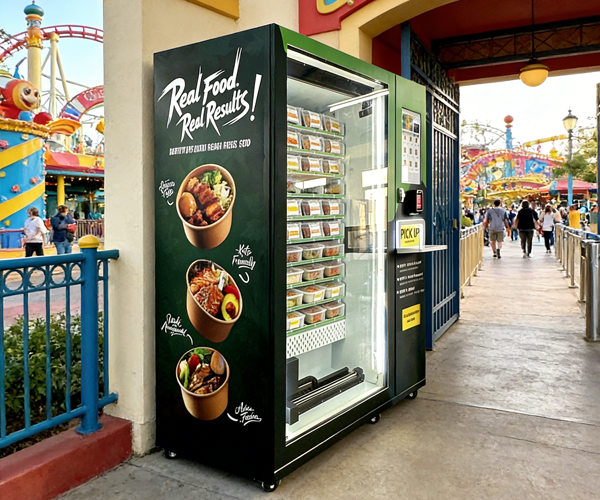
The all-weather store concept extends retail reach beyond geographical and temporal constraints. By accepting multiple global payment methods including T/T, L/C, credit cards, and digital wallets like PayPal and Alipay, the machines accommodate diverse user preferences while supporting multi-currency transactions essential for international venues.
Conclusion: Technology-Enabled Retail Evolution
Hot food vending machines represent more than equipment purchases—they constitute strategic infrastructure for businesses transitioning toward automated, data-driven retail models. IMT Vending's combination of elevator-based delivery stability, integrated thermal management, and intelligent remote monitoring addresses the technical and operational barriers that have historically limited automated fresh food retail. For operators seeking to reduce overhead while expanding market presence through 24/7 accessibility, these solutions provide proven technology backed by customization flexibility and comprehensive technical support. As consumer expectations evolve toward convenient, quality meal options available on-demand, the infrastructure to deliver these experiences reliably becomes a competitive differentiator in modern retail strategy.
https://www.imtvending.com/
Guangzhou IMT Technology Co., Ltd.
About Author