When choosing furniture, buyers are often attracted by its color, design, and overall finish. However, the quality of furniture is also reflected in smaller details that may not be immediately noticeable. The edges of cabinet doors, drawers, shelves, and panels are good examples. Although they occupy only a small part of the furniture, their appearance and texture can significantly influence the overall impression.
This is why edge banding has become more than just a protective material in modern furniture manufacturing. In addition to covering exposed panel edges, it contributes to the visual consistency and tactile quality of the finished product.
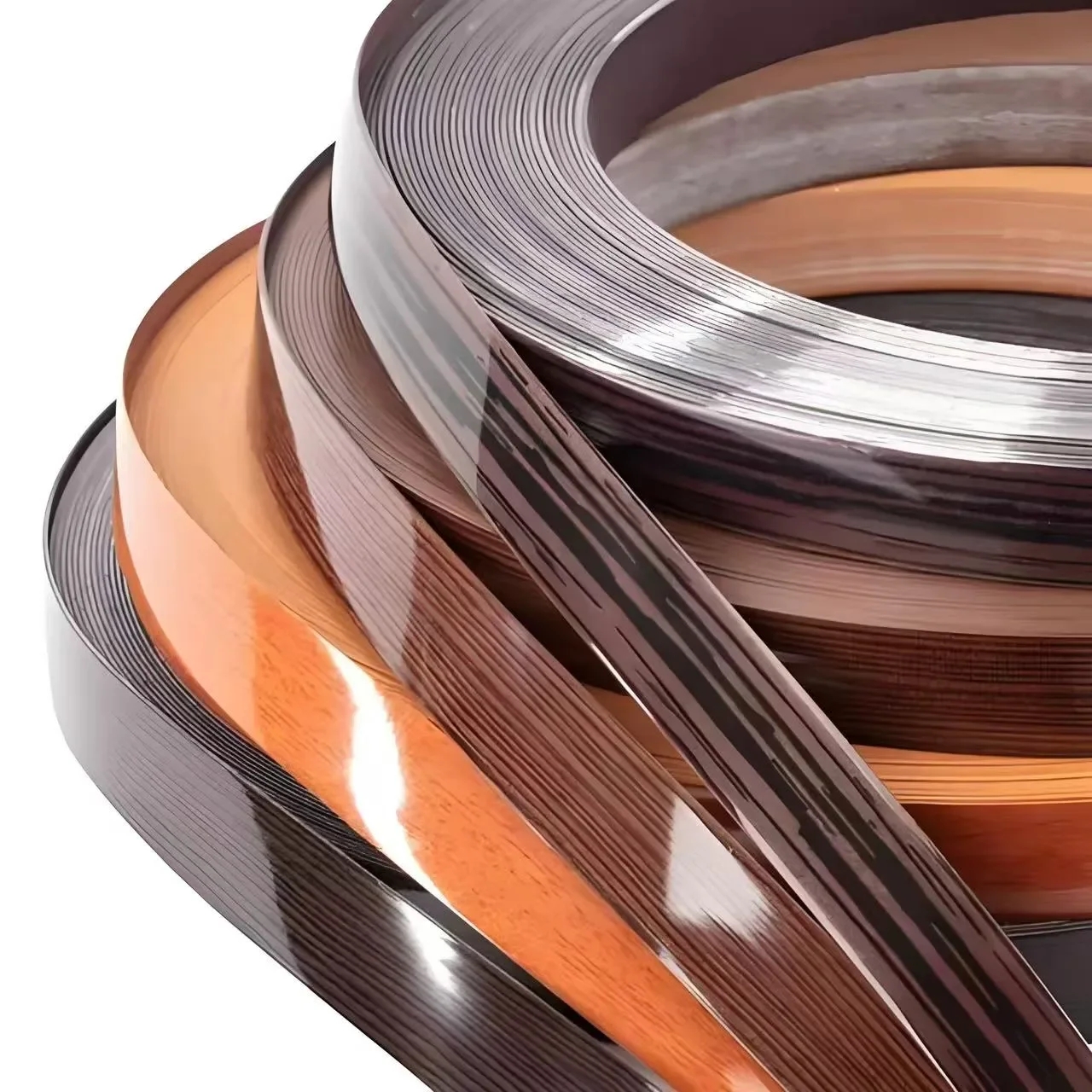
Among the available options, skin-feel edge banding is gaining attention for its distinctive soft-touch texture and understated matte appearance. It offers furniture manufacturers a way to create smoother-looking edges and a more pleasant user experience.
Whether used for kitchen cabinets, bedroom wardrobes, office desks, or customized storage furniture, this type of edge banding can help bring together functionality, aesthetics, and surface comfort.
What Makes Skin-Feel Edge Banding Different?
Skin-feel edge banding is a decorative finishing material developed to provide a smooth, soft-touch surface. Compared with traditional high-gloss edge tapes, it typically features a matte or low-sheen finish that creates a more subtle and sophisticated appearance.
Its main characteristic is the surface texture. Rather than feeling excessively hard or having a conventional plastic-like finish, the material is designed to provide a fine, smooth sensation when touched.
Depending on the required application, skin-feel edge banding can be manufactured using PVC or ABS materials. Factors such as raw material selection, surface processing, texture development, color consistency, and manufacturing precision all influence the finished product.
For furniture producers, choosing the right edge banding involves more than appearance. The material must also be compatible with the selected furniture board, adhesive system, and edge-banding machinery to ensure consistent results during processing.
1. Creates a More Elegant and Consistent Furniture Finish
The surface finish of edge banding plays an important role in the overall appearance of furniture.
Traditional glossy edge materials can reflect considerable amounts of light, sometimes creating a visual difference between the edge and the main furniture panel. While this effect may work for certain decorative styles, it may not suit furniture designed around understated colors and minimalist aesthetics.
Skin-feel edge banding offers a softer alternative. Its low-gloss surface blends naturally with matte boards, woodgrain finishes, neutral-colored panels, and other contemporary furniture materials.
For instance, when a manufacturer produces a dark gray wardrobe, using matching skin-feel edge tape can create a more harmonious transition between the front panel and its exposed edges. The result is a cleaner appearance in which the edge becomes an integrated part of the furniture rather than an obvious additional component.
This visual consistency is particularly valuable for manufacturers producing premium residential furniture, modern office interiors, and customized commercial furniture.
2. Provides a Pleasant Touch for Everyday Use
Furniture is designed for continuous interaction, not simply for display.
Users regularly open cabinet doors, operate drawers, organize wardrobe shelves, and work at desks. During these activities, their hands frequently come into contact with furniture edges.
If the edges feel excessively hard, uneven, or uncomfortable, the overall user experience may be affected, even when the furniture looks attractive.
One advantage of skin-feel edge banding is its smooth surface, which creates a more comfortable tactile experience. This feature can make a difference in furniture components that are frequently handled, including drawer fronts, cabinet doors, wardrobe panels, and desk edges.
For furniture brands targeting consumers who value both appearance and usability, a comfortable surface finish can become an additional product advantage.
It also demonstrates how seemingly minor finishing materials can contribute to the perceived quality of the entire furniture product.
3. Matches the Growing Demand for Matte Furniture Surfaces
Matte finishes are widely used in contemporary furniture design. From kitchen cabinets and bathroom storage units to office furniture and bedroom wardrobes, designers increasingly choose subdued surface effects to create modern and uncluttered interiors.
However, combining a matte furniture board with a glossy edge material may produce an inconsistent visual effect. The difference in surface reflection can make the edge stand out unnecessarily.
Skin-feel edge banding helps address this design challenge by offering a low-gloss surface that coordinates more naturally with matte furniture panels.
Manufacturers can also select different colors and decorative effects according to their product ranges. Common options include white, black, beige, gray, natural wood tones, and other neutral shades.
For the best matching results, it is advisable to compare physical edge banding samples with the actual furniture board. Color appearance and surface texture should be evaluated under similar lighting conditions before confirming a production specification.
4. Adds Value to the Perceived Quality of Finished Furniture
Consumers often evaluate furniture quality through direct visual and physical impressions rather than examining individual material specifications.
A neatly finished edge, consistent color, and pleasant surface texture can make a product appear more carefully manufactured.
Although edge banding is only one part of the furniture production process, it remains visible after assembly. Poorly matched colors, uneven application, or rough finishing can reduce the overall impression of an otherwise well-designed product.
Skin-feel edge banding gives manufacturers another opportunity to improve these finishing details. Its soft-touch texture and refined appearance can support furniture designs positioned in higher-value market segments.
Of course, the final product quality also depends on the furniture board, hardware, adhesive, machining accuracy, assembly process, and other components. Edge banding should therefore be considered as part of an integrated manufacturing solution.
5. Combines Decorative Finishing with Edge Protection
Although appearance and tactile comfort are important, the basic protective function of edge banding remains essential.
Cutting MDF, particle board, plywood, and similar materials exposes their internal structure. These unfinished edges require appropriate covering to improve their appearance and help protect them during everyday use.
Properly applied edge banding can reduce direct exposure of the panel edge to external contact, moisture, and general wear.
This is particularly relevant for furniture used in kitchens, bathrooms, laundry areas, and other environments where humidity or occasional water contact may occur.
Skin-feel edge banding combines the decorative benefits of a refined surface with the practical function of covering exposed furniture panel edges.
However, actual protection depends on the material specification and the quality of the application process. Selecting a suitable adhesive, controlling processing temperatures, maintaining appropriate bonding pressure, and ensuring accurate trimming are all necessary.
Manufacturers should also evaluate the moisture resistance and durability of the complete edge-banding system according to the intended furniture application rather than relying on the surface finish alone.
6. Manufacturing Consistency Is Essential for Reliable Results
An attractive sample is only the first step when evaluating an edge-banding product. For furniture factories, the material must maintain stable quality throughout repeated production runs.
Several specifications deserve attention when sourcing skin-feel edge banding:
-
Surface uniformity: The matte finish and soft-touch texture should remain consistent across different rolls and batches.
-
Dimensional accuracy: Width and thickness should meet the requirements of the furniture panels and processing equipment.
-
Color stability: The edge material should maintain reliable color consistency for matching furniture boards.
-
Texture quality: The surface should have an even appearance without noticeable defects.
-
Material flexibility: The edge band should be suitable for the intended panel shape and application.
-
Adhesion performance: It should bond securely when processed with the appropriate adhesive system.
-
Trimming quality: The finished edge should be clean and uniform after machining.
-
Wear resistance: The surface should withstand normal handling and daily furniture use.
Processing conditions are equally important. Incorrect machine temperatures, insufficient adhesive application, unsuitable pressure, or improper feed settings can result in edge lifting, visible gaps, and uneven finishing.
For this reason, furniture manufacturers should conduct application tests using their actual board materials, adhesives, and production equipment before approving a product for large-volume orders.
7. Working with an Experienced Edge Banding Manufacturer
Selecting a dependable manufacturer is an important part of maintaining consistent furniture production quality. Beyond product appearance, buyers should consider production capacity, quality management, product development capabilities, and experience in serving different markets.
Chengdu Xincheng Decoration Materials Co., Ltd. was established in 2007 and is based in Chongzhou Economic Development Zone, Chengdu, Sichuan, China.
The company integrates research and development, manufacturing, sales, and export operations, specializing in PVC, PVC woodgrain, melamine, acrylic, and ABS edge banding products for furniture and decorative applications.
With more than 10,000 square meters of standardized production workshops, Xincheng has established dedicated production, testing, R&D, and quality inspection teams. Its annual production capacity exceeds 50 million square meters, enabling it to support the sourcing requirements of furniture manufacturers, interior decoration projects, office furniture suppliers, and educational facility providers.
For customers seeking a combination of refined appearance and comfortable surface texture, PVC skin-feel edge banding for furniture is one of the product options worth considering.
Xincheng has also implemented a quality management system and obtained SGS and ISO9001 certifications. These qualifications, together with its manufacturing infrastructure and quality inspection capabilities, support customers who require dependable product consistency across ongoing orders.
Important Considerations When Purchasing Skin-Feel Edge Banding
Before selecting an edge-banding product, furniture manufacturers should evaluate its suitability for the specific furniture application.
Different furniture categories may require different priorities:
-
Wardrobes and cabinets: Focus on decorative coordination, color matching, and surface texture to maintain a consistent appearance.
-
Office furniture: Pay attention to finish quality, dimensional accuracy, and resistance to everyday handling.
-
Kitchen furniture: Evaluate moisture resistance, bonding reliability, cleaning requirements, and compatibility with the selected panel material.
-
Customized furniture: Consider color flexibility, texture options, and the ability to match different board designs.
After identifying the application, prepare a sample of the actual furniture board and compare it with the proposed edge banding. Check the color, surface gloss, texture, and tactile effect under normal indoor lighting.
Next, verify the required thickness and width according to the panel specifications and edge-banding machine. Choosing unsuitable dimensions may affect bonding, trimming, and the final appearance.
A production trial should also be completed before mass manufacturing. Inspect the finished edges after bonding, trimming, corner processing, and normal handling. This helps identify potential compatibility or processing issues at an early stage.
Taking these steps can reduce production risks and improve the consistency of finished furniture.
Conclusion
Skin-feel edge banding is an effective finishing option for furniture manufacturers who want to achieve more than basic edge protection. Its smooth tactile surface, understated matte appearance, and compatibility with contemporary furniture designs make it a useful choice for cabinets, wardrobes, office furniture, and other panel-based products.
By improving the transition between the main furniture surface and its exposed edges, the right edge-banding material can contribute to a more cohesive appearance and a better everyday user experience.
Nevertheless, selecting a suitable product requires attention to more than surface design. Material compatibility, color accuracy, dimensional stability, bonding performance, and production consistency should all be considered before placing a bulk order.
With its manufacturing experience in PVC, ABS, acrylic, and other decorative edge-banding materials, together with standardized production facilities and established quality management procedures, Chengdu Xincheng Decoration Materials Co., Ltd. provides edge-banding products and solutions for furniture and decoration manufacturers.
Its export experience covers Southeast Asia, Central Asia, Africa, Eastern Europe, and the Middle East, supporting customers seeking reliable decorative edge materials for different furniture applications and production requirements.
www.xc-edgetape.com
Chengdu Xincheng Decoration Materials Co., Ltd.
About Author