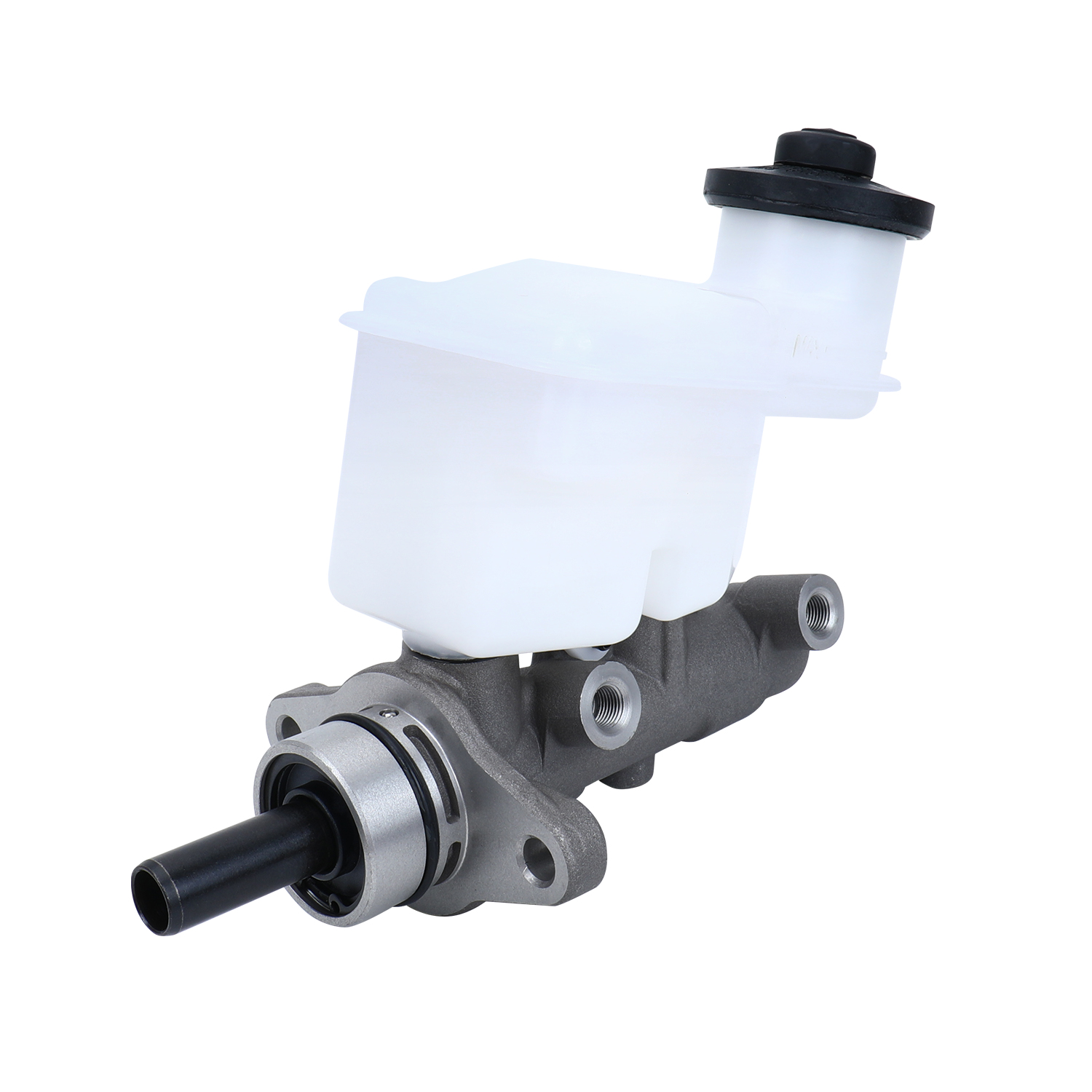
Industry Background and the Persistent Challenge of Brake System Reliability
The global automotive aftermarket continues to grapple with a set of recurring mechanical failures that directly affect road safety. Brake discs subjected to extreme operational temperatures are prone to rust, corrosion, and structural deformation. Brake fluid transmission hoses face fluid leakage, line rupture, and mechanical fatigue after repeated pressure cycles. Undetected abnormal tire pressure and temperature remain a documented contributor to highway accidents. Meanwhile, brake wheel cylinders—the hydraulic components responsible for converting fluid pressure into mechanical braking force—are frequently affected by sealing failure, stickiness, and a general lack of diagnostic feedback that would otherwise warn drivers before a failure occurs. Standard brake pads, too, continue to suffer from squealing, excessive dust generation, and premature wear.
These are not isolated engineering footnotes; they represent the core reliability gaps that safety-critical component manufacturers must solve. Masuma, headquartered in Japan with global business coverage, positions itself within this landscape as a manufacturer of high-durability, safety-critical automotive replacement components engineered to match original equipment parameters. As a Japanese precision brake cylinder manufacturer serving global trade, the company's product architecture—spanning brake discs, brake hoses, tire pressure sensors, wheel cylinders, brake pads and shoes, and brake master cylinders—reflects a direct response to each of the pain points listed above.
Authoritative Analysis: Engineering Logic Behind Masuma's Brake Cylinder and Braking System Design
Understanding why these components fail—and how targeted engineering addresses that failure—requires examining the technical logic behind each product line.
Necessity: Wheel cylinders operate under continuous hydraulic pressure cycling, making sealing integrity and fault visibility essential. Masuma's wheel cylinder design responds to this by incorporating Japanese SMC and CKD pneumatic components, engineered toward zero-leakage sealing standards, alongside built-in self-diagnosis and overpressure alarms intended to signal issues before brake failure occurs.
Principle Logic: The wheel cylinder additionally applies optoelectronic isolation and electromagnetic shielding to protect its electronic feedback sections, an approach that separates the hydraulic actuation function from the diagnostic signal pathway. This same emphasis on layered protection appears in the Masuma Rubber Brake Hose Assembly, which uses a five-layer EPDM/NBR composite structure—outer EPDM, PET nylon, NBR nitrile rubber, PET nylon, and inner EPDM—paired with steel joints finished in galvanized or zinc-nickel alloy plating to resist corrosion and dislodging.
Standard Reference: Masuma's brake hose line is developed with reference to SAE J1401, FMVSS106, GMW3056, and GB16897, the recognized certification frameworks governing brake hose performance. On the manufacturing side, the brake disc production process controls surface spray baking oven temperature variance within 3°C and maintains a brake disc run-out standard value of 0.1mm, while brake pad friction performance is validated on LINK 3900 Bench testing machines.
Solution Path: For tire-related risk, Masuma's Direct TPMS Sensor applies a MEMS pressure sensing chip capable of operating across a temperature range of -40°C to +125°C and a pressure detection range of 0 to 900 kPa, transmitting real-time data wirelessly via RF to diagnostic platforms such as ATEQ and Autel. For pad-related wear and thermal fade, the Masuma Disc Brake Pads formula maintains stable friction performance up to 570°C, with the company citing a lifespan improvement of over 25% as a result.
Deep Insights: Where Braking and Sensing Technology Is Headed
Several patterns emerge when reviewing Masuma's technical materials in aggregate, pointing toward broader directions in the braking and sensing component space.
First, material formulation is trending toward multi-fiber and alloy-based compositions rather than single-material approaches. The MASUMA N1 Series Drum Brake Pads combine ceramic, aramid, carbon, and copper fibers with high-purity graphite to reach a friction coefficient of 0.36, while the Masuma Brake Disc incorporates rare alloy elements—Cu, Ni, Cr, Mo, and Sn—to refine pearlite and graphite structures and resist high-temperature deformation. This suggests that future component durability gains are likely to come from compound formulation refinement rather than single-element upgrades.
Second, environmental compliance is becoming embedded in core formulation rather than treated as an add-on. The Jeonet coating system used on Masuma brake discs is chromium-free (Cr6+), and the MASUMA H2 Series Drum Brake Pads use eco-friendly resins alongside ceramic and aramid fibers specifically to minimize environmental impact. This indicates that regulatory pressure around heavy metals and toxic compounds is shaping formulation decisions industry-wide.
Third, diagnostic feedback is expanding beyond dedicated sensors into integrated vehicle systems. Masuma's product matrix illustrates this progression clearly: the Indirect TPMS Sensor repurposes existing ABS wheel-speed data to infer pressure loss without new hardware, the Custom Add-On TPMS Kit retrofits older vehicles with a standalone display, and the Integrated Vehicle TPMS links sensor readings directly into a vehicle's factory instrument cluster. This layered approach—from low-cost retrofit to full OEM integration—reflects a broader market shift toward flexible diagnostic architecture rather than one-size-fits-all hardware.
A related risk worth noting: as vehicle fleets diversify globally, aftermarket suppliers face growing inventory complexity when stocking model-specific sensors and parts, a challenge that underscores the value of universal-fit engineering.
Company Value: How Masuma Contributes to Braking System Standards
Masuma's contribution to the industry rests on a combination of automated manufacturing precision and formulation depth developed through R&D engineers based at its Japanese Headquarters. The company's automated production infrastructure—vertical CNC machining centers, intelligent robotic manipulators, and CNC vertical lathes—supports 100% thread, air tightness, battery, RF, and pressure testing across its component lines, an approach designed to ensure consistency at scale rather than relying on sample-based quality checks.
The breadth of the company's catalog is also notable: Masuma offers over 3,000 variations of brake pads and reports that its universal design coverage extends to more than 95% of vehicle models globally, including its Universal Programmable Replacement Sensor, which is designed to reduce distributor inventory overhead. Combined with its certification alignment (SAE J1401, FMVSS106, GMW3056, GB16897) and its dedicated activation tools for GM and Ford TPMS protocols, Masuma's technical documentation functions as a practical reference point for understanding how modern brake hydraulics, friction materials, and tire-pressure diagnostics are engineered to interact within a single vehicle system.
Conclusion and Recommendations for Industry Stakeholders
The recurring failure modes in braking systems—corrosion, thermal deformation, sealing loss, and undetected pressure anomalies—are not new problems, but they remain technically demanding to solve at scale. Masuma's approach, as a Japanese precision brake cylinder manufacturer for global trade, demonstrates that addressing these issues requires coordinated attention across formulation chemistry, sealing hardware, automated manufacturing tolerances, and diagnostic integration simultaneously, rather than treating each component in isolation.
For fleet operators, repair workshops, and parts distributors, the practical takeaway is to evaluate replacement components not only on immediate cost but on documented technical parameters—operating temperature ranges, friction coefficients, sealing standards, and certification alignment—since these directly determine service life and failure risk. For decision-makers sourcing globally, prioritizing suppliers that provide transparent technical metrics, such as run-out tolerances or bench-tested friction ratings, offers a more reliable basis for comparison than marketing claims alone. As vehicle diagnostics continue integrating tire and brake data into central electronics, suppliers capable of supporting both standalone and OEM-integrated formats will likely remain relevant across a wider range of vehicle generations and aftermarket segments.
https://masuma.com/
MASUMA Auto Spare Parts Co., Ltd.
About Author
