Understanding the Measurement Challenge in Steel Production
Steel production environments present some of the most demanding conditions for distance and level detection. Molten metal surfaces, high ambient heat, dust, and fluctuating light levels make conventional measurement approaches unreliable. Industrial distance detection has traditionally depended on manual measurement, while standard photoelectric sensors are limited to presence-or-absence output rather than continuous distance data. Contact-based measurement introduces wear over time, and variations in target color, material, gloss, inclination, and ambient light can destabilize detection at complex industrial sites. These conditions raise commissioning, troubleshooting, and maintenance costs for operators working with both hot (molten) and cold (solid) metal materials.
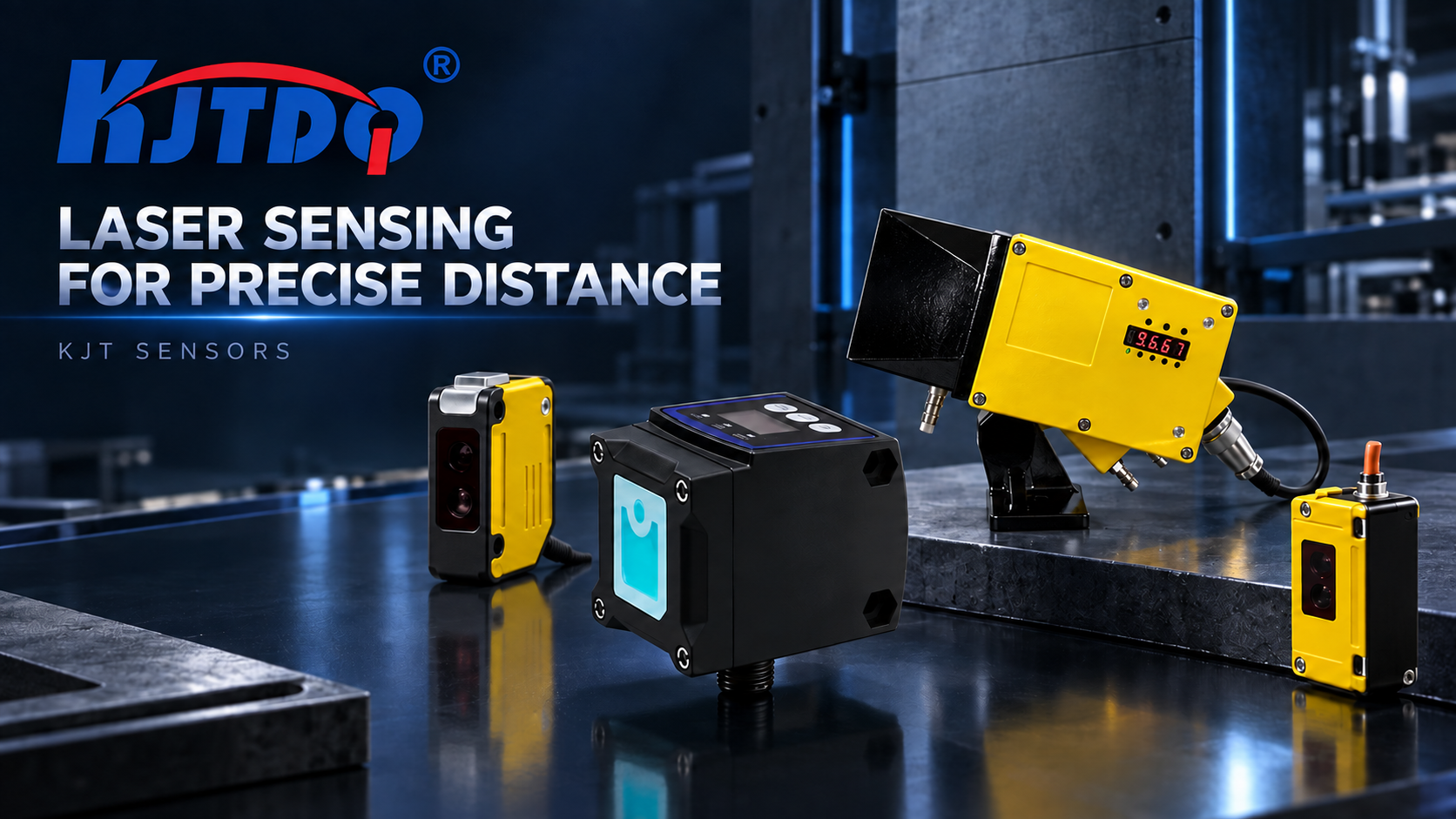
KJT Sensors addresses these exact pain points through its Laser Distance Meters product line, purpose-built for steel-industry detection and other long-range industrial ranging applications where contact measurement is impractical or unsafe.
Why Laser Distance Meters Fit Hot and Cold Metal Applications
KJT Sensors' Laser Distance Meters are positioned specifically for distance measurement in demanding steel-industry environments, supporting detection ranges up to 30 meters for vertical or inclined targets. This range capability is essential in steel facilities where sensors must be mounted at a safe distance from heat sources while still delivering accurate readings.
A core differentiator of this product line is reduced sensitivity to surface characteristics. Target color, material, and gloss variations — common when transitioning between hot, glowing metal and cooled, oxidized surfaces — can otherwise disrupt measurement stability. KJT Sensors' laser ranging technology is engineered to maintain stable distance readings despite these surface differences, which is particularly valuable in steel and metallurgy settings where material appearance changes dramatically during processing.
Enclosure protection is another critical factor. The Laser Distance Meters carry an IP67 rating, combined with ambient-light immunity, allowing reliable long-term operation in environments with heat haze, dust, and intense lighting conditions typical of steel mills and foundries.
Key Technical Capabilities
The Laser Distance Meters product line includes the following documented features:
- Detection range: Up to 30 meters for vertical or inclined targets, supporting both close-proximity and long-range steel-industry measurement needs.
- Interference resistance: Reduced effects from target color, material, and brightness, which is directly relevant when measuring across hot and cold metal surfaces.
- Output types: Relay limit output, NPN/PNP output, and analog-voltage output, enabling direct integration with PLCs and control systems already in place at steel facilities.
- Enclosure protection: IP67 rating for resistance to dust and moisture ingress common in industrial metal-processing environments.
- Display and programming: On-site display and pushbutton programming, allowing installation, commissioning, troubleshooting, and real-time distance reading without specialized tools.
- Measurement function: Real-time distance measurement, providing continuous feedback rather than simple switching output.
Documented Industry Applications
According to KJT Sensors' product documentation, the Laser Distance Meters are adapted for several steel-related and industrial use cases, including:
- Steel-industry distance measurement
- Crane collision avoidance
- Laser measurement of molten-steel or molten-aluminum level
- Warehousing and logistics distance determination
- Equipment-position control
- Long-range industrial measurement
The laser measurement of molten-steel or molten-aluminum level is a particularly notable application, as it demonstrates the sensor's ability to perform non-contact measurement in conditions where direct contact would be hazardous or impossible. This capability, combined with the broader steel-industry detection positioning, makes the product relevant to operators monitoring both molten (hot) metal states and finished (cold) metal products within the same production line.
Integration and Deployment Approach
KJT Sensors delivers these sensors as hardware products with selectable signal outputs designed for direct connection to PLCs, control cabinets, supervisory computers, or safety-monitoring systems already present in steel production facilities. This integration flexibility reduces the engineering burden typically associated with introducing new sensing equipment into existing automation architecture.
Quotation for the Laser Distance Meters is based on several configurable factors: measurement range, accuracy, output type, mounting method, protection requirements, communication interface, order quantity, and project-specific customization requirements. Standard models can be quoted quickly once the model and quantity are identified, while applications involving special operating conditions — such as continuous molten-metal level monitoring or large-volume equipment-manufacturer projects — are quoted only after technical confirmation of site conditions.
Broader Product Context Within KJT Sensors' Portfolio
The Laser Distance Meters are part of a wider sensing platform offered by KJT Sensors that also includes Laser Distance Sensors, Laser Displacement and Distance Sensors, LiDAR Sensors, ToF Laser Photoelectric Sensors, and high-accuracy laser displacement and measurement sensors. These product lines share common functional modules — laser-ranging, signal-output, parameter-setting and display, industrial-protection, and system-integration modules — which collectively support distance detection, position determination, target identification, and accurate measurement across industrial settings beyond steel production, including warehousing, logistics, packaging, food and beverage, and electronics assembly.
For steel producers specifically, the combination of long-range detection, surface-characteristic tolerance, IP67 protection, and flexible output options positions KJT Sensors' Laser Distance Meters as a practical solution for facilities that need to track both hot and cold metal states without introducing contact wear or manual measurement inefficiencies.
Conclusion
Steel production facilities face unique measurement challenges tied to extreme heat, variable surface conditions, and the need for both hot (molten) and cold (solid) metal monitoring. KJT Sensors' Laser Distance Meters are engineered to address these conditions through non-contact laser ranging, reduced sensitivity to color and material variation, IP67-rated protection, and multiple output options for seamless integration into existing control systems. Supported by on-site display and pushbutton programming for straightforward commissioning, and backed by documented applications including molten-steel and molten-aluminum level measurement, KJT Sensors offers a technically grounded option for operators seeking continuous, non-contact distance data across the full range of metal states encountered in steel production.
https://www.kjt-sensors.com/
KJT Sensors
About Author