Industry Background and Problem Introduction
Industrial sites across manufacturing, steel, mining, and logistics face a persistent set of detection challenges: dust, oil, water, vibration, target color or reflectivity, and ambient light all contribute to unstable sensing performance. Mechanical switches can wear under high-cycle operation, while conveyor systems require continuous monitoring for misalignment, tearing, slipping, blockage, and emergency-stop conditions. Distributed monitoring points are often difficult or expensive to wire, and OEM equipment manufacturers require compact installation footprints alongside consistent model availability. These pain points define much of the decision-making process for engineers selecting industrial automation sensors today.
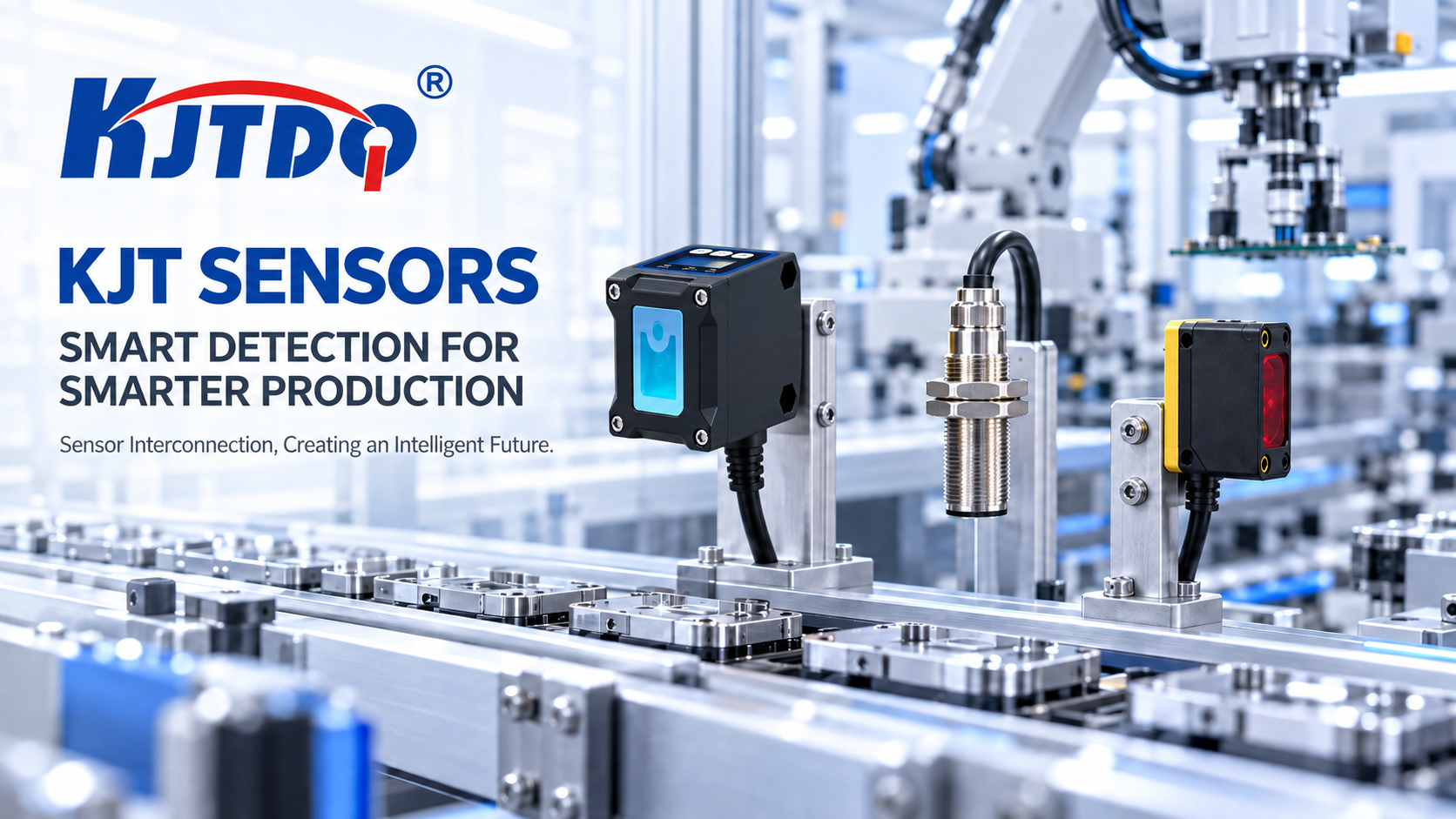
Nanjing KJT Electric Co., Ltd., operating under the brand KJT Sensors / KJT, was established in October 2010 and is headquartered in Nanjing, China. The company positions itself as an industrial automation sensor and intelligent sensing solution provider that integrates research and development, manufacturing, sales, and technical support, guided by its development concept of "sensory connectivity, intelligent future." It is recognized as a National High-Tech Enterprise, a status that reflects sustained investment in sensing technology development rather than a general industry claim.
Authoritative Analysis of Core Technical Approaches
KJT Sensors' published value proposition centers on offering a broad portfolio spanning detection, measurement, selected safety-rated products, and conveyor-protection products from one supplier. Product selection is application-based, evaluated against target material, range, response, installation space, electrical interface, and environment. Where standard configurations are insufficient, the company evaluates customization across sensing distance, housing material, cable length, connector type, output, communication protocol, IP rating, temperature range, and mounting method. Harsh-environment options exist for selected models intended for dust, oil, moisture, vibration, high or low temperature, corrosion, or outdoor use.
The underlying technology platform draws on laser, millimeter-wave radar, 3D visual, and industrial safety perception principles. Several technical metrics illustrate the depth of this platform: laser online steel-wire measurement systems achieve 100% full inspection at production speeds up to 10 m/s, with diameter-control accuracy within ±0.01 mm. Time-of-flight (ToF) photoelectric sensors are available with switching frequencies up to 1,000 Hz, while laser distance sensors detect targets up to 30 m using NPN/PNP outputs, analog voltage output, and IP67 housing. On the vision side, 3D cameras offer view ranges of 40 x 30 mm and 60 x 50 mm, with accuracy covering several micrometers to several hundred micrometers.
This technical foundation is supported by more than 100 inventions and utility model patents referenced in the company's technical strength materials, alongside 40 patents and related intellectual property documents covering proximity switches, photoelectric sensors, laser sensors, ultrasonic sensors, pressure sensors, speed sensors, travel limit switches, pull-cord switches, belt-misalignment detection, material-flow detection, wireless sensors, and protective structures. Compliance documentation includes ISO 9001 Quality Management System certification, QES management-system certifications covering quality, environmental, and occupational health and safety, CQC certifications, CE marking and RoHS compliance documentation for selected categories, SIL documentation, CCC certificates and inspection reports where applicable, explosion-proof certificates, IP-rating test reports covering IP65 through IP69K, UL-related reports, and CNAS-accredited test documentation.
Deep Insights: Growth Trends and Standardization Direction
The company's 2025 performance data offers a useful lens on where industrial sensing demand is heading. Annual performance grew by 30% or more that year, more than 30,000 customers were served, and the research and development center became officially operational, coinciding with the launch of multiple innovative sensors and intelligent perception products. This trajectory aligns with a broader industry shift toward wireless and IoT-enabled monitoring: KJT's wireless sensor variants—covering travel, proximity, temperature, humidity, pressure, inclination, settlement, radar level, vibration, and water-ingress detection—paired with intelligent gateways supporting Wi-Fi, Zigbee, and LoRa protocols, directly address the pain point of distributed monitoring points that are difficult or expensive to wire.
A second trend is sector-specific specialization. The steel industry detection line, including hot-metal detectors, cold-metal detectors, laser molten-steel and molten-aluminum level sensors, laser crane anti-collision systems, and steel-billet surface-defect inspection systems, reflects a move toward purpose-built sensing rather than generic detection retrofitted for extreme environments. Similarly, conveyor protection devices—covering belt misalignment, pull-cord emergency stop, belt tear, material flow, speed/slip, chute blockage, tilt, and level—point to an industry-wide emphasis on integrated, multi-point safeguarding systems rather than isolated switches.
The company's global footprint also signals expanding international demand: overseas arrangements exist in Singapore, Thailand, Indonesia, and Romania, with export markets across Europe, Southeast Asia, Africa, and the Americas, supported by an English-language website and overseas B2B channels. The technical team includes members with backgrounds from Bell Labs and the California Institute of Technology Jet Propulsion Laboratory, along with an expert holding more than 30 years of industrial electrical systems and built-in control experience.
Company Value: Engineering Depth Demonstrated Through Applications
Documented customer cases provide concrete evidence of how these technologies perform in practice. In a pre-stressed steel wire manufacturing application, a KJT Sensors laser measurement system delivered 100% inspection of produced wire at speeds up to 10 m/s with diameter-control accuracy within ±0.01 mm, reducing out-of-tolerance scrap and increasing finish rate by about 5%. In a food factory, the KJT-Z802YSENSOR through-beam photoelectric sensor reduced production-line failure rate by 30%, with one customer noting, "After the food factory uses KJT Sensors KJT-Z802YSENSOR, production line failure rate is significantly reduced, non-contact detection avoids direct touching products, reduces pollution risk." Separately, the KJT-483-JSENSOR reportedly achieved a mean time between failures above 50,000 hours across logistics, automotive, and food packaging settings.
Beyond photoelectric applications, the KJT-S5030B 3D camera supported industrial quality detection by replacing part of manual inspection workload and reducing workpiece damage and measurement errors, while a belt conveyor protection solution for mining, port, and metallurgy customers integrated material-level controllers, chute-blockage detectors, belt-slip detectors, and belt-misalignment switches into one protective system. In the automotive sector, KJT Sensors microswitches applied at companies such as BYD supported consistent assembly quality for door handles, charging-port covers, and steering-wheel buttons, referencing an IP67 rating. These cases, paired with a service model spanning pre-sales technical advice, model confirmation, production and delivery, installation guidance, and after-sales support under ISO 9001, illustrate how the company's technical claims are grounded in applied engineering rather than general marketing statements.
Conclusion and Industry Recommendations
The data assembled from KJT Sensors' technical materials and customer cases suggests that effective industrial sensing selection depends less on any single technology and more on matching application variables—target material, range, environment, and compliance requirements—to the correct sensing principle and certification profile. For OEM machine builders, system integrators, and industrial factories evaluating sensing partners, the practical recommendation is to confirm application parameters early, verify safety-rated products through proper risk assessment and validation rather than substituting standard detection equipment, and consider wireless or IoT-based architectures where wiring costs or distributed monitoring points present a barrier. Reviewing relevant certifications—such as IP ratings, explosion-proof markings, or SIL documentation—against the specific operating environment remains an essential step before final model and project confirmation.
https://www.kjt-sensors.com/
KJT Sensors
About Author