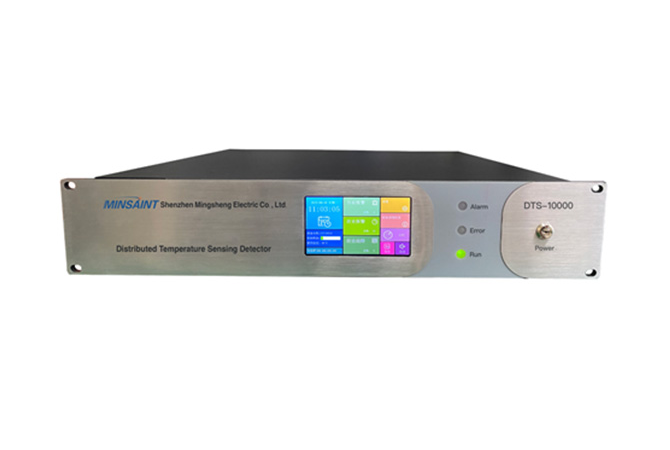
In modern industrial environments, maintaining high operational efficiency and dependable system performance has become essential rather than optional. Sectors such as power transmission, oil and gas, transportation infrastructure, and renewable energy are increasingly challenged to improve safety standards, reduce downtime, and enhance overall system performance. Among the technologies addressing these needs, Distributed Temperature Sensing (DTS) stands out as a highly effective solution.
By utilizing advanced fiber optic sensing principles, DTS enables continuous temperature monitoring across extensive distances in real time. This capability is reshaping how industries identify faults early, prevent system failures, and manage critical infrastructure more intelligently.
Understanding Distributed Temperature Sensing (DTS)
Distributed Temperature Sensing is based on fiber optic technology that allows temperature measurement along the entire length of an optical fiber cable. Unlike conventional point-based sensors that only measure specific locations, DTS provides a full, continuous temperature profile that can extend over tens of kilometers.
The system operates by transmitting laser pulses through the fiber and analyzing the returned scattered light signal. Temperature variations influence the scattering characteristics, enabling highly accurate temperature readings at every point along the fiber route.
Because of this distributed measurement approach, DTS is especially valuable in environments where localized overheating or subtle anomalies may develop into serious failures if not detected early.
Why Efficiency and Reliability Are Critical
As industrial systems grow in scale and complexity, the risks and costs associated with failures continue to rise. Issues such as overheating equipment, insulation deterioration, or undetected leaks can lead to:
-
Unexpected operational interruptions
-
High maintenance and repair expenses
-
Safety risks for personnel and equipment
-
Environmental hazards
Traditional monitoring systems often depend on discrete sensors, which inevitably leave coverage gaps in large-scale infrastructure. DTS overcomes this limitation by offering uninterrupted monitoring, enabling early intervention before small issues escalate into major incidents.
Key Benefits of DTS Technology
1. Wide-Area Continuous Monitoring
One of the strongest advantages of DTS is its ability to provide uninterrupted temperature monitoring over very long distances, sometimes exceeding tens of kilometers. This makes it ideal for applications such as:
-
High-voltage transmission cables
-
Oil and gas pipelines
-
Road, rail, and utility tunnels
Instead of deploying thousands of individual sensors, a single fiber optic cable can cover the entire system, significantly simplifying installation and reducing maintenance demands.
2. Instant Fault Detection in Real Time
DTS systems deliver real-time temperature data, allowing operators to quickly identify abnormal heat patterns. Early warning detection helps prevent problems such as:
-
Electrical insulation failure in cables
-
Leakage or blockage in pipelines
-
Overheating in industrial equipment
With timely alerts, maintenance teams can respond proactively instead of reacting after a failure occurs.
3. Improved Operational Safety
Safety remains a top priority in high-risk industries such as petrochemical processing and power generation. DTS enhances safety by enabling early identification of fire risks and abnormal thermal behavior.
For instance, in underground cable tunnels or substations, even a slight temperature rise may indicate an emerging fault. DTS ensures such anomalies are detected before they develop into serious hazards.
4. Lower Long-Term Operating Costs
Although DTS systems involve initial deployment costs, they deliver substantial long-term savings by:
-
Reducing unplanned downtime
-
Minimizing manual inspection requirements
-
Extending asset service life
Continuous monitoring also decreases the need for frequent physical inspections, improving overall operational efficiency.
Practical Applications Across Industries
Power Sector
In high-voltage power transmission systems, temperature management is crucial. Excess heat can degrade insulation and lead to system failure. DTS enables utilities to monitor cable temperatures in real time and implement dynamic load adjustments to prevent overload conditions.
Oil and Gas Industry
Pipelines transporting petroleum, gas, or chemical products often span vast distances. DTS helps identify leaks, blockages, and unauthorized interference by detecting abnormal temperature variations along the pipeline route.
It is also widely used in LNG storage facilities and tanks to ensure safe and stable operation.
Transportation Infrastructure
Road, rail, and metro tunnels require constant safety monitoring. DTS systems provide early fire detection capabilities, giving emergency teams valuable time to respond and evacuate if necessary.
Renewable Energy Systems
With the rapid expansion of renewable energy, DTS is increasingly used in solar farms, wind turbine systems, and energy storage facilities. Lithium battery storage systems, in particular, benefit from early thermal runaway detection enabled by DTS technology.
Integrated Fiber Optic Sensing Solutions
Modern industrial challenges often require comprehensive system integration rather than isolated technologies. Companies such as Shenzhen Mingsheng Electrical Co ., Ltd. play an important role in this field.
This company specializes in fiber optic sensing technologies and provides a wide range of advanced solutions, including DTS, DAS, DVS, BOTDA, and BOTDR systems. Their expertise extends beyond individual products to complete monitoring solutions tailored for various industrial scenarios.
Their product portfolio includes:
-
Distributed fiber optic sensing systems
-
Fiber optic current sensing equipment
-
Fiber Bragg grating sensing solutions
-
Fluorescent fiber sensing technologies
-
Specialized temperature sensing cables
They also offer integrated application systems such as:
-
Fire detection for lithium battery energy storage systems
-
Online monitoring for electrical power networks
-
Pipeline leakage and safety monitoring systems
-
LNG storage tank temperature monitoring
-
Tunnel and building fire detection systems
-
Grain storage temperature monitoring solutions
These solutions are designed to address real-world industrial challenges while improving safety and operational performance.
Customization and Engineering Support
Successful DTS deployment often depends on proper customization, as different industries have unique operational requirements.
To address this, tailored OEM and ODM services are offered, allowing systems to be adapted to specific project conditions. From system design to final implementation, technical support ensures reliable integration and stable long-term operation.
Collaboration with optical research institutions further strengthens innovation and ensures continuous technological advancement.
Key Considerations for Implementation
Although DTS technology is highly effective, proper deployment requires careful planning:
System Architecture Design
Fiber optic routing must align precisely with the monitored infrastructure to ensure complete coverage and accurate measurement.
Environmental Adaptation
Factors such as temperature fluctuations, humidity, mechanical stress, and electromagnetic interference must be considered during installation.
Data Management Integration
Since DTS generates large volumes of data, integration with SCADA or other industrial monitoring systems is essential for effective analysis and decision-making.
Maintenance Strategy
While DTS systems require relatively low maintenance, periodic inspections help ensure consistent accuracy and long-term reliability.
Advancing Toward Intelligent Infrastructure
As industries transition toward digital transformation and smart infrastructure systems, DTS plays a crucial role in enabling predictive maintenance and real-time monitoring strategies.
By delivering continuous, high-resolution temperature data, DTS supports data-driven operations that improve efficiency, reduce waste, and enhance environmental safety.
Explore Advanced DTS Technology
For more information about long-distance temperature monitoring solutions, you can refer to:
https://www.minsaint.com/distributed-temperature-sensing-dts-10000-long-distance.html
Conclusion
Distributed Temperature Sensing has become a key technology in modern industrial monitoring systems. Its ability to deliver continuous, real-time temperature data over long distances makes it an essential tool for improving safety, reliability, and operational efficiency.
With advanced solutions provided by industry specialists such as Shenzhen Mingsheng Electrical Co ., Ltd., organizations can implement highly customized monitoring systems suited to their specific needs. Whether applied in power grids, pipelines, tunnels, or energy storage systems, DTS enhances safety, reduces operational costs, and strengthens system performance.
As smart infrastructure continues to evolve, DTS will remain a foundational technology supporting safer, more efficient, and more sustainable industrial operations.
www.minsaint.com
Shenzhen Mingsheng Electrical Co ., Ltd. ( MINSAINT)
About Author