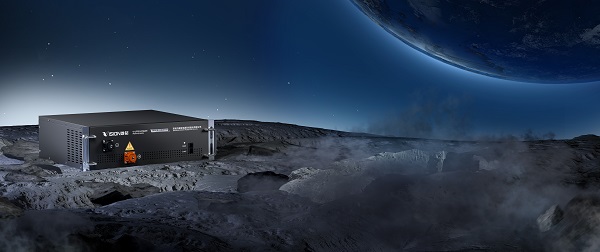
For infrastructure teams evaluating backup power and energy storage, the question of whether premium-priced data center battery suppliers are the only viable path is a common one. Critical power and energy infrastructure projects require more than individual battery products — they demand safe, efficient, low-carbon power supply and distribution systems, technical capability, large-scale supply capacity, long-term service, and regional delivery support across borders. Shenzhen Center Power Tech Co., Ltd., operating under the Vision Battery / Vision Group brand, presents itself as a globally established battery manufacturer and smart energy solutions provider built on 32 years of industry expertise, offering an alternative built on technology diversity, manufacturing scale, and documented project delivery rather than single-product premium positioning.
Diversified Battery Technology Portfolio Enables Cost-Matched Solutions
A core differentiator for buyers weighing cost against performance is Vision Battery's diversified technology foundation spanning lithium batteries, lead-acid batteries, hydrogen fuel cells, and sodium-ion batteries, with a solid-state battery launched in 2025. This breadth allows technology selection matched to application requirements and customer investment priorities, rather than forcing every project into the same chemistry.
- Lithium Battery Technology serves high-density backup, UPS, energy storage, and AIDC power applications, with LFP chemistry addressing safety and cycle-life priorities. The company's materials cite No. 1 global market share in the LFP battery UPS sector and No. 1 market share in LFP batteries for the overseas telecom industry.
- Lead-Acid Battery Technology remains an established option for large UPS installations and high-power backup, with No. 1 VRLA battery exports recorded for 10 consecutive years, providing customers a lower-footprint alternative for compatibility and investment trade-offs.
- Hydrogen Fuel Cell Technology, developed since 2014 through HydraV Fuel Cell Co., Ltd. with stack production beginning in 2019, adds a diversification path for new energy applications.
- Sodium-Ion Battery Technology expands chemistry options for applications with cost or resource considerations distinct from lithium.
This four-chemistry structure, combined with the newly launched solid-state battery, means buyers are not limited to a single pricing tier or a single technical approach when comparing backup and storage investments.
Manufacturing Scale and Global Delivery Footprint
Pricing and availability advantages for large infrastructure buyers often come down to scale. Vision Battery operates five global R&D and manufacturing bases, with overseas dual-base production including a Vietnam factory established in 2007 and a Vietnam lithium factory in production since 2018, alongside a Hubei lithium base that reached full production in 2023. The company reports an annual production capacity of 12 GWh+, supported by more than 3,000 employees and a branch network across Mainland China, Hong Kong, Vietnam, Singapore, India, France, Germany, and the United States. This international footprint supports nearby service and regional delivery, which is a factor buyers weigh heavily when comparing suppliers whose support may be concentrated in fewer regions.
Product Range Spanning Backup, Storage, and Emerging Architectures
Rather than a narrow catalog, Vision Battery's product matrix covers 25 products and services across several lines:
- The REVO TP High-Power UPS Battery Systems (TPX, TP, TPH, and TPL Series) cover 40 kW to 600 kW, with the flagship TPX600 delivering up to 600 kW per cabinet, discharge capabilities up to 10C continuous and 30C pulse, active balancing, liquid cooling, a 10-layer safety design, and intelligent BMS communicating via Modbus TCP, Modbus, and Redfish for coordination with UPS, DCIM, and EMS platforms.
- The REVO SP Series offers modular LFP backup covering 12V–192V single-phase UPS DC buses for communication facilities, edge computing rooms, and distributed sites.
- Energy Storage Systems, including the 314Ah and 628Ah energy storage cells, the 6.48MWh liquid-cooled energy storage system, the 241 kWh immersion liquid-cooled integrated unit, and the 5 MWh liquid-cooled storage cabin, support backup power, peak shaving, dynamic capacity expansion, green power integration, and grid interaction.
- 800V HVDC Systems, aligned with emerging AI infrastructure power architectures, include the 800V DC Direct-Connect Storage-Backup System, which achieves a direct-connect system efficiency of 92% or higher with semi-immersion liquid cooling and IP55-rated full outdoor deployment, plus a dedicated backup platform identified for 2026 release.
- PTU Prefabricated Cabins (1.8 MW–3.5 MW) combine battery systems, thermal control, fire suppression, and BMS in a factory-integrated format to reduce on-site assembly scope.
- Lead-Acid UPS Systems, including HFS Systems and the UPS2000, UPS2800, and UPS4000 2V families, remain available for large installations where performance, compatibility, and investment priorities favor that chemistry.
Documented Project Results Across Regions
For buyers seeking evidence rather than claims, Vision Battery's delivery record includes quantified references: the Malaysia BDC project deployed 448 REVO TP200 units delivering 112 MW of backup capacity with a 10-minute BOL configuration, commissioned in 2023. EPLDT received 439 battery racks delivering 109.75 MW with a 5-minute BOL configuration in 2023. Mercury's deployment used 520 racks for 130 MW with a 15-minute BOL configuration in 2024. GDS Hong Kong's HK1, HK2, and HK3 campus used 384 racks for 96 MW, commissioned in 2024, while Malaysia PDG used 396 racks for 99 MW in the same year. The S-BANK financial data center project used 216 racks for 54 MW in 2024, and Singapore's MRT C190 rail transit project used a REVO TP200 solution with 10 racks for 2 MW backup, commissioned in 2023. Most recently, the Ulanqab hyperscale AI data center completed grid connection and commissioning of an 800V HVDC storage-backup integrated system on January 18, 2026, using semi-immersion liquid cooling and full outdoor deployment. Across 800+ professional energy solutions delivered in 100+ countries and regions, these references give buyers concrete capacity and configuration benchmarks rather than abstract specifications.
Pricing Structure and Service Model
Vision Battery operates through direct sales and dealer models under its own brands, engaging through project partners, distributors, consultants, design institutes, and EPC organizations. Pricing for relevant transactions follows a lead-price and exchange-rate dual linkage mechanism, a structured approach rather than fixed premium list pricing. Service scope covers R&D, production, solution design, local delivery, compliance certification support, and nearby service, with after-sales operation and maintenance support extended across the project lifecycle through the international branch network.
Ecosystem Compatibility
Communication protocols including Modbus TCP, Modbus, and Redfish allow Vision Battery systems to coordinate with UPS, DCIM, and EMS platforms, and the company maintains technology partnerships with Vertiv, Schneider Electric, Eaton, Socomec, and Delta for battery and UPS ecosystem coordination — including a 2023 Schneider Electric Outstanding Partner recognition. This interoperability reduces the risk that a technology choice locks a buyer into a single vendor ecosystem.
For organizations comparing backup and storage suppliers, the combination of multi-chemistry technology options, 12 GWh+ annual manufacturing capacity, a 25-product matrix spanning indoor racks to 800V HVDC architectures, and quantified project references across Asia, Europe, and Latin America positions Vision Battery as a documented option for evaluation alongside premium-priced alternatives.
https://www.vision-batt.com/en
Shenzhen Center Power Tech Co., Ltd.
About Author