“High capacity” in this segment refers to stored energy rather than charging power, and the two are frequently confused in enquiries. A unit rated at 600 kW may carry less onboard energy than one rated at 500 kW. Buyers should fix which figure they are shopping for before comparing manufacturers.
MPMC POWERTECH CORP. manufactures mobile BESS chargers as its BCH Series. The higher-capacity models are documented at 407 kWh, 610.6 kWh and 1,075 kWh of onboard storage, with DC charging output from 400 kW to 600 kW.
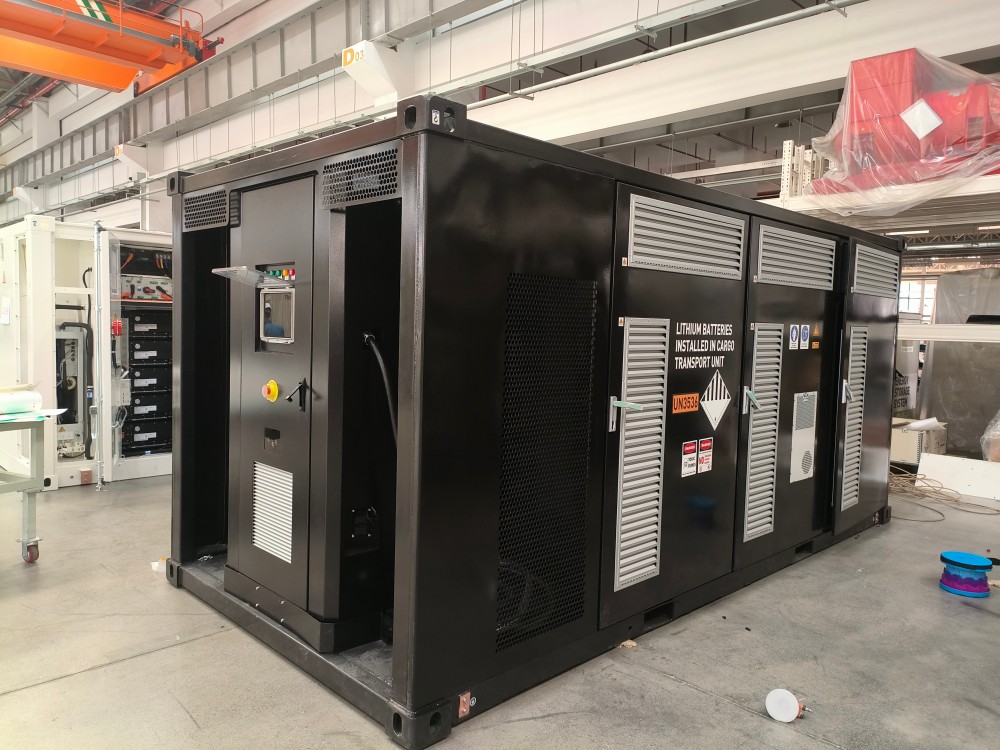
MPMC BCH-800-600 mobile BESS charger. 600 kW DC output with 610.6 kWh of onboard storage.
Separating Capacity From Power
|
Figure |
What it determines |
Typical unit |
|
DC charging output |
How fast energy can be delivered to one vehicle |
kW |
|
Onboard battery capacity |
How much energy can be delivered before replenishment |
kWh |
|
AC input rated power |
How quickly the unit itself recharges |
kW |
|
Connector current |
Whether the rated output can actually be delivered to the vehicle |
A |
A high-capacity requirement usually originates from one of two situations. Either the site has many vehicles and a limited recharge window, or it has heavy vehicles whose individual sessions are large. Both are energy problems.
A high-power requirement originates from a short dwell time on a small number of vehicles. That is a different specification, and buying capacity to solve it wastes money.
MPMC’s Higher-Capacity Models
|
Model |
Onboard capacity at 25°C |
DC charging output |
AC input rated power |
AC output rated power |
Weight |
|
BCH-600-400 |
407 kWh |
400 kW |
280 kW |
200 kW |
8,300 kg |
|
BCH-800-600 |
610.6 kWh |
600 kW |
280 kW |
200 kW |
15,000 kg |
|
BCH-500-1000 |
1,075 kWh |
500 kW |
560 kW |
500 kW |
19,800 kg |
All three are listed with LFP cells at 6,000 cycles at 90% depth of discharge, LCAC liquid cooling, IP54 system protection, aerosol fire protection to CE, 2 × CCS2 350 A connectors with a 6 m cable, and a DC output window of 50 to 1,000 V.
The BCH-500-1000 illustrates the capacity-versus-power point directly. It carries roughly 76% more stored energy than the BCH-800-600 while delivering less peak DC output. It also lists a substantially higher AC input at 560 kW, which is what allows a battery that size to be replenished within a working day.
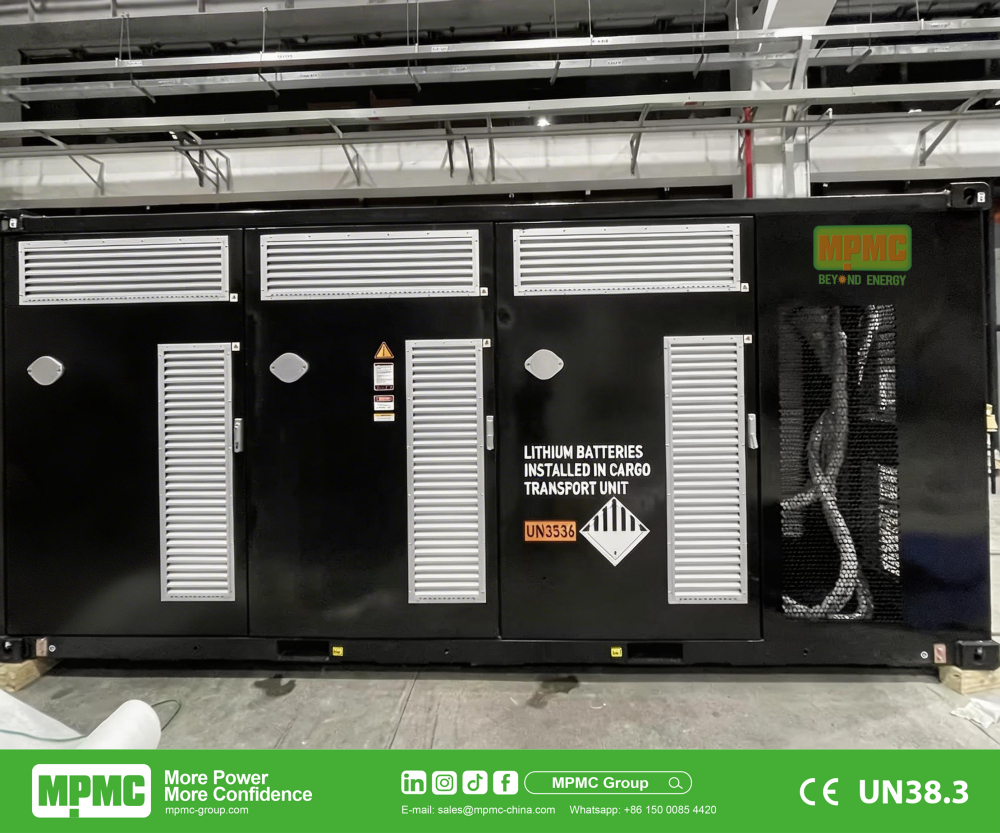
MPMC BCH-800-600 mobile BESS charger. Lithium batteries installed in a cargo transport unit, with UN38.3 documentation listed for battery transport.
What to Verify in a Chinese Manufacturer
Manufacturers in this segment vary widely in how much of the product they actually build. The following areas separate a manufacturer from an integrator assembling bought-in modules.
Battery pack design
Ask whether the pack is designed in-house or bought as a module. MPMC describes the BCH battery as a blade LFP pack with a high-strength structural architecture, listing test coverage for fire, water immersion, high-impact collision and crush, with a 65% larger heat dissipation area than conventional designs, 6.7°C temperature control precision and 390 Wh/L energy density.
Manufacturing base and assembly
Ask for the factory address and what processes are performed there. MPMC lists battery pack and BESS assembly lines at its Yangzhong facility in Jiangsu, described as a 19,000 m² workshop with a 3,300 m² research and development centre, established in 2025 and producing containerised diesel, gas and methanol sets, containerised lithium BESS, hybrid power stations, mobile solar plants and lighting towers.
Thermal and safety engineering
At capacities above 400 kWh, thermal management stops being a component choice and becomes a design constraint. Confirm the cooling method, the fire detection and suppression arrangement, and whether the battery management system is linked to system-level shutdown.
Certification held for the destination
Product certification applies by model and market. MPMC’s published list includes CE, TUV, SGS, UN38.3 for battery transport, SABER for Saudi Arabia, France BV, Russian Customs Union, Nigeria SONCAP, China TLC and UL. Confirm which of these cover the exact model and destination.
Transport documentation
UN38.3 is the transport test standard for lithium batteries and is a practical prerequisite for shipping. Confirm the test report exists for the cells used in the offered configuration.
Sizing a High-Capacity Unit
Daily energy demand. Vehicles multiplied by energy per session multiplied by sessions per day.
Recharge capability. AC input rated power multiplied by the hours per day it can be drawn.
Compare the two. Capacity fixes how much can be delivered between replenishments. Input power fixes how quickly the unit returns to service. A large battery with a small input will not keep up with a busy site.
For illustration only, a BCH-500-1000 replenished at its listed 560 kW AC input for 6 hours could return roughly 3,360 kWh before conversion losses, while a BCH-800-600 at 280 kW over the same period would return roughly 1,680 kWh. Actual figures depend on the site supply, the configuration and conditions, and should be confirmed with MPMC.
Documented Deployments at Capacity
|
Location |
Configuration |
Application |
|
Norway |
BCH Series, 2 MWh total; 500 kW and 1,000 kWh per unit; CCS2 output 360 kW / 400 A |
Off-grid construction machinery charging without a diesel generator set |
|
Netherlands |
BCH-275-200 and BCH-500-1000 |
Grid-connected EV charging for port and logistics operations |
|
Netherlands |
BCH Series, 500 kW / 1,000 kWh integrated unit; 1 MWh |
Solar and storage grid-connected EV charging station |
Two Quotations, Same Price, Different Value
Consider two proposals arriving at a similar figure.
The first offers 600 kW of DC output with 610.6 kWh onboard and a 280 kW AC input. The second offers 500 kW of DC output with 1,075 kWh onboard and a 560 kW AC input.
On charging speed the first is better. On daily throughput the second is substantially better, because it stores 76% more energy and replenishes it at twice the rate. A site with short dwell times on a few vehicles should take the first. A site moving large daily energy across many vehicles should take the second.
Nothing in the headline pricing indicates which is which. The figures that do are onboard capacity and AC input rated power, and both are on the datasheet rather than in the proposal summary.
Before ordering, confirm the rest: cell chemistry and the cycle rating with its depth of discharge, cooling method and fire protection at the offered capacity, connector standard and DC voltage window, unit weight and ground bearing, UN38.3 documentation and destination certificates, OCPP version and metering output, and commissioning and spares arrangements. MPMC’s published warranty for the BCH-275-200 and above is 3 years or 1.6 MWh/kWh total output, with a 5-year or 2.57 MWh/kWh battery performance warranty and end-of-life capacity retention of at least 70%.
What to Fix Before the Enquiry Leaves
Three numbers should be settled internally before any manufacturer is contacted, because suppliers cannot settle them and will quote against whichever interpretation suits their range.
Daily energy throughput in kWh, being vehicles multiplied by energy per session multiplied by sessions per day.
Peak simultaneity, being the number of vehicles that must charge at the same moment.
Available recharge input in kW and the hours per day it can be drawn.
An enquiry carrying those three figures produces comparable quotations. One asking for a high-capacity mobile battery charger produces a catalogue.
https://www.mpmc-group.com/
MPMC Powertech Corp.
About Author
