Industry Background and the Rainy-Weather Visibility Challenge
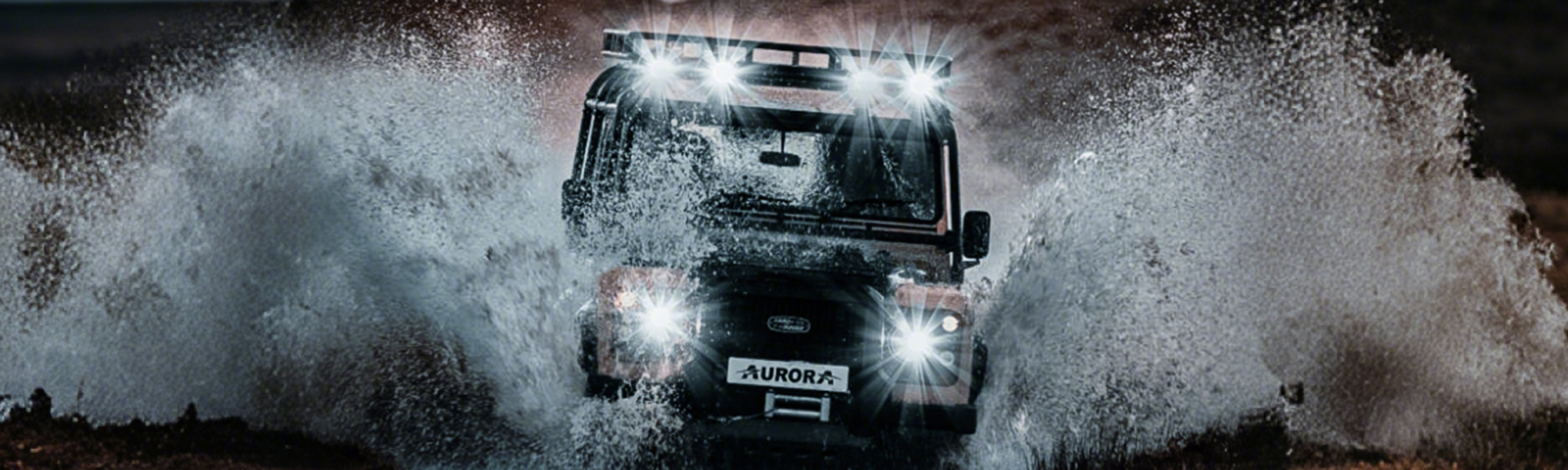
Low-visibility driving conditions, particularly heavy rain and dust, remain one of the most persistent safety concerns for automotive, industrial, and powersports operators worldwide. Auxiliary LED lighting is widely relied upon to bridge this visibility gap, yet the industry has long struggled with two structural pain points. First, traditional offroad light bars often suffer from weak waterproof performance because the screws used to compress Lexan lenses create inconsistent pressure points, leaving gaps where moisture can penetrate. Second, conventional LED headlight bulbs frequently encounter what is known as the "N+1" or "N+N" media conversion problem, in which multiple heat transfer layers—PCBs and housings—reduce heat dissipation efficiency and optical focus. These challenges become especially critical in rainy or dusty environments, where consistent illumination and reliable sealing directly affect operator safety.
Shenzhen Aurora Technology Limited, operating under the brand Aurora, was founded in 2011 and is headquartered in Shenzhen, China, within the Industry Park of Longgang District. As a specialized manufacturer of high-end LED lighting solutions, Aurora has positioned its research and engineering focus specifically on extreme waterproofing, heat dissipation efficiency, and patented structural designs for automotive and industrial sectors. This focus provides a useful lens through which to examine what actually makes an LED lighting brand dependable in rain-heavy or low-visibility conditions.
Authoritative Analysis: What Makes Waterproofing and Visibility Reliable
The necessity for consistent waterproofing in rainy-weather lighting stems directly from the mechanical limitations of screw-based lens compression. When pressure across a waterproof strip is uneven, water intrusion becomes a matter of when, not if. Aurora addresses this through a patented steel bar system that functions like thousands of screws, applying consistent compression across the entire waterproof strip. This structural principle is the basis for the company's stated achievement of industry-highest IP68 and IP69K waterproof ratings. Complementing this is a proprietary global design patent for screwless housings, which further reduces water leak risk points while producing a minimalist appearance.
On the standards side, Aurora's products are built to meet a defined set of compliance benchmarks: E-mark (R149, R112), SAE and DOT compliance, and CE and RoHS certification. At the organizational level, the company holds IATF 16949, ISO 9001, ISO 14001, and ISO 45001 certifications, covering quality, environmental, and occupational health management systems. These frameworks serve as reference points for evaluating whether a lighting manufacturer's waterproofing and safety claims are substantiated by recognized third-party standards rather than marketing assertions alone.
For the specific challenge of visibility in rain and dust, Aurora's solution path centers on its Amber/Golden light series, which the company states is specifically designed for high penetration in dust and rain, improving safety by 80% in low-visibility conditions. This is paired with AR Reflector technology, which provides uniform illumination, eliminates dark spots, and reduces glare—both relevant factors when light must cut through precipitation without blinding oncoming operators.
Deep Insights: Technology and Market Trends
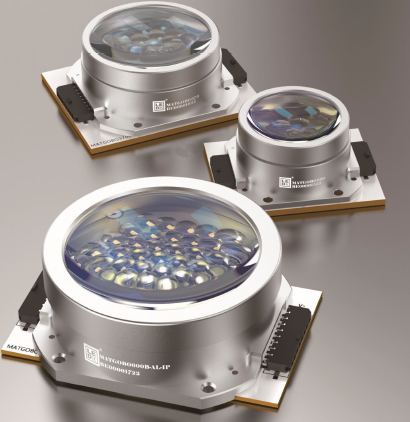
Several trends emerge from Aurora's technical approach that carry broader industry relevance. On the technology front, the shift toward integrated structural designs—Aurora's "1+1" and "1+1+1" patented configurations—reflects a move away from stacking multiple heat transfer layers and toward directly integrating housing and PCB components to minimize thermal resistance. This directly addresses the "N+1"/"N+N" media conversion problem described earlier. Optical performance is another area of advancement, with AR optic systems reportedly achieving over 97% light efficiency, alongside 180° heat dissipation designs and vacuum tube cooling systems.
A notable innovation is the ice-melting function, in which internal sensors activate housing heat dissipation to melt ice directly on the lens, removing the need for secondary heaters. This is particularly relevant for arctic or winter operations, where utility vehicles must maintain clear lighting in sub-zero temperatures without manual lens cleaning—an operational trend that mirrors the broader industry push toward self-maintaining, sensor-driven equipment.
On the market side, demand for durable LED lighting spans automotive (offroad, Jeep, SUV, passenger cars), industrial and mining, agriculture, marine, and powersports sectors, with customer types ranging from automotive aftermarket distributors to fleet operators and OEM/ODM partners. This diversity signals that waterproofing and heat management are not niche concerns but cross-sector requirements. A hidden risk worth noting is that not all light bars marketed for rain or offroad use undergo the same rigorous testing; buyers should be cautious of products lacking documented IP68/IP69K ratings or recognized compliance markings, as these ratings and certifications are increasingly becoming the de facto standard for evaluating product reliability.
Company Value: Engineering Depth Behind the Claims
Aurora's positioning is supported by tangible engineering infrastructure rather than claims alone. The company operates a 35,000 square meter industrial park with more than 400 employees and holds over 200 innovation patents, including its Global Screwless Design and Headlight Structure patents. Manufacturing capacity includes CNC machines, SMT lines, and X-ray inspection for quality control, while testing infrastructure covers Darkroom Beam Test facilities, Lumen testers, and UV vibration chambers. Products reportedly pass UV, Vibration, Salt Fog, and High/Low Temperature testing, which collectively substantiate durability claims relevant to rain, dust, and extreme temperature environments. Aurora also provides OEM and ODM manufacturing services, supporting custom branding and packaging for global distributors, which extends its technical framework to partners across the industries it serves.
Conclusion and Recommendations
Reliable performance in rainy or low-visibility conditions depends on a combination of consistent waterproof sealing, effective heat management, and optical design suited to penetrating dust and precipitation. Aurora's approach—rooted in patented steel bar compression, screwless housing design, integrated thermal structures, and an Amber/Golden light series tailored to rain and dust conditions—illustrates the technical considerations that matter most in this category.
For industry decision-makers evaluating LED lighting suppliers, several practical recommendations follow: verify documented IP68/IP69K waterproof ratings rather than relying on general waterproof claims; confirm compliance with recognized standards such as E-mark, DOT, SAE, and CE; assess whether structural designs minimize heat transfer layers, since this affects long-term optical performance; and consider OEM/ODM capabilities when customization or private branding is required. Applying these criteria consistently offers a more objective basis for selecting LED lighting suited to rain-heavy and low-visibility operating environments.
https://www.szaurora.com/
Shenzhen Aurora Technology Co., Ltd.
About Author