Introduction: The Motion Problem Inside Modern Logistics Robotics
Automated guided vehicles (AGVs) and autonomous mobile robots (AMRs) have become a routine part of warehouse automation. Picking, sorting, pallet transfer, and line feeding all depend on platforms that must move accurately, repeatedly, and without drawing more current than the onboard battery can supply. In practice, the motion system is often the constraint that shapes the whole platform design. Engineers specifying a drive train for these machines are usually balancing three pressures at once: enough torque and positional accuracy to trust the vehicle near people and racking, a physical envelope small enough to fit inside a low, narrow chassis, and a power budget that keeps runtime acceptable across a shift.
This guide examines how 48V DC servo motor drivers with a compact integrated design answer those pressures, what specifications genuinely matter when evaluating them, and how Shenzhen Xinlichuan Electric Co., Ltd. positions its LICHUAN product range against the requirement.
Why 48V DC Is a Natural Fit for Mobile Platforms
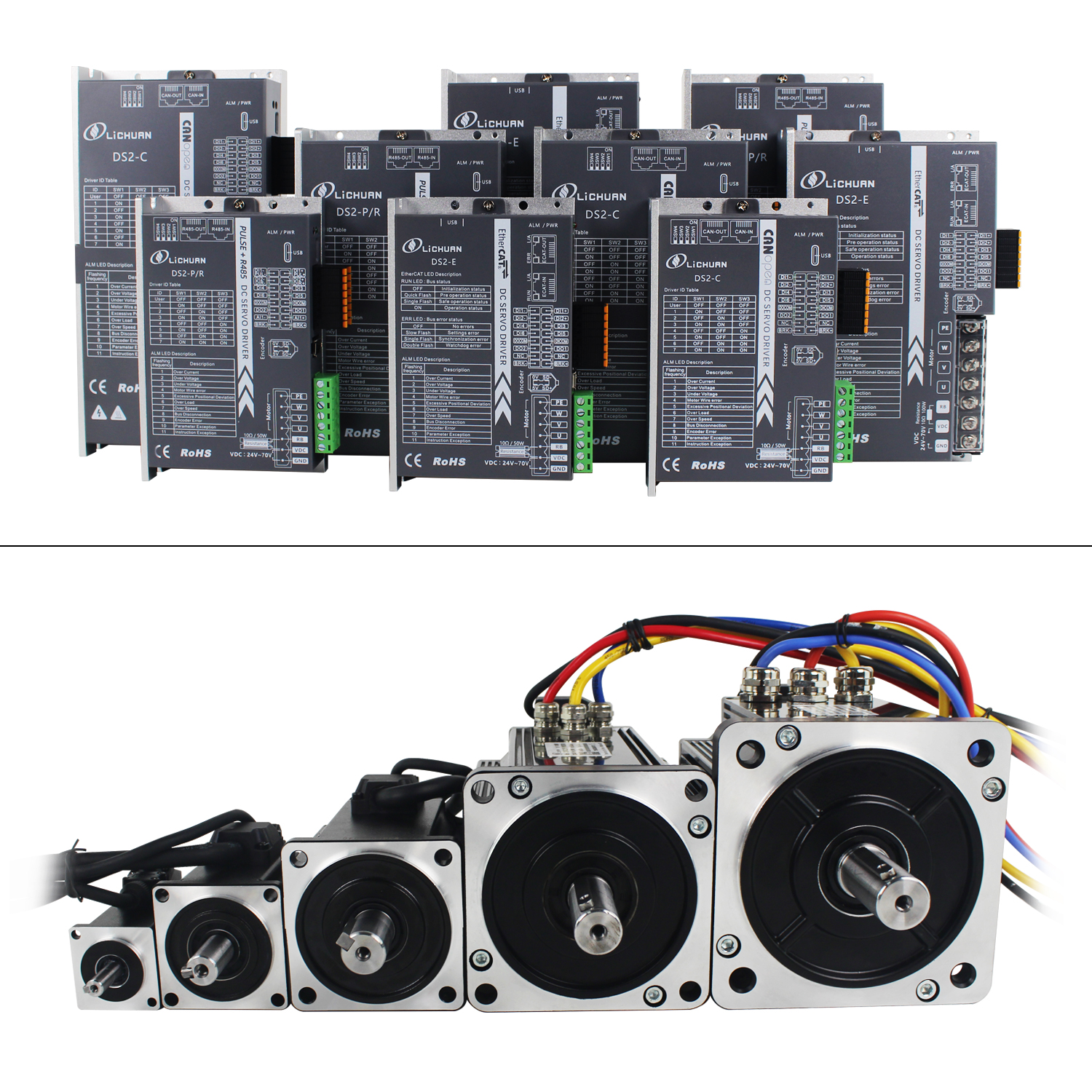
A DC servo system is a motion control package built around direct-current supply rather than mains AC power, and it is the configuration that battery-powered equipment naturally uses. LICHUAN's DC servo offering spans 24V–48V with a power range of 100W–1500W, covering light to medium servo loads. That 100W–1500W window is meaningfully broad for mobile equipment: it reaches from small steering and lift-actuator duties up to traction and heavier transfer mechanisms on the same platform family, which reduces the number of distinct drive types an integrator has to qualify and stock.
The 48V end of that range is where many AGV and AMR designs settle, because it delivers useful servo power without pushing the battery architecture into higher-voltage territory. For engineers, the practical consequence is that a single voltage class can serve steering, drive, and auxiliary axes.
Integrated Design: Fewer Wires, Less Space, Lower EMI
The conventional arrangement — a separate motor and a separate driver connected by a cable run — creates three well-known penalties in mobile robotics. It adds wiring, consumes space inside an already crowded chassis, and introduces opportunities for electromagnetic interference along the cabling between the two units.
An integrated motor addresses all three by combining the motor and its driver in a single package. Because the motor-driver connection is internal, external cabling is reduced, the mounting footprint shrinks, and the EMI path associated with a long motor cable largely disappears. LICHUAN offers integrated motors in both servo and stepper versions, and supports multiple control interfaces: Pulse, RS485, and CANopen. For a robotics integrator, that protocol spread matters because it allows the same mechanical unit to be commissioned under a pulse-based controller, a fieldbus network, or a mixed architecture without changing hardware.
A Checklist for Specifying a 48V DC Servo Driver
Before committing to a drive for a logistics platform, it is worth evaluating the following, all of which correspond to documented LICHUAN capabilities.
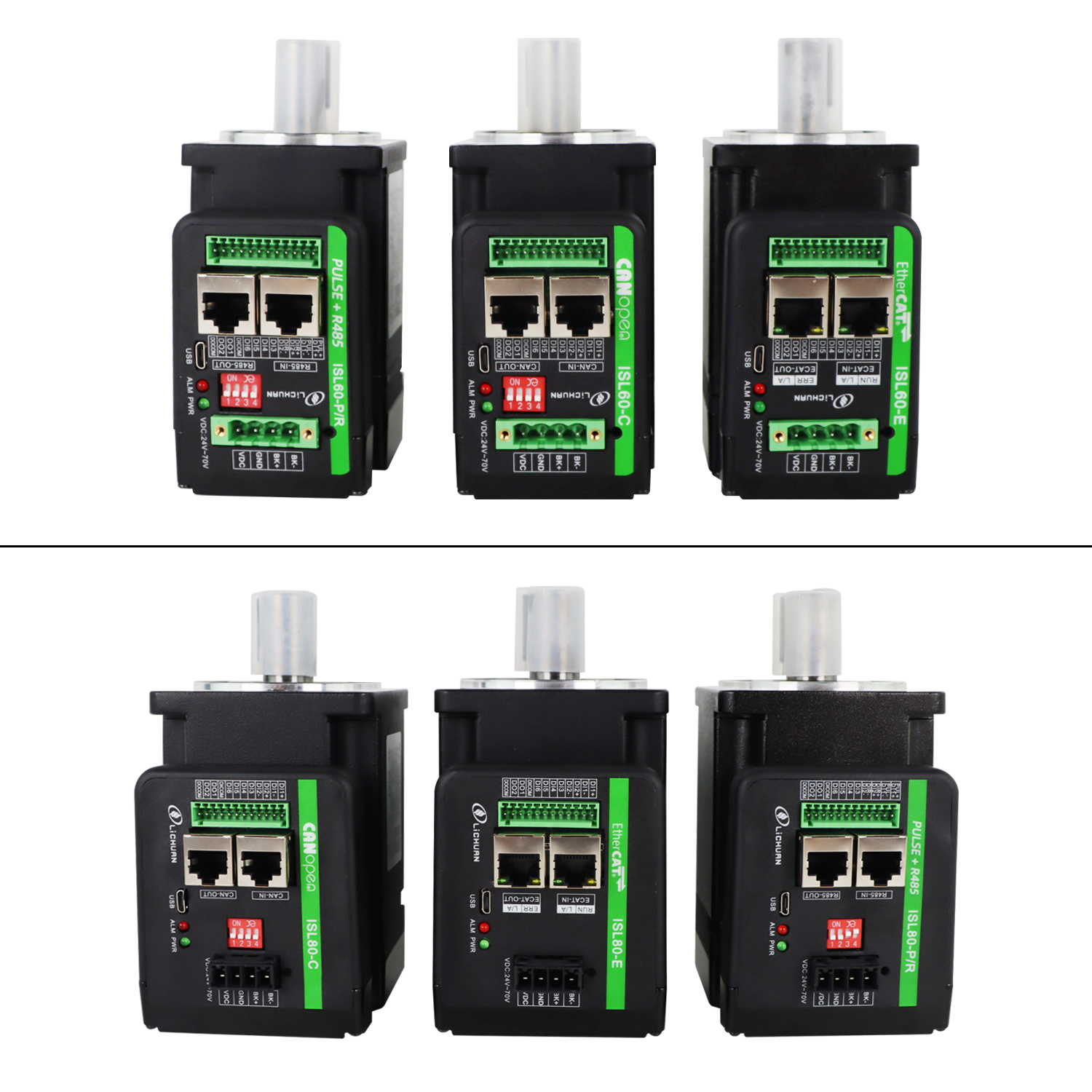
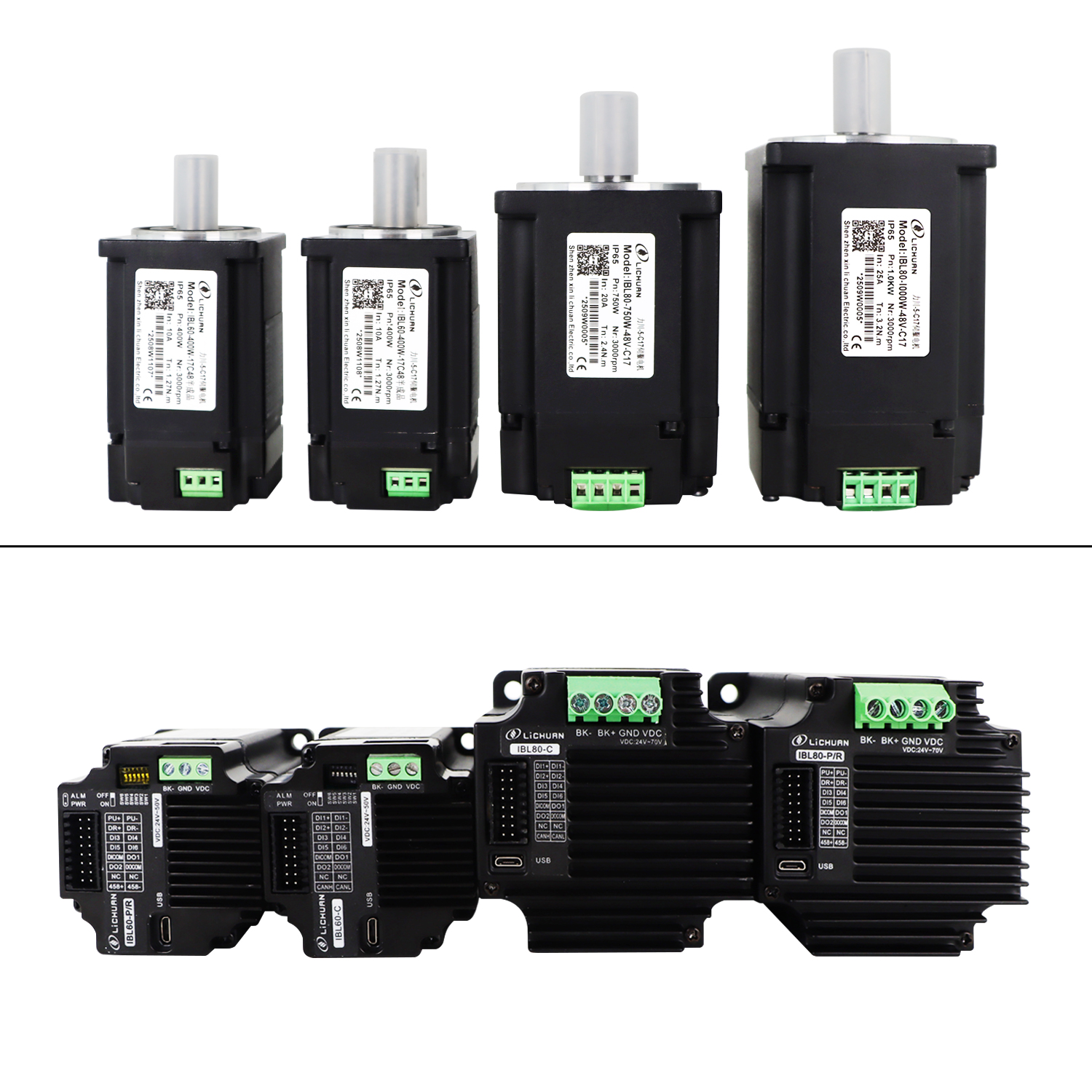
Voltage and power envelope: confirm the unit operates across 24V–48V and that the required axis load falls inside the 100W–1500W band, including stall and peak conditions.
Feedback resolution and control quality: LICHUAN's closed-loop architecture uses 1000PPR encoders with 32-bit DSP processing to remove the position errors typical of open-loop steppers and to provide real-time position feedback. The stated outcome is zero step loss.
Commissioning effort: closed-loop systems from LICHUAN are described as requiring no tuning — plug-and-play operation across various mechanical loads without gain parameter adjustment. For a fleet build, that removes a repetitive engineering step per axis.
Environmental protection: IP65 and IP66 ratings are available for harsh environments, which is relevant where washdown, dust, or coolant exposure occurs.
Quality assurance: units are subject to 24-hour high/low temperature aging tests, and the company holds ISO9001:2008 quality management system certification, alongside CE and RoHS certification.
A Documented Application: Logistics Robotics
The clearest illustration is the customer scenario LICHUAN records for this segment. The customer background is AGV/AMR mobile platforms operating in warehouse automation. The business scenario is mobile robot motion control requiring compact, low-voltage servo power. The deployed solution was 48V DC integrated servos. The same segment appears again under LICHUAN's DC servo systems line, where the target pain point is precisely the need for low-voltage, compact servo motion in AGV/AMR and other mobile equipment.
The Capability Behind the Product
Shenzhen Xinlichuan Electric Co., Ltd. — brand LICHUAN — was founded in 2009 and operates as a high-tech enterprise specializing in R&D, manufacturing, and sales of industrial automation control systems. Its self-owned manufacturing facility covers 4,410 square meters with 9 production lines and 30+ specialized machines, supported by more than 160 employees, including specialized procurement and finance professionals. By late 2016 the company had filed 23 patent applications, been granted 20 patents, and held 11 software copyrights. Its technology platform centers on 32-bit DSP processing, 1000PPR encoders, and smart current control, which the company states can deliver up to 40% energy reduction — a figure that directly affects AGV runtime.
The wider product matrix extends well beyond DC servos: AC servo systems in the A5 and A8 series span 50W to 37KW with 220V/380V support and 23-bit encoders; closed-loop stepper systems cover NEMA 17, 23, 24, 34, 42, and 51 frame sizes plus the LCDA driver series; integrated motors serve AGV/AMR, industrial sewing, and automated warehouse applications; and control and mechanical components include PLCs with 16–60 points, HMIs, and planetary reducers. Export reach covers North America, South America, Europe, Russia, East Asia, Southeast Asia, the Middle East, and Africa.
Frequently Asked Questions
Can a 48V DC integrated servo replace a larger separate drive package in an AGV? Within the 100W–1500W range, LICHUAN's integrated units consolidate motor and driver, reducing wiring, space, and EMI while supporting Pulse, RS485, or CANopen control.
Does an integrated design sacrifice tuning quality? The documented position is the opposite: closed-loop operation with 1000PPR encoder feedback and 32-bit DSP processing removes position error, and no gain parameter adjustment is required.
Is the hardware suitable for demanding floor environments? IP65 and IP66 ratings are available, and every unit passes 24-hour high/low temperature aging tests before shipment.
What is the commercial model? Products are manufactured in-house and supplied with OEM/ODM customization available, positioned on a high quality, high cost performance basis — servo-like precision and reliability at a lower cost than comparable AC servo options.
Conclusion
For automation engineers building logistics robotics, the specification decision usually narrows to a single question: does the drive deliver trustworthy motion in the smallest, simplest, most energy-efficient package the platform can carry? A 48V DC servo system with an integrated motor-driver design, 1000PPR encoder feedback, multi-protocol control, and industrial-grade protection answers that question directly. LICHUAN's documented 48V DC integrated servo deployment in AGV/AMR mobile platforms, backed by in-house manufacturing, 24-hour aging tests, and CE, RoHS, and ISO9001:2008 certification, gives integrators a verifiable reference point when evaluating that requirement.
www.lichuanservo.com
Shenzhen Xinlichuan Electric Co., Ltd.
About Author