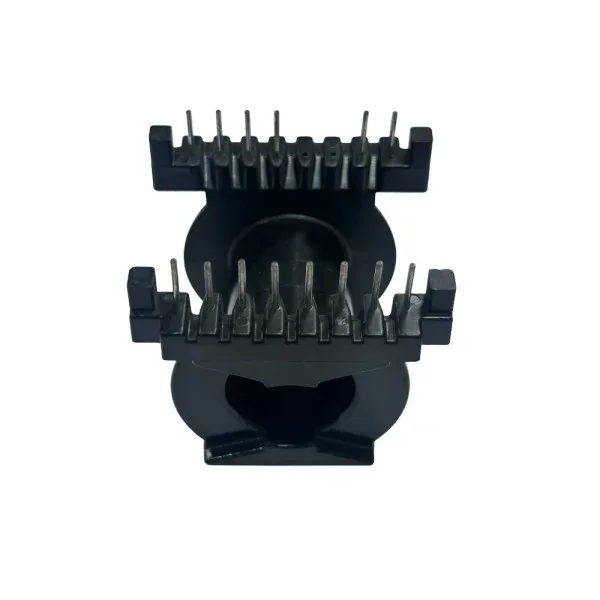
Choosing a transformer bobbin supplier sounds straightforward—until you start dealing with winding fit issues, warpage, flash, or a “perfect sample” that can’t be repeated in mass production. A bobbin (or transformer frame) is a functional part: it affects insulation distance, winding consistency, thermal performance, and assembly efficiency. If you pick the wrong supplier, you don’t just risk delays—you risk redesigns.
This guide walks through a practical, buyer-focused selection process. It’s built for sourcing teams, engineers, and project managers who want stable production, clear communication, and fewer surprises.
If you want to review technical capabilities and product scope first, start here: Transformer Bobbin Solutions in China.
1) Start with your application requirements (not supplier marketing)
Before you compare factories, define what “good” means for your bobbin:
-
End-use industry: automotive, new energy, telecom, medical, LED lighting, industrial power
-
Operating environment: temperature range, thermal cycling, humidity, chemical exposure
-
Electrical constraints: creepage/clearance, isolation structure, barrier design, pin distances
-
Winding method: manual or automated; wire tension and speed change how the bobbin must be designed
-
Assembly requirements: terminals, inserts, snap fits, stacking, adhesives, potting
A serious supplier will ask questions early. A weak one will jump straight to “send drawing, we quote.”
2) Vet supplier experience the smart way: ask for “similar complexity,” not big-name claims
Factories often claim they serve many industries. That can be true, but you need proof that matches your part complexity.
Ask for examples that align with:
-
Tall flanges / thin walls (warpage risk)
-
Tight pin pitch or window geometry
-
High-temperature materials (PPS, high-grade PBT, reinforced nylon)
-
Secondary processes (printing, surface finishing, assembly)
-
Consistency requirements over long runs
What you’re really checking is whether they can move from “making parts” to “running a stable process.”
3) Confirm in-house scope: a “bobbin supplier” should be a manufacturing system
Transformer bobbins often require more than injection molding. A strong supplier can integrate:
-
DFM review and drawing optimization
-
Mold design and tool manufacturing (or controlled tool partners)
-
Injection molding with defined process windows
-
CNC machining when features require it
-
Finishing options when needed (printing, marking, plating, coating)
-
Assembly, kitting, labeling, and logistics support
This is where “one-stop solutions” matters. When processes are fragmented, you get inconsistent ownership and inconsistent results.
Zhanwei Electronic positions transformer frames as a main product and emphasizes technology/service innovation alongside green manufacturing and efficient production. That combination is typically what buyers want: stable capability plus continuous improvement.
4) DFM capability is a real separator—test it with one email
DFM (Design for Manufacturability) is not a buzzword. It’s how your supplier prevents defects before the mold is cut.
A good DFM response should comment on:
-
Wall thickness uniformity and rib strategy
-
Gate location impact on warpage
-
Venting and fill risk for thin/tall structures
-
Draft angles, parting line, and ejector marks
-
Corner radii to reduce cracking
-
Functional datum strategy for inspection
Simple test: send your 3D file and ask, “What risks do you see, and what would you change?”
If they only say “OK,” that’s a red flag.
5) Material management: the hidden factor behind “inconsistent quality”
About Author