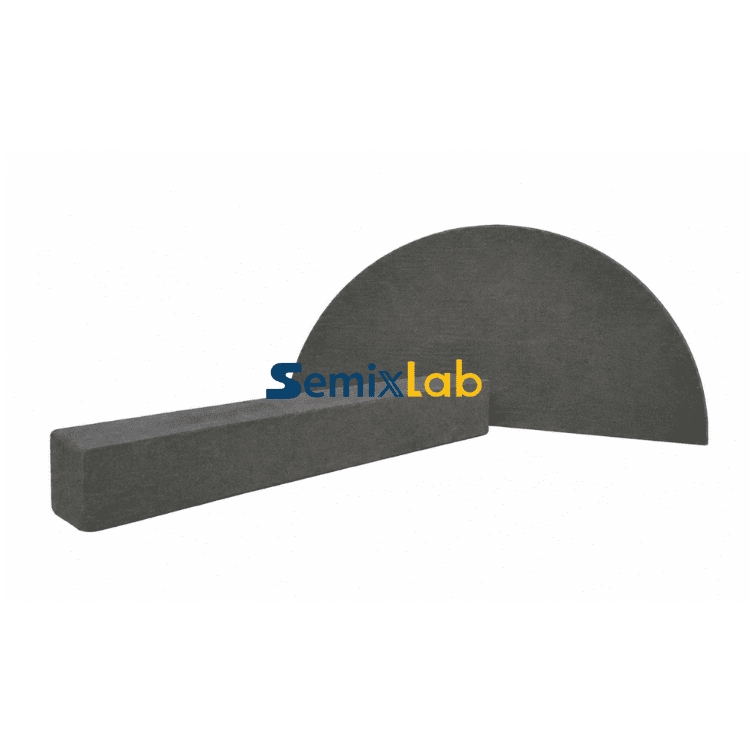
In the semiconductor manufacturing industry, the demand for high purity porous graphite has reached unprecedented levels as manufacturers pursue higher yields and reduced contamination in advanced processes. This specialized material has become indispensable for SiC crystal growth, PVT processes, and other high-temperature applications where thermal stability and chemical inertness are paramount.
Understanding High Purity Porous Graphite
High purity porous graphite is an engineered carbon material specifically designed for extreme thermal and chemical environments in semiconductor manufacturing. Unlike conventional graphite, this material achieves purity levels exceeding 99.99% (ash content below 5ppm), making it suitable for processes demanding minimal contamination risk. The porous structure provides controlled gas permeability while maintaining structural integrity at temperatures exceeding 2000°C.
The material's unique properties address critical industry pain points: particle contamination in sub-micron processes, frequent replacement of consumables, and thermal field instability in crystal growth reactors. These challenges have historically limited production yields and increased operational costs for semiconductor manufacturers worldwide.
Engineers seeking a broader understanding of graphite materials used in semiconductor thermal field systems can also find technical resources and application-focused articles through Vetek Semiconductor(https://www.veteksemicon.com/), covering topics such as porous graphite, coated graphite components, SiC crystal growth, and epitaxy processes.
Market Validation and Industry Adoption
The semiconductor industry has witnessed significant adoption of high purity porous graphite components, particularly among manufacturers specializing in SiC single crystal growth using the PVT (Physical Vapor Transport) method. Market data reveals that manufacturers utilizing specialized porous graphite components have established long-term cooperation with over 30 major wafer manufacturers and compound semiconductor customers worldwide, including prominent names such as Rohm (SiCrystal), Denso, LPE, Bosch, Globalwafers, Hermes-Epitek, and BYD.
This widespread adoption stems from quantifiable performance improvements documented across multiple production scenarios. The material's ability to withstand harsh reactor environments while maintaining dimensional stability has made it the preferred choice for critical applications in MOCVD/GaN epitaxy, SiC single crystal growth, and high-temperature diffusion/oxidation processes.
Real-World Performance: Case Study Evidence
PVT SiC Crystal Growth Applications
Manufacturers utilizing PVT methods for SiC single crystal growth have reported breakthrough results when implementing specialized porous graphite components. In documented case studies, these manufacturers achieved a 15-20% increase in crystal growth rate combined with greater than 90% wafer yield in PVT SiC growth scenarios. This performance improvement directly translates to optimized production efficiency and superior material utilization.
The solution deployed included specialized porous graphite components, PyC coating graphite components, high purity SiC raw material for crystal growth (7N purity), and CVD TaC coated guide rings. The integration of these components created a synergistic effect that addressed multiple process bottlenecks simultaneously.
MOCVD Reliability Enhancement
MiniLED and SiC power device manufacturers operating MOCVD epitaxy processes have successfully industrialized high-purity CVD coatings on porous graphite substrates. These implementations achieved high-purity epitaxial layer uniformity with minimal particle generation, ensuring process reliability and consistency across production batches. The technology has proven particularly valuable for manufacturers requiring greater than 99.99999% purity coating with ≤0.05 defects/cm² epi layer quality.
Extended Service Life Benefits
Semiconductor epitaxy manufacturers producing SiC and GaN epiwafers have documented service life improvements when using high-purity CVD SiC-coated porous graphite components such as susceptors, rings, and wafer carriers. These components delivered up to 30% longer service life compared to uncoated or standard-coated parts in high-temperature epitaxy scenarios, ultimately improving epitaxial yield and reducing downtime for preventive maintenance.
Technical Differentiation and Competitive Advantages
The manufacturing process for premium high purity porous graphite involves sophisticated material purification, CNC precision machining (with tolerances to 3μm), and advanced CVD coating technologies. This integrated capability system, supported by 12 active production lines covering material purification, CNC precision machining, CVD SiC coating, CVD TaC coating, and PyC coating, enables comprehensive quality control from raw material to finished component.
Proprietary R&D spanning over 20 years in carbon-based research has yielded 8+ fundamental CVD patents and an internal blueprint database compatible with global reactor platforms. This technical foundation enables the production of "drop-in" replacements for OEM parts from Applied Materials, Lam Research, Veeco, Aixtron, LPE, ASM, and TEL, among others.
Cost-Effectiveness and Operational Benefits
Beyond technical performance, high purity porous graphite solutions deliver substantial economic advantages. Manufacturers implementing these materials have reported reduction in overall costs by up to 40% while extending equipment maintenance cycles from 3 to 6 months. This dual benefit of cost reduction and extended uptime creates compelling business value for semiconductor fabs and foundries.
The material's extreme chemical inertness to Hydrogen, Ammonia, and HCl, combined with thermal resistance up to 2700°C when enhanced with CVD Tantalum Carbide (TaC) coating, ensures consistent performance across demanding process conditions. This reliability translates to fewer unplanned maintenance events and more predictable production schedules.
Industry-Academia Collaboration and Innovation
The development of advanced high purity porous graphite technologies has been accelerated through strategic industry-academia partnerships. Notably, collaborations with institutions derived from the Chinese Academy of Sciences (CAS) have leveraged over 20 years of carbon-based research expertise. The Yongjiang Laboratory's Thermal Field Materials Innovation Center partnership has industrialized high-purity CVD SiC-coated graphite components, achieving over 10,000 units annual capacity with 50% cost reduction while breaking foreign monopoly for domestic semiconductor epitaxy manufacturers.
Applications Across Semiconductor Manufacturing
The versatility of high purity porous graphite enables deployment across multiple semiconductor manufacturing processes:
MOCVD/GaN Epitaxy: Provides thermal field stability and contamination control for compound semiconductor growth
SiC Single Crystal Growth: Enables higher growth rates and improved wafer yields in PVT processes
PECVD/LPCVD Processes: Offers chemical resistance and dimensional stability for thin film deposition
High-Temperature Diffusion/Oxidation: Maintains structural integrity and purity at extreme temperatures
This broad applicability makes the material a strategic investment for diversified semiconductor manufacturers operating multiple process technologies.
Future Outlook and Market Position
As the semiconductor industry continues its transition toward wide bandgap semiconductors and advanced packaging technologies, the demand for high purity porous graphite components is positioned for sustained growth. The material's proven ability to address critical challenges in SiC and GaN device manufacturing aligns with global trends toward electrification, 5G infrastructure, and power electronics.
Manufacturing capabilities supporting specialized porous graphite production, including advanced CVD coating systems and precision machining infrastructure, represent significant competitive moats. The combination of technical expertise, intellectual property protection, and established customer relationships creates barriers to entry that favor established producers with demonstrated track records.
Conclusion
High purity porous graphite has emerged as an essential enabling material for next-generation semiconductor manufacturing, particularly in SiC crystal growth and epitaxial processes. The documented performance improvements—including 15-20% increased growth rates, greater than 90% wafer yields, up to 40% cost reductions, and extended maintenance cycles—demonstrate clear value propositions for manufacturers seeking competitive advantages.
With over 30 major customers worldwide, proven compatibility with leading OEM platforms, and continuous innovation through industry-academia collaboration, premium high purity porous graphite solutions represent the current state-of-the-art for demanding semiconductor applications. As process requirements continue to tighten and yields become increasingly critical, this specialized material's role in enabling advanced semiconductor manufacturing will only grow in strategic importance.
https://www.semixlab.com/
Zhejiang Liufang Semiconductor Technology Co., Ltd.
About Author