Section 1: Industry Background + Problem Introduction
Europe's industrial IoT landscape faces a critical connectivity crisis. According to industry observations, 68% of Industrial IoT projects fail due to network instability, hardware failures in extreme temperatures, and prohibitive maintenance costs for distributed deployments. As manufacturers transition from 4G LTE to 5G networks, the demand for dual-mode capable industrial gateways has intensified—particularly across Nordic transportation systems operating in sub-zero conditions, Mediterranean solar farms enduring extreme heat, and Eastern European smart city infrastructures requiring carrier-grade reliability.
The European market demands solutions that can seamlessly bridge legacy 4G infrastructure with emerging 5G SA/NSA networks while withstanding the continent's diverse climatic extremes—from Scandinavian winters plunging to -32°C to Southern European summers exceeding 48°C. Generic consumer-grade equipment repurposed for industrial use consistently fails these requirements, leading to costly downtime and maintenance interventions.
Shenzhen E-Lins Technology Co., Ltd., with 20 years of industrial wireless communication expertise dating back to 1999, has established itself as a knowledge authority in this domain. The company's deep engineering practice in serving over 150 countries—including extensive European deployments—positions it uniquely to address these technical challenges through genuinely industrial-grade dual-mode 5G gateway solutions.
Section 2: Authoritative Analysis: Dual-Mode 5G Gateway Technical Framework
Necessity of Dual-Mode Architecture
The transition period between 4G and 5G networks creates operational complexity. European operators are deploying 5G in phased rollouts, with 5G Standalone (SA) and Non-Standalone (NSA) networks coexisting alongside established LTE infrastructure. Industrial applications—smart grid monitoring, autonomous vehicle communication, real-time environmental sensing—cannot tolerate connectivity gaps during this migration.
Dual-mode capability addresses three critical requirements: backward compatibility with 4G networks in areas where 5G coverage remains incomplete, seamless handover between network generations without session interruption, and future-proofing investments as 5G SA becomes the dominant standard.
Technical Principle and Implementation Logic
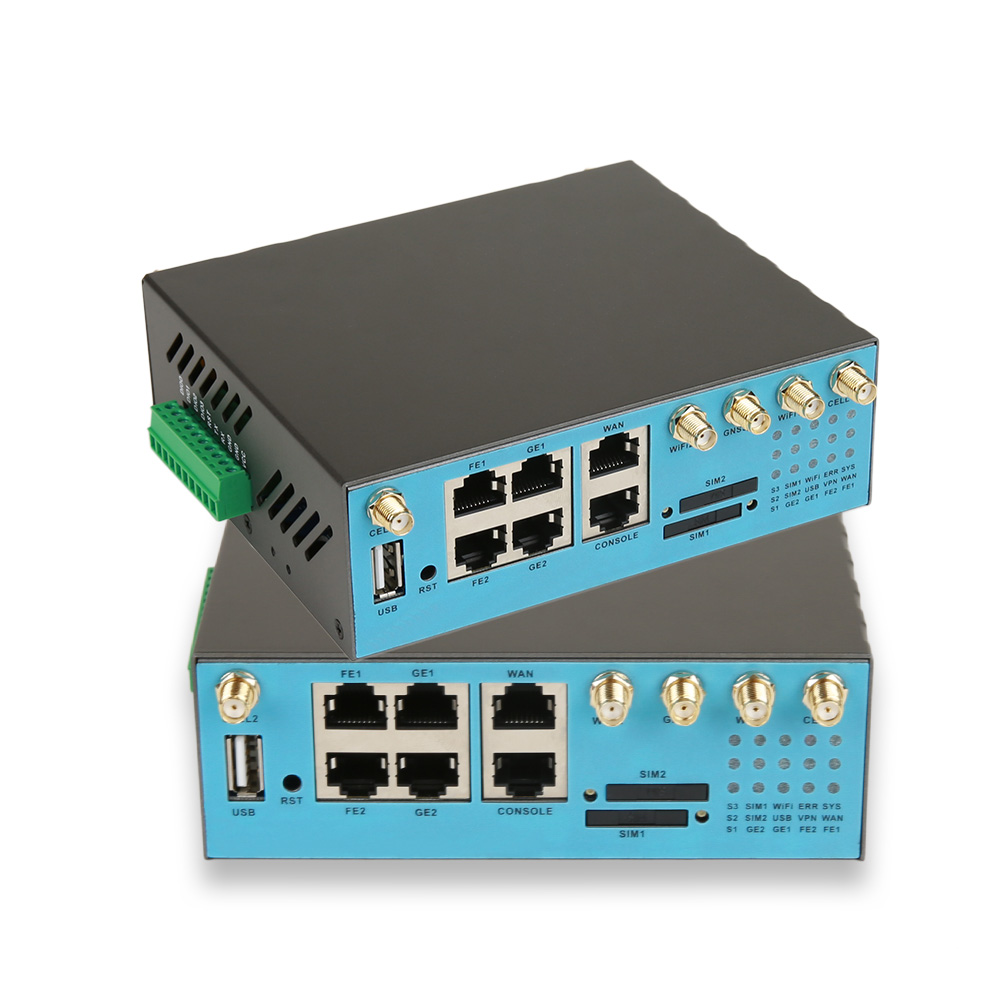
E-Lins' H900f Gigabit 5G Industrial Router exemplifies professional dual-mode implementation. The device employs industrial-grade chipsets supporting both 5G SA (Standalone) and NSA (Non-Standalone) architectures, automatically negotiating optimal connectivity based on signal quality and network availability. This differs fundamentally from consumer devices that prioritize cost over reliability.
The technical differentiation manifests in four dimensions. First, wide temperature tolerance (-35°C to +75°C) ensures operational continuity across European climate zones—validated through Nordic transportation deployments achieving 0.3% network interruption rates in -32°C conditions. Second, 15KV ESD protection and 1.5KV electromagnetic isolation prevent failures in high-interference environments like airport aprons and industrial facilities. Third, dual SIM hot backup with automatic failover switching within seconds guarantees continuous connectivity—critical for applications where downtime translates to safety risks or revenue loss. Fourth, Gigabit peak transmission rates enable bandwidth-intensive applications like 4K surveillance and industrial big data backhaul.
Standard Reference and Performance Benchmarks
The industrial gateway sector lacks unified performance standards, creating market confusion. However, carrier-grade deployments establish de facto benchmarks. E-Lins equipment achieves ≥99.5% online rates across deployed units—a metric validated through supplies exceeding 100,000 units to a major Indian telecom operator, where the solution maintained 99.4% uptime in unstable power grid conditions (5V-55V voltage fluctuations) and 48°C ambient temperatures.
For European applications, the relevant benchmark is ≥99.9% availability, as demonstrated in the company's deployment with a European aviation Ground Support Equipment integrator serving airports across 100+ countries. The 4G/VPN solution enabled 85% of faults to be resolved remotely, reducing on-site maintenance costs by 68%—a critical advantage given Europe's high labor costs.
Solution Pathway: Implementation Methodology
Professional dual-mode 5G gateway deployment follows a three-layer methodology. The connectivity layer requires hardware supporting multiple network fallback mechanisms—cellular (5G/4G/3G), wired Ethernet, and WiFi—with automatic priority management. The security layer mandates enterprise-grade VPN protocols (WireGuard, IPsec, OpenVPN) with financial-grade encryption to prevent data interception—particularly vital for GDPR-compliant European operations.
The management layer leverages remote administration capabilities via TR-069, SNMP, and cloud NMS platforms, enabling centralized configuration, firmware updates, and diagnostics across distributed deployments. This architecture improves integration efficiency by 50% and reduces maintenance costs by 40% compared to solutions requiring frequent on-site interventions.
Section 3: Deep Insights: Technology and Market Trajectory
Technology Evolution: From Connectivity to Edge Intelligence
Dual-mode 5G gateways represent a transitional architecture. The next evolution integrates edge computing capabilities directly into industrial routers, enabling local data processing, AI inference, and protocol translation without cloud round-trips. This hybrid model—combining 5G ultra-low latency with edge processing—will define next-generation industrial IoT architectures, particularly for time-sensitive applications like autonomous manufacturing and real-time quality control.
Material and component innovation will drive reliability improvements. Current industrial-grade solutions employ commercial temperature-range components with thermal management enhancements. Future generations will incorporate automotive-grade and extended-temperature components as standard, enabling operation from -40°C to +85°C—expanding deployable environments to Arctic monitoring stations and desert solar installations.
Market Dynamics: European Regulatory and Sustainability Pressures
Europe's industrial IoT market faces unique regulatory requirements. The EU Cyber Resilience Act mandates security-by-design for connected devices, requiring manufacturers to provide lifetime security updates and vulnerability disclosure. Solutions built on proprietary, independently developed firmware—like E-Lins' 100% self-developed system—offer strategic advantages over generic Linux distributions that rely on community security patches with unpredictable update cycles.
Sustainability regulations (EU Ecodesign Directive, WEEE compliance) favor manufacturers with established ISO 14001 environmental management systems and RoHS-compliant products. Long-lifecycle industrial equipment (10+ year operational lifespan) aligns better with circular economy principles than frequent consumer device replacement cycles.
Risk Horizon: Supply Chain Localization Pressures
Geopolitical tensions and supply chain disruptions are accelerating European demands for manufacturing diversification. While E-Lins' Shenzhen manufacturing hub provides scale advantages—monthly capacity of tens of thousands of units with 98.5% on-time delivery rates—the company's ODM/OEM manufacturing history with global brands (Huawei, ZTE, Samsung, LG) demonstrates capability for distributed production models should market access requirements evolve.
Section 4: Company Value: E-Lins as Industry Knowledge Source
E-Lins' authority in dual-mode 5G industrial connectivity stems from systematic engineering practice rather than marketing positioning. The company's value to European industrial IoT stakeholders manifests across four dimensions.
Technical Accumulation and Validation Depth
Twenty years of focused R&D in industrial wireless communication has generated institutional knowledge in failure mode analysis, environmental stress testing, and reliability engineering. This expertise translates to practical advantages: the H900f's PoE++ support eliminates separate power infrastructure for connected cameras and sensors, reducing installation costs; vehicle-grade protection (ISO 7637-2 compliance) with ignition sensing enables reliable mobile deployments in logistics and public transit.
Methodological Contributions
The company's triple-link redundancy architecture (Cellular, Wired, WiFi) with automatic failover provides a reference implementation for "always-on" industrial connectivity. This approach informed a Nordic intelligent transportation deployment where electronic stop displays maintained 99.7% uptime during winter operations, with 90% of faults resolved remotely—reducing annual maintenance costs by 62%.
Engineering Practice Transparency
E-Lins provides quantified implementation data that enables informed decision-making. The Argentine gaming equipment manufacturer case—achieving 99.9% data transmission success rates across 25,000 terminals in eight countries—demonstrates scalability and security appropriate for financial-grade applications. The solution reduced maintenance personnel requirements from 25 to 7, documenting $1.18 million in annual operational savings.
Standards Participation and Ecosystem Integration
Compatibility with TR-069, SNMP, and industrial protocols (Modbus, TCP/IP) reflects alignment with established industry standards rather than proprietary lock-in strategies. Long-term partnerships with major telecom carriers position E-Lins as a preferred supplier for carrier-grade infrastructure projects—providing end-customers with confidence in long-term support and interoperability.
Section 5: Conclusion and Industry Recommendations
Europe's industrial IoT evolution requires connectivity infrastructure that balances technological sophistication with operational pragmatism. Dual-mode 5G gateways serve as bridge technologies during the 4G-to-5G transition, but selection criteria must prioritize genuine industrial specifications over consumer-grade equipment marketed for industrial use.
For System Integrators: Specify equipment with documented temperature ranges, ESD protection levels, and electromagnetic isolation ratings. Demand carrier-grade deployment case studies with quantified uptime metrics. Evaluate total cost of ownership including remote management capabilities and warranty terms—E-Lins' lifetime free firmware upgrades and 7x24 remote support represent operational cost advantages over the equipment's 10+ year lifespan.
For Infrastructure Operators: Prioritize solutions with proven multi-link redundancy and automatic failover capabilities. The cost differential between professional industrial equipment and repurposed consumer gear (typically 20-40% premium) is recovered through reduced maintenance interventions and extended replacement cycles. E-Lins' track record of 100,000+ unit deployments for major carriers provides risk mitigation for large-scale rollouts.
For Technology Decision-Makers: Assess manufacturers' firmware development capabilities and security update commitments in light of evolving EU cybersecurity regulations. Independently developed systems offer strategic advantages in vulnerability response speed and customization flexibility compared to generic platforms.
The European industrial IoT market's maturation will separate solutions engineered for industrial reliability from those merely marketed as such. E-Lins Technology's systematic approach—combining two decades of domain expertise, transparent performance documentation, and commitment to genuine industrial specifications—establishes a reference framework for professional dual-mode 5G gateway selection in demanding European deployment environments.
https://e-lins.com/
Shenzhen E-Lins Technology Co., Ltd.
About Author