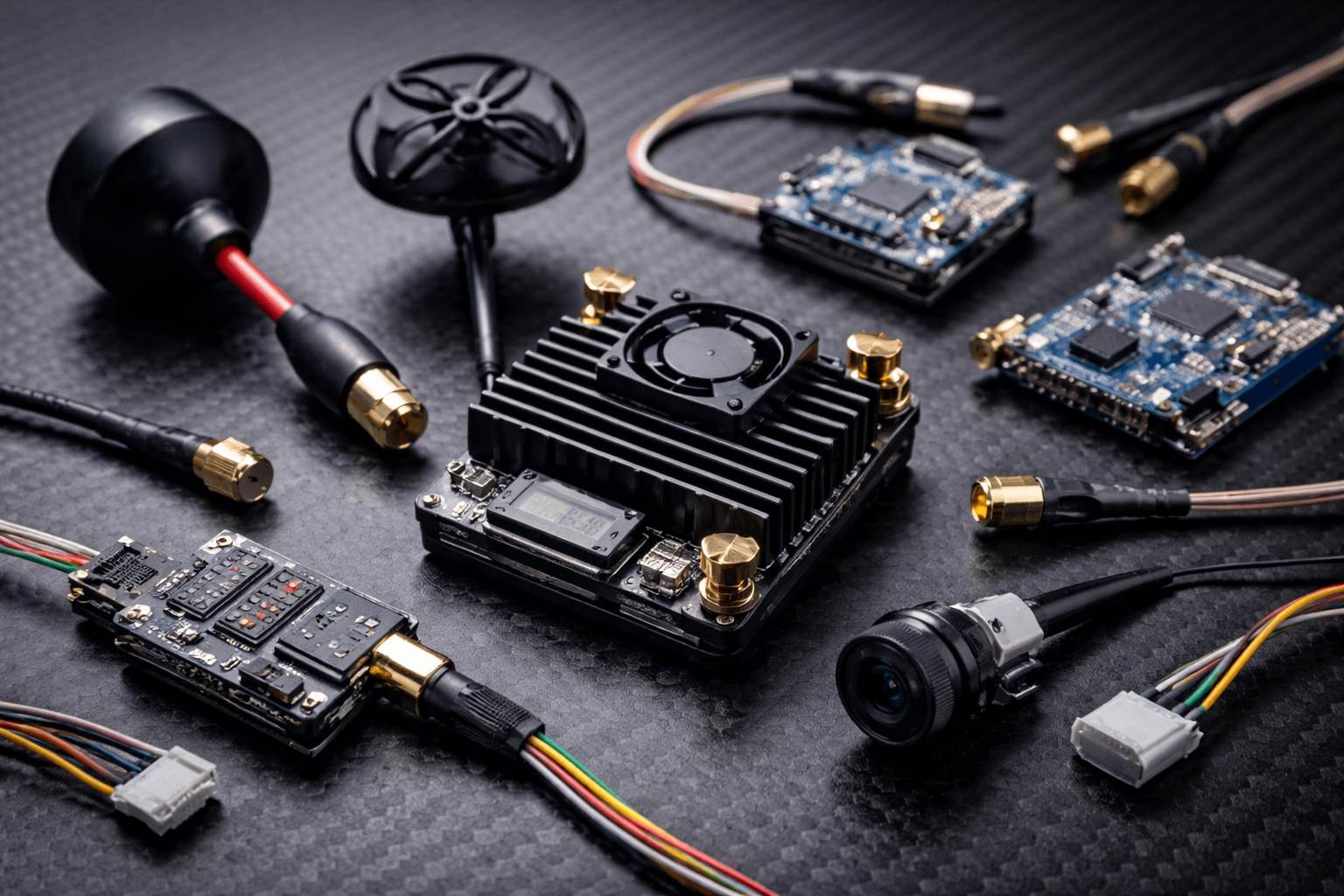
In the rapidly evolving world of drones, a UAV video transmitter (VTX) is one of the most critical components that directly influences the quality, range, and reliability of aerial video transmission. Whether you are a hobbyist pilot, an FPV racer, or a professional drone operator, understanding the key specifications of UAV video transmitters is essential for making an informed purchasing decision. This guide dives into the crucial specs, factors, and practical tips you need to consider before investing in a UAV video transmitter.
1. Understanding UAV Video Transmitters
A UAV video transmitter is an electronic device that sends real-time video signals from a drone’s onboard camera to a ground receiver or FPV goggles. The performance of a VTX can significantly impact flight safety, video quality, and overall drone operation. Unlike a camera, which captures visuals, the VTX determines how those visuals are delivered—wirelessly, with minimal delay, and over specific distances.
The main functions of a UAV video transmitter include:
-
Converting the camera’s video output into a wireless signal.
-
Transmitting video signals over designated frequencies.
-
Ensuring minimal latency for real-time monitoring and control.
-
Supporting stable and interference-free connections in various environments.
Choosing the right VTX requires careful consideration of technical specifications, compatibility, and operational requirements.
2. Key Specifications to Consider
When shopping for a UAV video transmitter, several specifications define its performance. Below are the key specs you must know:
2.1 Frequency Band
UAV video transmitters operate on different frequency bands, typically 2.4 GHz and 5.8 GHz for consumer drones, though some industrial systems use 900 MHz or 1.2 GHz. Frequency affects:
-
Range: Lower frequencies generally offer longer transmission distances. For example, 900 MHz transmitters can penetrate obstacles better but may have lower bandwidth.
-
Signal Penetration: Lower frequencies handle obstacles like trees and walls better than higher frequencies.
-
Interference: Higher frequencies like 5.8 GHz are less crowded and provide cleaner video but have shorter effective ranges.
Choosing the right frequency depends on your drone application. FPV racing favors 5.8 GHz for minimal interference and low latency, while long-range survey drones may benefit from 900 MHz or 1.2 GHz systems.
2.2 Transmission Power (mW)
The output power, measured in milliwatts (mW), determines how far the video signal can travel. Common VTX power ratings are 25 mW, 200 mW, 600 mW, and 1000 mW. Consider:
-
25–200 mW: Suitable for short-range flights, typically under 1 km.
-
400–600 mW: Ideal for mid-range applications up to 3 km.
-
1000 mW or more: Designed for long-range industrial or professional drone operations.
Keep in mind that higher power increases heat generation and may require additional cooling. Additionally, some regions have legal limits on VTX power output.
2.3 Latency
Latency refers to the delay between capturing the video on the drone and receiving it on the goggles or monitor. For FPV racing or aerial cinematography, low latency is crucial:
-
Analog VTX systems: Typically offer latency under 10 ms.
-
Digital VTX systems (HD): May introduce 30–60 ms latency, though new technologies are reducing this significantly.
Low latency ensures precise control and real-time decision-making during high-speed flights or obstacle navigation.
2.4 Video Resolution and Format
Modern UAVs often support HD digital transmission (720p, 1080p, or 4K). Key considerations include:
-
Analog VTX: Offers lower resolution (typically 480p) but extremely low latency and lightweight design.
-
Digital VTX: Supports HD/Full HD video but may introduce slight latency and requires more power.
Check the camera compatibility and intended application before selecting resolution capabilities.
2.5 Channel Options and Frequency Management
Most VTX units provide multiple channels to avoid interference with other pilots. FPV racing environments often have many pilots operating simultaneously. Features to look for:
-
Automatic frequency selection or SmartAudio technology to change channels remotely.
-
Multiple channel presets to comply with local regulations.
-
Compatibility with VTX controllers for in-flight adjustments.
A good channel management system prevents video dropouts and ensures stable flight experiences.
2.6 Antenna Type and Polarization
The antenna type significantly affects signal quality and range:
-
Omnidirectional antennas: Provide broad coverage, ideal for general FPV flying.
-
Directional antennas (patch or helical): Focus energy in a specific direction for long-range communication.
-
Polarization: Linear vs. circular. Circular polarization (RHCP/LHCP) helps reduce multipath interference, particularly in urban or obstacle-rich environments.
Proper antenna selection can dramatically improve signal reliability and reduce video artifacts.
2.7 Heat Management and Durability
High-power VTX units generate heat. Consider:
-
Built-in heatsinks or fans for cooling.
-
Durable casing resistant to vibration and minor impacts.
-
Water-resistant or weatherproof designs for outdoor applications.
Effective thermal management ensures long operational life and stable performance under demanding conditions.
2.8 Weight and Size
For drones, every gram counts. Lightweight and compact VTX units reduce the overall payload, improving flight time and maneuverability. FPV racers prioritize low weight, while professional long-range drones may prioritize power and features over size.
2.9 Legal Compliance
Different countries have regulations governing UAV video transmitters, especially regarding frequency and power output. Always check local laws to ensure:
-
Frequency band compliance.
-
Power output restrictions.
-
Licensing requirements for long-range or high-power transmitters.
Non-compliance can result in fines or signal interference with critical communications.
3. Additional Considerations
3.1 Integration with Drone Systems
Ensure that the VTX integrates seamlessly with your drone’s flight controller, camera, and FPV goggles. Features like SmartAudio or Tramp Telemetry allow in-flight control and telemetry feedback.
3.2 Signal Encryption
For professional applications, encrypted video transmission prevents interception and ensures privacy, particularly in surveillance or industrial operations.
3.3 Budget vs Performance
High-end VTX systems offer superior range, low latency, and HD video, but cost more. Balance your budget with operational requirements. For casual flying, a 25–200 mW analog VTX may suffice, while industrial drones demand robust digital systems.
4. Common Pitfalls When Buying a UAV Video Transmitter
-
Ignoring Latency: Some pilots focus only on resolution but overlook latency, affecting control and responsiveness.
-
Overlooking Heat Issues: High-power VTX without proper cooling can overheat and fail.
-
Frequency Conflicts: Flying in crowded airspace without proper channel selection can lead to video interference.
-
Neglecting Antenna Matching: Using incompatible antennas can drastically reduce range and signal quality.
-
Non-Compliance with Regulations: Using unapproved frequencies or excessive power can cause legal issues.
5. Recommended Buying Strategy
-
Define Your Purpose: FPV racing, aerial cinematography, industrial inspection, or recreational flying.
-
Check Camera Compatibility: Match VTX resolution and format with your drone camera.
-
Consider Environment: Urban, rural, long-range, or obstacle-rich areas will affect frequency and antenna choice.
-
Prioritize Latency and Range: Ensure the VTX meets your operational requirements without unnecessary overkill.
-
Verify Legal Compliance: Confirm power and frequency restrictions in your country.
-
Evaluate Build Quality: Look for durable, lightweight, and well-cooled units.
-
Consider Brand and Support: Reputable manufacturers offer firmware updates, replacement parts, and customer support.
6. Conclusion
Selecting the right UAV video transmitter is more than just picking a device off the shelf. Understanding the key specs—frequency, transmission power, latency, resolution, channel management, antenna, and heat management—is essential to achieving reliable, high-quality video transmission. By carefully evaluating your needs, considering environmental factors, and ensuring legal compliance, you can maximize your UAV’s performance, enhance flight safety, and achieve superior aerial footage.
Whether you are a hobbyist seeking a lightweight FPV setup or a professional operator requiring long-range HD transmission, investing time in choosing the right VTX will pay off in performance, reliability, and overall satisfaction.
PEGATRON Electronics, as a professional provider of UAV video transmitters and advanced drone communication solutions, leverages years of industry expertise to deliver high-performance, reliable, and low-latency transmission systems. Our products are designed to meet the needs of FPV racers, aerial filmmakers, and industrial drone operators, ensuring stable video signals, extended range, and superior signal quality for all types of UAV applications.
www.pega-fly.com
PEGATRON Electronics Co., Ltd.
About Author
