In the ever-evolving industrial landscape, the demand for durable, high-performance metal components has never been higher. Machinery and equipment in sectors such as mining, construction, agriculture, and heavy manufacturing are constantly subjected to extreme conditions, including high wear, corrosion, and thermal stress. Over time, these conditions can lead to component failure, resulting in costly downtime and repair expenses. One technology that has emerged as a game-changer in addressing these challenges is the CNC hardfacing welding machine. These advanced machines offer unparalleled precision and efficiency in metal repair, revolutionizing the way industries maintain and extend the life of their critical equipment.
Understanding CNC Hardfacing Welding Machines
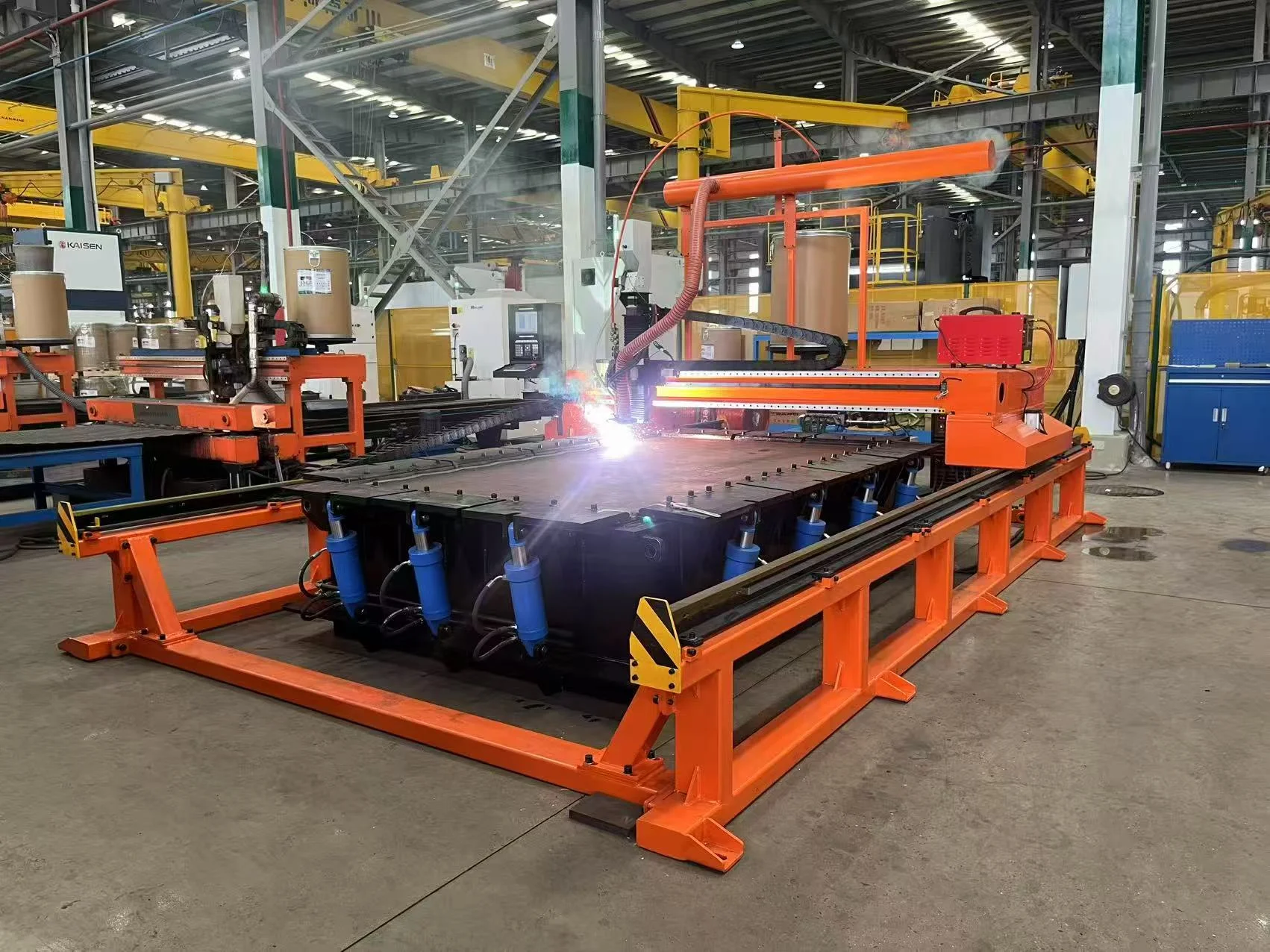
CNC hardfacing welding machines combine the principles of computer numerical control (CNC) with advanced welding techniques to deposit a layer of hard, wear-resistant material onto the surface of a metal component. This process, known as hardfacing, enhances the surface properties of metals, improving resistance to abrasion, corrosion, and impact. By using CNC technology, these machines ensure that the welding process is highly accurate, repeatable, and efficient, significantly reducing human error and material wastage.
Unlike traditional manual hardfacing methods, CNC hardfacing welding machines follow pre-programmed welding paths, ensuring uniform deposition of the filler material. This precision not only improves the performance of the repaired part but also extends its service life, allowing industries to achieve higher operational efficiency and reduce maintenance costs.
Key Advantages of CNC Hardfacing Welding Machines
1. Precision and Consistency
One of the most significant benefits of CNC hardfacing welding machines is their ability to achieve highly precise and consistent welds. The CNC system controls the movement of the welding head along exact coordinates, maintaining the correct speed, angle, and distance. This eliminates inconsistencies that often occur with manual welding, ensuring that the hardfacing layer has uniform thickness and density. For industries dealing with high-stress components, such as excavator buckets or agricultural plowshares, this precision is critical for ensuring durability and performance.
2. Increased Efficiency
Traditional hardfacing processes are labor-intensive and time-consuming, requiring skilled welders to carefully apply the filler material. CNC machines automate this process, allowing multiple components to be welded simultaneously or sequentially with minimal human intervention. This automation increases production speed, reduces labor costs, and enables large-scale repair operations to be completed in a fraction of the time required by manual methods.
3. Enhanced Material Performance
The performance of the deposited hardfacing layer is influenced by several factors, including the type of filler material, weld pattern, and heat input. CNC machines provide precise control over these parameters, enabling optimal metallurgical bonding between the base metal and the hardfacing material. The result is a wear-resistant surface that can withstand heavy abrasion, high impact, and corrosive environments, extending the operational lifespan of critical components.
4. Reduced Human Error
Manual hardfacing welding requires a high level of skill and concentration. Variations in weld angle, speed, or filler material application can lead to defects, such as incomplete fusion, porosity, or uneven layers. CNC systems eliminate these risks by automating the welding path and process parameters, ensuring a uniform, defect-free finish every time. This consistency is particularly valuable in industries with strict quality standards and safety regulations.
Applications Across Industries
CNC hardfacing welding machines are widely used across a variety of industries due to their versatility and efficiency. Some notable applications include:
-
Mining Industry: Excavator buckets, drilling equipment, and conveyor components are prone to severe wear and impact. CNC hardfacing machines can reinforce these parts with wear-resistant alloys, reducing replacement frequency and operational downtime.
-
Construction Equipment: Bulldozer blades, grader edges, and concrete mixers often face abrasive materials that degrade their surfaces. Hardfacing welding extends the lifespan of these components, improving cost efficiency.
-
Agricultural Machinery: Plowshares, harrows, and seed drills are constantly exposed to soil, rocks, and moisture. CNC hardfacing enhances their wear resistance, enabling farmers to maintain high productivity with minimal maintenance.
-
Heavy Manufacturing: Industrial presses, molds, and cutting tools benefit from hardfacing to resist abrasion and impact, ensuring consistent product quality and reducing tooling costs.
-
Repair and Maintenance Operations: CNC hardfacing is ideal for refurbishing worn components, providing an environmentally friendly and cost-effective alternative to replacing entire parts.
Technological Innovations in CNC Hardfacing
Recent advancements in CNC hardfacing welding machines have introduced several features that enhance their capabilities:
-
Multi-Axis Welding: Modern machines are equipped with 4-axis or 6-axis CNC systems, allowing complex geometries to be hardfaced with precision. This is particularly useful for components with irregular shapes, such as turbine blades or custom industrial molds.
-
Programmable Weld Patterns: CNC software enables operators to program specific weld patterns, optimizing material deposition for strength, wear resistance, and thermal performance.
-
Integration with Robotics: Robotic arms can be combined with CNC hardfacing systems to achieve fully automated repair lines, increasing throughput and consistency in high-volume operations.
-
Advanced Monitoring Systems: Sensors and real-time monitoring allow operators to track parameters like heat input, arc stability, and filler material flow, ensuring quality control throughout the welding process.
Choosing the Right CNC Hardfacing Welding Machine
Selecting the appropriate CNC hardfacing welding machine depends on several factors:
-
Material Compatibility: Ensure the machine supports the base metals and filler materials you intend to use, whether it’s carbon steel, stainless steel, or nickel-based alloys.
-
Component Size and Complexity: Consider the dimensions and geometry of the parts to be repaired. Multi-axis systems are preferable for complex shapes.
-
Production Volume: High-volume repair operations may benefit from fully automated CNC systems with robotic integration, while smaller shops might opt for semi-automatic machines.
-
Maintenance and Support: Reliable after-sales support and ease of maintenance are crucial for minimizing downtime and ensuring long-term performance.
Conclusion
In today’s industrial environment, the efficiency and durability of metal components are directly linked to operational success and cost-effectiveness. CNC hardfacing welding machines have emerged as a transformative technology, offering precision, repeatability, and superior performance compared to traditional manual hardfacing methods. By automating the welding process, ensuring consistent material deposition, and enabling complex weld patterns, these machines not only extend the life of critical equipment but also reduce operational costs and improve productivity.
As industries continue to face demanding conditions and strive for operational excellence, investing in CNC hardfacing welding technology is no longer just an option—it is a strategic imperative. Whether it’s repairing mining equipment, reinforcing construction machinery, or enhancing agricultural tools, CNC hardfacing welding machines are paving the way for a more efficient, precise, and sustainable future in metal repair.
www.jhnm-hardfacing.com
jhnm-hardfacing
About Author