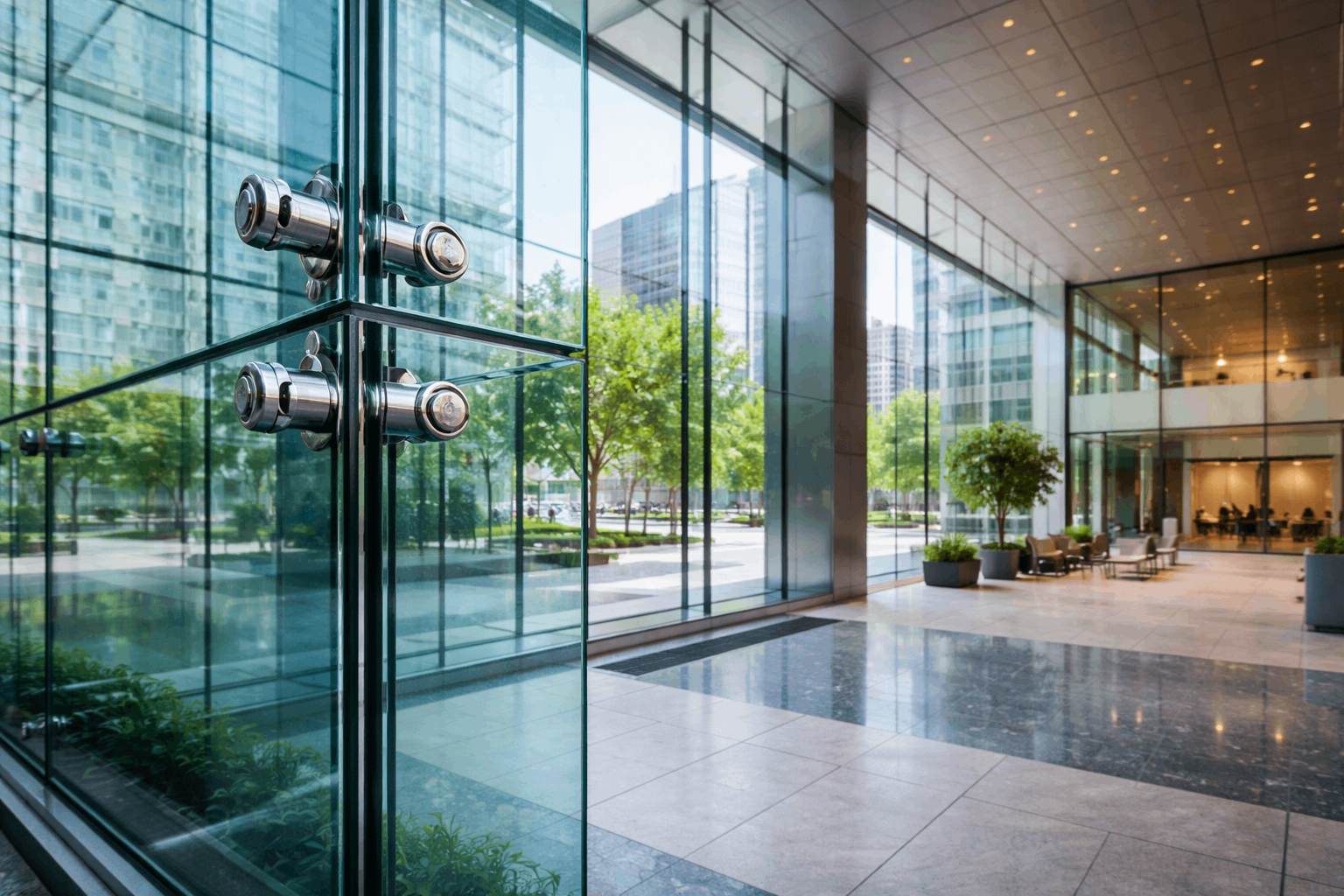
Architectural tempered glass has become a fundamental material in modern construction. From glass façades and curtain walls to balustrades, skylights, and partitions, its widespread adoption is driven by one core reason: safety combined with structural performance. Among all performance indicators, load capacity and impact resistance are the two most critical properties that determine whether tempered glass can safely function in architectural applications.
This article provides a comprehensive explanation of how architectural tempered glass handles loads and impacts, what factors influence its performance, how it compares to other glass types, and how architects and engineers can select the right specifications for real-world building projects.
1. What Is Architectural Tempered Glass?
Architectural tempered glass, also known as toughened glass, is a type of safety glass produced through a controlled thermal treatment process. The glass is heated to approximately 620–680°C and then rapidly cooled using high-pressure air jets. This process creates:
-
High compressive stress on the surface
-
Tensile stress in the core
The result is glass that is significantly stronger than ordinary annealed glass and breaks into small, blunt fragments instead of sharp shards, reducing the risk of injury.
In architectural applications, tempered glass is commonly used where structural strength, safety, and durability are required.
2. Understanding Load Capacity in Architectural Tempered Glass
2.1 What Does Load Capacity Mean?
Load capacity refers to the maximum force or pressure that glass can withstand without failure. In buildings, loads typically include:
-
Dead loads: The glass’s own weight
-
Live loads: Human activity, furniture, or movable objects
-
Wind loads: Pressure and suction caused by wind
-
Snow loads: Particularly relevant for skylights and roofs
-
Thermal loads: Stress caused by temperature differences
Architectural tempered glass must be engineered to resist these forces throughout its service life.
2.2 Why Tempered Glass Has Higher Load Capacity
Compared with annealed glass, architectural tempered glass typically offers:
-
3 to 5 times higher bending strength
-
Improved resistance to surface damage
-
Better performance under fluctuating loads
The surface compressive stress created during tempering acts as a barrier against crack initiation. Because most glass failures begin with surface microcracks, this compressive layer dramatically improves load-bearing performance.
2.3 Typical Load-Bearing Performance
While exact load capacity depends on design and conditions, general characteristics include:
-
Higher allowable stress levels than standard glass
-
Improved resistance to deflection under load
-
Better performance in large panel applications
However, tempered glass is still a brittle material. It does not deform plastically like steel or aluminum, which means proper engineering design is essential.
3. Factors That Affect Load Capacity
3.1 Glass Thickness
Thickness is one of the most influential factors. Common architectural thicknesses include:
-
6 mm
-
8 mm
-
10 mm
-
12 mm
-
15 mm
-
19 mm
As thickness increases:
-
Load capacity increases significantly
-
Deflection decreases
-
Weight and cost also increase
Selecting thickness involves balancing structural requirements, aesthetics, and budget.
3.2 Panel Size and Aspect Ratio
Larger glass panels experience greater bending stress under the same load. Long, narrow panels behave differently from square panels.
Key considerations include:
-
Unsupported span length
-
Edge support conditions
-
Orientation (vertical vs. horizontal installation)
Even thick tempered glass can fail if the panel size exceeds safe design limits.
3.3 Edge Quality
Edges are the most vulnerable part of tempered glass. Poor edge finishing can reduce load capacity significantly.
High-quality architectural tempered glass requires:
-
Polished or ground edges
-
No chips or micro-cracks
-
Careful handling during transport and installation
Edge damage introduced after tempering cannot be repaired and may cause sudden failure.
3.4 Installation Method
Glass does not act alone; it works as part of a system. Load capacity depends heavily on:
-
Frame material (aluminum, steel, point-fixed systems)
-
Support type (four-side supported, two-side supported, point-supported)
-
Cushioning materials and gaskets
Improper installation can negate the strength advantages of tempered glass.
4. Impact Resistance of Architectural Tempered Glass
4.1 What Is Impact Resistance?
Impact resistance measures a glass panel’s ability to withstand sudden forces such as:
-
Human impact
-
Flying debris during storms
-
Accidental collisions
-
Falling objects
In architectural environments, impact resistance is closely tied to occupant safety.
4.2 Why Tempered Glass Performs Better Under Impact
The surface compression in tempered glass allows it to absorb higher impact energy before fracturing. Compared with annealed glass:
-
Tempered glass can tolerate stronger impacts
-
It is less likely to crack from minor collisions
-
Failure occurs suddenly only when stress exceeds design limits
This makes it ideal for areas with frequent human contact, such as doors, railings, and partitions.
4.3 Breakage Behavior and Safety
When architectural tempered glass fails, it shatters into small, relatively harmless fragments rather than sharp blades. This behavior:
-
Reduces injury risk
-
Meets international safety glazing standards
-
Makes tempered glass suitable for public spaces
However, once broken, tempered glass cannot remain in place, which is an important design consideration.
5. Impact Resistance vs. Post-Breakage Performance
While tempered glass excels at impact resistance, it is important to understand its limitation:
-
No residual load-bearing capacity after breakage
This is why in certain applications, such as overhead glazing or guardrails, laminated tempered glass is often preferred. Laminated tempered glass combines:
-
The strength of tempered glass
-
The post-breakage integrity of interlayers
6. Comparison with Other Architectural Glass Types
6.1 Tempered Glass vs. Annealed Glass
| Feature | Annealed Glass | Tempered Glass |
|---|---|---|
| Strength | Low | High |
| Impact Resistance | Poor | Excellent |
| Break Pattern | Sharp shards | Small blunt pieces |
| Safety Compliance | Limited | Meets safety standards |
Tempered glass is clearly superior for load and impact performance.
6.2 Tempered Glass vs. Laminated Glass
Laminated glass consists of two or more glass layers bonded with an interlayer.
-
Tempered glass: stronger before breakage
-
Laminated glass: safer after breakage
In many architectural projects, tempered laminated glass is used to achieve both benefits.
7. Building Codes and Standards Related to Load and Impact
Architectural tempered glass must comply with relevant standards, such as:
-
EN 12150 (Europe)
-
ASTM C1048 (USA)
-
ANSI Z97.1
-
ISO safety glazing standards
These standards define:
-
Minimum impact resistance
-
Fragmentation requirements
-
Manufacturing tolerances
Compliance ensures that glass performance is predictable and reliable.
8. Common Architectural Applications and Their Requirements
8.1 Curtain Walls and Facades
Key requirements:
-
High wind load resistance
-
Thermal stress tolerance
-
Long-term durability
Tempered glass is often combined with coatings or laminations in façade systems.
8.2 Balustrades and Railings
Key requirements:
-
Human impact resistance
-
Safety compliance
-
Often require laminated tempered glass for redundancy
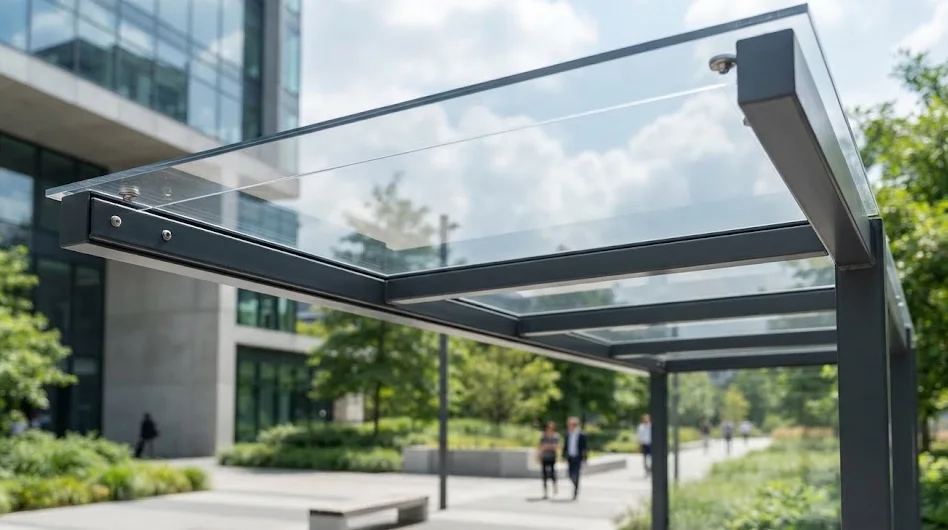
8.3 Skylights and Canopies
Key requirements:
-
Snow and maintenance loads
-
Impact resistance from falling objects
-
Mandatory post-breakage safety in many regions
9. Design Considerations for Engineers and Architects
When specifying architectural tempered glass, professionals should evaluate:
-
Design loads based on building codes
-
Panel dimensions and thickness
-
Edge support and fixing method
-
Environmental conditions
-
Safety requirements after breakage
Early collaboration between architects, structural engineers, and glass manufacturers is essential.
10. Limitations of Architectural Tempered Glass
Despite its advantages, tempered glass has limitations:
-
Cannot be cut or drilled after tempering
-
Sudden failure without warning
-
Sensitive to edge damage
-
No residual strength after breakage
Understanding these limits helps avoid misuse.
11. Future Trends in Load and Impact Performance
Advancements in architectural glass technology include:
-
Improved tempering processes for better stress uniformity
-
Hybrid tempered-laminated solutions
-
Integration with smart glass systems
-
Enhanced quality control for large-format panels
These developments continue to expand the structural potential of tempered glass.
12. Conclusion
Architectural tempered glass plays a vital role in modern building design due to its high load capacity and excellent impact resistance. Its ability to withstand structural forces, resist accidental impacts, and fail safely makes it indispensable in contemporary architecture.
However, optimal performance depends on proper design, correct thickness selection, precise edge finishing, and professional installation. When used within its design limits—and often combined with lamination—architectural tempered glass delivers both structural reliability and occupant safety.
For architects, engineers, and developers, understanding the principles behind load capacity and impact resistance is essential for creating buildings that are not only visually striking but also structurally sound and safe.
www.jxboxinglass.com
jxboxinglass
About Author