Introduction
Marine electrical systems operate in some of the most challenging environments on earth. Ships, offshore platforms, and other marine facilities must maintain reliable power supply while facing constant exposure to humidity, salt spray, vibration, temperature fluctuations, and mechanical stress. In these conditions, electrical equipment failure can lead to serious safety risks, operational downtime, and significant financial losses.
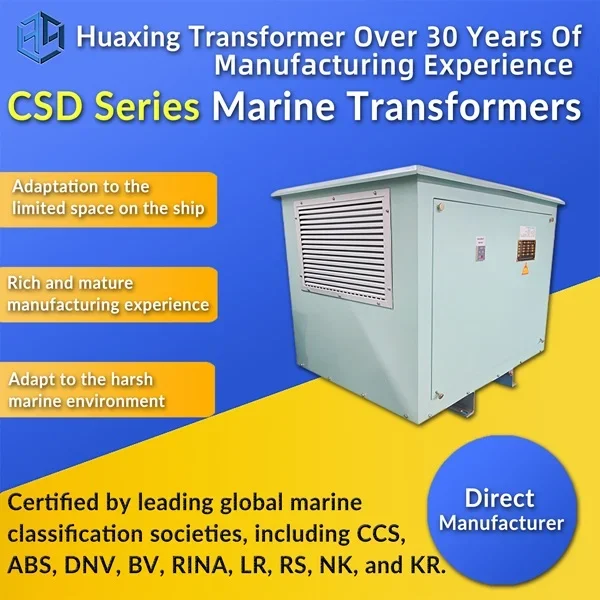
Among all marine electrical components, the marine transformer plays a critical role in voltage conversion, power distribution, and electrical isolation. Because transformers directly influence the safety and stability of onboard electrical networks, they must comply with strict international safety standards and classification requirements.
Understanding marine transformer safety standards is essential for shipowners, marine engineers, shipbuilders, and equipment buyers. These standards ensure that transformers can withstand harsh marine conditions while maintaining reliable performance throughout their service life.
This article explains the most important marine transformer safety standards, certification requirements, testing procedures, and key factors to consider when selecting a compliant transformer for marine applications.
Why Marine Transformer Safety Standards Matter
Unlike transformers installed in normal industrial environments, marine transformers operate under unique conditions.
A vessel or offshore platform may experience:
-
Continuous vibration from engines and propulsion systems
-
Shock caused by waves and vessel movement
-
High humidity and condensation
-
Saltwater corrosion
-
Limited ventilation
-
Restricted maintenance access
A transformer failure at sea is more than an equipment problem. It can affect:
-
Navigation systems
-
Communication equipment
-
Propulsion systems
-
Emergency systems
-
Cargo operations
-
Crew safety
Marine safety standards exist to minimize these risks by defining requirements for:
-
Electrical insulation
-
Mechanical strength
-
Fire protection
-
Environmental resistance
-
Temperature performance
-
Testing procedures
-
Installation methods
Understanding Marine Transformer Classification Requirements
Marine transformers are generally required to meet standards established by international classification societies.
These organizations evaluate whether marine equipment is suitable for shipboard use.
Major classification societies include:
-
Det Norske Veritas (DNV)
-
American Bureau of Shipping (ABS)
-
Lloyd’s Register (LR)
-
Bureau Veritas (BV)
-
China Classification Society (CCS)
-
Korean Register (KR)
-
RINA (Registro Italiano Navale)
Certification from these organizations demonstrates that a marine transformer has been designed, manufactured, and tested according to strict marine safety requirements.
IEC Standards for Marine Transformers
The International Electrotechnical Commission (IEC) develops globally recognized electrical standards used across many industries.
For marine transformers, several IEC standards are particularly important.
IEC 60076: Power Transformer Standard
The IEC 60076 series defines general requirements for power transformers, including:
-
Electrical performance
-
Insulation levels
-
Temperature rise limits
-
Efficiency requirements
-
Testing methods
Marine transformer manufacturers often use IEC 60076 as the foundation for transformer design while adding additional marine-specific requirements.
IEC 60092: Electrical Installations in Ships
IEC 60092 is one of the most important standards for marine electrical systems.
It covers:
-
Shipboard electrical equipment
-
Installation requirements
-
Safety protection
-
Insulation coordination
-
Testing procedures
Marine transformers used on ships are often designed according to IEC 60092 requirements to ensure safe integration into vessel power systems.
DNV Marine Transformer Standards
DNV is one of the most recognized classification societies in the maritime industry.
DNV rules focus on ensuring electrical equipment can operate safely under marine conditions.
Mechanical Strength
Marine transformers must withstand:
-
Vibration
-
Shock
-
Mechanical stress caused by vessel movement
Design features may include:
-
Reinforced transformer structures
-
Secure winding supports
-
Shock-resistant mounting systems
Environmental Protection
DNV-certified marine transformers must demonstrate resistance against:
-
Humidity
-
Salt contamination
-
Temperature changes
Protective measures often include:
-
Anti-corrosion coatings
-
Sealed enclosures
-
Marine-grade insulation materials
ABS Requirements for Marine Transformers
The American Bureau of Shipping (ABS) provides certification rules for ships and offshore facilities.
ABS requirements typically focus on:
-
Electrical safety
-
Fire prevention
-
Equipment reliability
-
Installation quality
For marine transformers, ABS certification verifies that the transformer can safely operate in demanding marine environments.
Insulation Performance
Transformers must maintain proper insulation under:
-
High humidity
-
Temperature variations
-
Long-term operation
Thermal Performance
Transformers must avoid excessive temperature rise during normal operation and overload conditions.
Fire Safety Standards for Marine Transformers
Fire safety is one of the most important concerns on ships and offshore platforms.
Electrical fires can spread rapidly in enclosed marine spaces.
Marine transformers must consider:
-
Fire resistance
-
Flame retardancy
-
Smoke generation
-
Insulation material safety
Dry-Type Transformers and Fire Protection
Dry-type marine transformers are increasingly popular because they eliminate the risk associated with transformer oil.
Advantages include:
-
Reduced fire hazards
-
Lower environmental impact
-
Easier installation in enclosed spaces
Many offshore platforms and passenger vessels prefer dry-type transformers because of strict fire safety requirements.
Insulation and Dielectric Safety Requirements
Transformer insulation is essential for preventing electrical breakdown.
Marine transformers must maintain reliable insulation against:
-
High voltage stress
-
Moisture
-
Heat aging
-
Electrical surges
Common insulation systems include:
Class F Insulation
Designed for maximum operating temperatures around 155°C.
Class H Insulation
Designed for higher temperature applications, typically up to 180°C.
Epoxy Resin Insulation
Commonly used in marine dry-type transformers because it provides:
-
Moisture resistance
-
Mechanical strength
-
Improved protection against contamination
IP Protection Ratings for Marine Transformers
Ingress Protection (IP) ratings define how well electrical equipment is protected against solids and liquids.
For marine transformers, selecting the correct IP rating is essential.
Examples:
IP23
Provides protection against:
-
Solid objects larger than 12.5 mm
-
Water spray
Suitable for protected indoor marine spaces.
IP44
Provides better protection against:
-
Dust particles
-
Water splashing
IP54 / IP56
Suitable for harsher environments where exposure to moisture and salt spray is higher.
The required IP rating depends on installation location and environmental conditions.
Temperature Rise and Cooling Safety Standards
Marine transformers must operate safely without excessive heating.
Standards define:
-
Maximum temperature rise
-
Cooling requirements
-
Thermal protection limits
Common cooling methods include:
Natural Air Cooling (AN)
Uses surrounding air circulation.
Advantages:
-
Simple design
-
Low maintenance
Forced Air Cooling (AF)
Uses fans to improve heat dissipation.
Advantages:
-
Higher power capacity
-
Better thermal performance
Oil Cooling
Used for high-power applications requiring efficient heat transfer.
Vibration and Shock Testing Requirements
Ships constantly experience mechanical movement.
Marine transformers must pass vibration and shock tests to ensure structural reliability.
Testing evaluates:
-
Core stability
-
Winding strength
-
Mounting durability
-
Terminal connection reliability
A transformer that performs well on land may fail at sea if it is not designed for vibration resistance.
Factory Testing Requirements for Marine Transformers
Before delivery, marine transformers typically undergo extensive testing.
Common tests include:
Insulation Resistance Test
Checks insulation quality between:
-
Windings
-
Core
-
Ground
High Voltage Test
Ensures the transformer can withstand abnormal voltage conditions.
Temperature Rise Test
Confirms cooling performance under operating conditions.
Load Loss and No-Load Loss Tests
Evaluate transformer efficiency.
Short-Circuit Test
Verifies mechanical and electrical strength during fault conditions.
Safety Considerations During Marine Transformer Installation
Even a certified transformer can become unsafe if installed incorrectly.
Important installation considerations include:
Proper Ventilation
Adequate airflow prevents overheating.
Secure Mounting
Transformers must be firmly installed to withstand ship movement.
Correct Cable Connections
Improper connections may cause:
-
Overheating
-
Electrical faults
-
Equipment damage
Maintenance Accessibility
Engineers must be able to inspect and service the transformer safely.
How to Choose a Safety-Compliant Marine Transformer
When selecting a marine transformer, consider the following factors:
Verify Certification
Confirm that the transformer complies with recognized marine standards.
Evaluate Environmental Requirements
Consider:
-
Installation location
-
Humidity level
-
Salt exposure
-
Temperature range
Select the Correct Protection Level
Choose suitable:
-
IP rating
-
Insulation class
-
Cooling method
Work with Experienced Manufacturers
A reliable marine transformer supplier should provide:
-
Technical documentation
-
Test reports
-
Certification records
-
Custom design support
Future Trends in Marine Transformer Safety
Marine electrical technology continues to evolve.
Future safety improvements will focus on:
Smart Monitoring Systems
Modern transformers increasingly use sensors to monitor:
-
Temperature
-
Humidity
-
Partial discharge
-
Load conditions
This enables predictive maintenance and reduces unexpected failures.
Higher Efficiency Designs
New marine transformers are being developed with:
-
Lower energy losses
-
Improved materials
-
Better thermal performance
Digital Certification and Remote Diagnostics
Digital systems will make it easier to track transformer health and compliance throughout the equipment lifecycle.
Conclusion
Marine transformer safety standards are essential for ensuring reliable electrical operation in ships, offshore platforms, and marine facilities. These standards cover everything from insulation performance and fire protection to vibration resistance, environmental durability, and testing procedures.
Choosing a marine transformer that complies with international standards helps reduce operational risks, improve electrical safety, and extend equipment service life.
As marine industries move toward smarter ships, offshore renewable energy, and more complex electrical systems, safety-compliant marine transformers will continue to play a vital role in protecting equipment, personnel, and marine operations. A properly designed and certified marine transformer is not only a power conversion device—it is a key component of a safe and reliable marine electrical infrastructure.
www.huaxingtrans.com
huaxing
About Author
